




Fat tire electric bikes have become extremely popular in the US over the past few years.
At first glance, they look like off-road bikes built for dirt trails, sand, or mountain paths.
But more and more riders are using them in cities.
That raises a simple question:
👉 Are fat tire e-bikes actually better for city riding, or just overbuilt for no reason?
The answer is not as obvious as it seems.
The common assumption: skinny tires are better for cities
Most people assume city riding requires:
- lightweight design
- narrow tires for efficiency
- minimal rolling resistance
On paper, this makes sense.
Narrow tires:
- roll faster on smooth pavement
- feel easier to pedal
- reduce battery consumption slightly
So logically, they should be better for urban commuting.
But real city roads are rarely smooth.
🏙️ The reality: city roads are not “clean pavement”
Most US city riding includes:
- cracked asphalt
- potholes
- uneven intersections
- construction zones
- painted road surfaces
- sudden curb transitions
This is where narrow tires start to show limitations.
Instead of feeling fast, they often feel:
- harsh on impact
- unstable over bumps
- less confident in turns
🛞 What fat tires actually change in real riding
Fat tire e-bikes (like 20×4.0 setups) behave very differently in practice.
They don’t just make the bike “bigger”—they change how the road feels.
1. More surface contact = more stability
Fat tires spread weight over a larger surface area.
This results in:
- better grip on uneven pavement
- more stable cornering
- reduced slip on loose surfaces
2. Natural shock absorption
Even without perfect suspension, fat tires already absorb:
- small potholes
- cracks in asphalt
- vibration from rough roads
This reduces fatigue on longer rides.
3. More predictable handling under load
When carrying:
- backpacks
- groceries
- heavier riders
fat tires help keep balance more consistent.
This is especially noticeable in stop-and-go traffic.
⚖️ The trade-off: what you lose with fat tires
Fat tires are not a free upgrade.
There are real compromises:
Slightly lower efficiency
More contact with the ground = more rolling resistance.
Heavier steering feel
At low speeds, the bike can feel less “nimble”.
More battery usage in aggressive riding
Hard acceleration increases energy demand faster than slim tires.
The key misunderstanding about fat tires
A lot of riders compare fat tires vs standard tires like this:
👉 speed vs efficiency
But in real use, the difference is actually:
👉 stability vs precision
Fat tires don’t make the bike slower in a meaningful commuting sense.
They make it more forgiving.
🚴 Real-world example of a fat tire setup
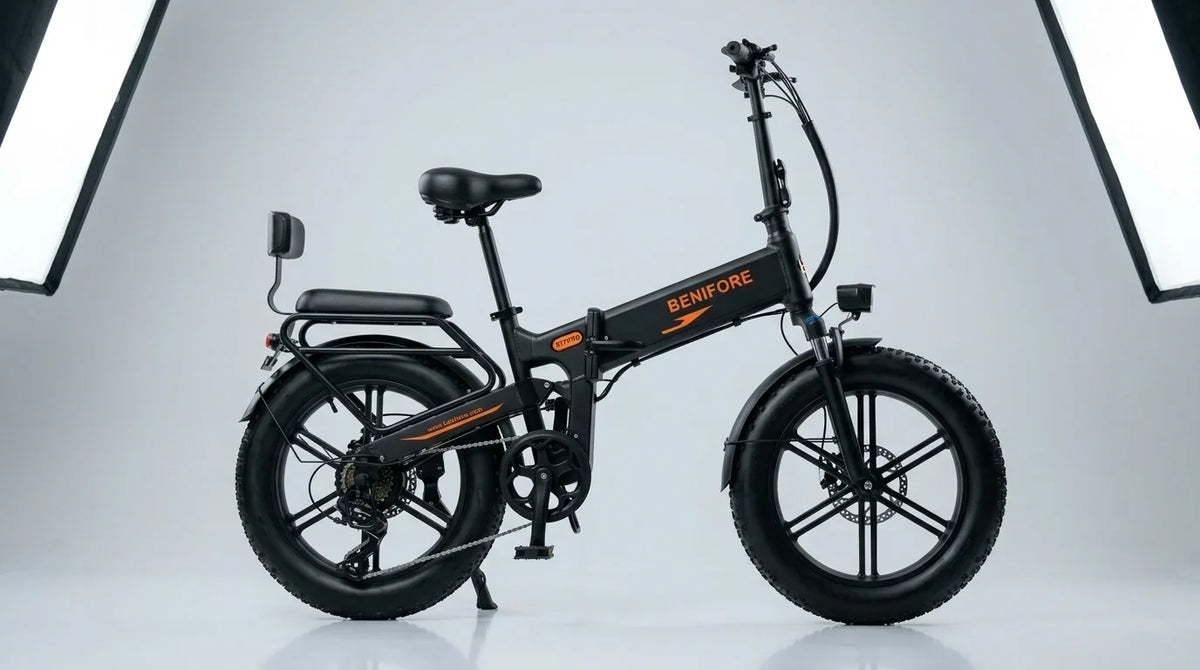
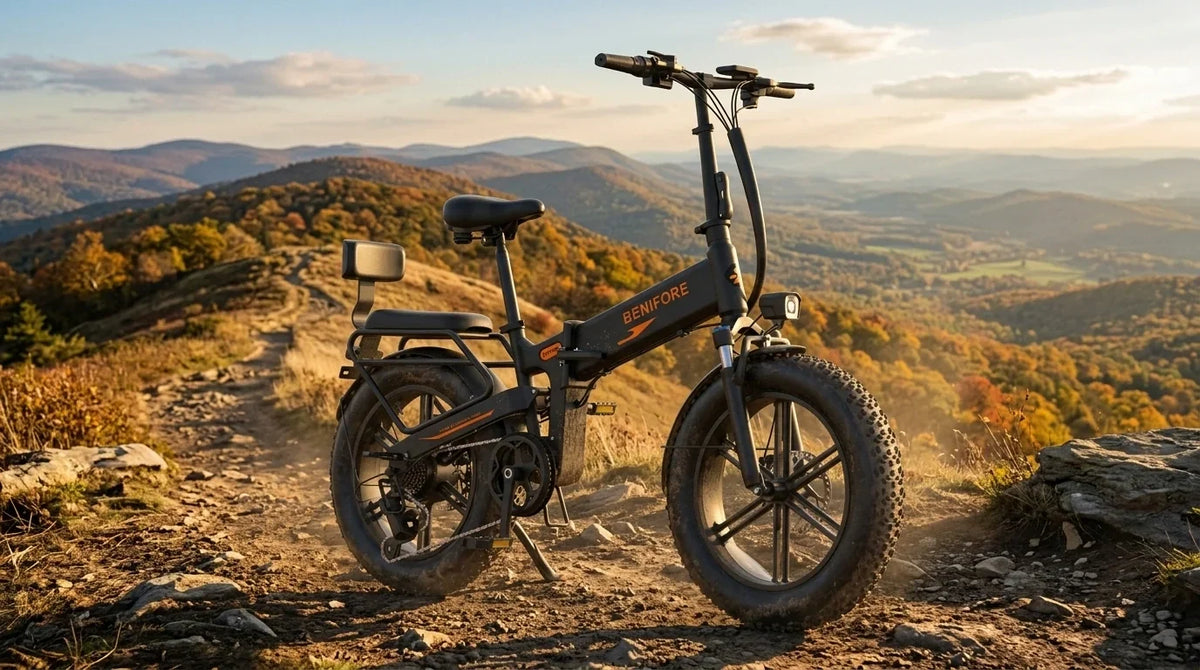
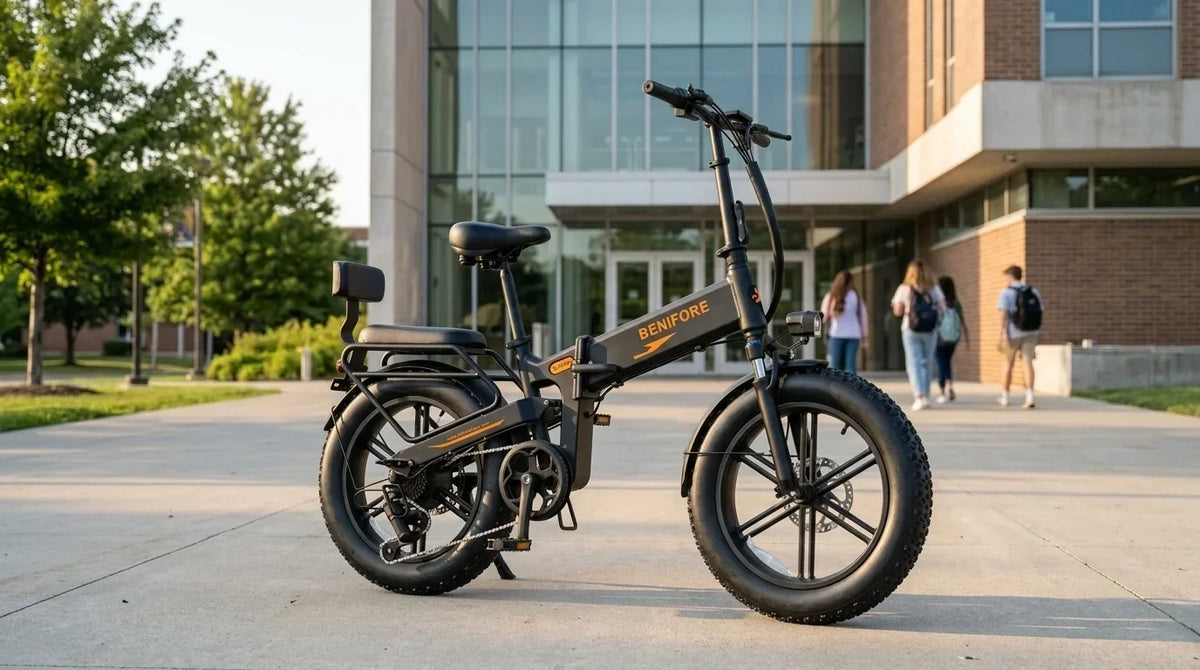
Some utility-focused e-bikes like the Benifore X1T PRO use:
- 20×4.0 fat tire platform
- full suspension system
- high torque motor output
The goal is not to maximize efficiency on perfect roads.
It is to maintain:
- control on broken pavement
- stability under load
- consistent ride feel across mixed terrain
This type of setup fits riders who deal with unpredictable city conditions rather than clean bike lanes.
Who actually benefits from fat tire e-bikes?
Fat tire e-bikes make the most sense for riders who:
- ride in mixed road conditions
- deal with potholes or rough pavement
- carry cargo regularly
- want more stability than speed optimization
They are less ideal for riders who:
- only ride on smooth bike paths
- prioritize maximum efficiency over comfort
- want a lightweight folding setup
Final takeaway
Fat tire e-bikes are not “better” or “worse” than standard tire bikes.
They are simply optimized for a different reality.
- standard tires → efficiency and light handling
- fat tires → stability and real-world forgiveness
In real city riding, the advantage often goes to the bike that stays stable when the road is not perfect
Share: