




An electric bike does not have to be used for long-distance adventures to be useful.
For many riders, some of the most valuable eBike trips are simple everyday errands:
Going to the grocery store.
Picking up a few things from a local shop.
Visiting a coffee shop.
Getting to the post office.
Meeting a friend.
Running a quick appointment.
Driving less for short neighborhood trips.
These journeys may only take a few miles, but they happen frequently. That makes practicality more important than impressive specifications alone.
A good electric bike for errands should be comfortable enough for repeated short trips, powerful enough for everyday roads, easy to control in stop-and-go situations, and capable of carrying the items you actually need.
This guide explains what to look for when choosing an electric bike for errands and how to evaluate range, storage, comfort, tires, motor performance, and overall practicality.
Why Use an Electric Bike for Everyday Errands?
Many daily trips are relatively short.
A destination may be only:
- 1 mile away
- 2 miles away
- 3 miles away
- 5 miles away
Driving a car for every short trip can be inconvenient.
You may need to:
- Start the car
- Find parking
- Deal with traffic
- Walk from the parking space
- Spend money on fuel
An eBike can provide another option for suitable trips.
You can ride directly from your home to the destination without dealing with many of the inconveniences associated with short car journeys.
For riders who already own an eBike, this can turn the bike from an occasional recreational product into a regular part of everyday transportation.
What Makes a Good Errand eBike?
The best eBike for errands is not necessarily the one with the highest top speed.
Instead, everyday practicality usually comes from a combination of:
- Comfortable riding position
- Reliable motor assistance
- Sufficient battery capacity
- Useful carrying capacity
- Stable tires
- Good braking
- Easy starting and stopping
- Appropriate frame design
- Weather and road versatility
An eBike that performs well on a 2-mile grocery trip may need a different set of priorities from a bike designed primarily for weekend trail riding.
How Far Do You Need to Go?
Before buying an eBike for errands, think about your actual weekly routes.
Make a list of your common destinations.
For example:
Home → Grocery Store: 2.5 miles
Home → Coffee Shop: 1.5 miles
Home → Pharmacy: 3 miles
Home → Hardware Store: 4 miles
Then consider the round trip.
A 3-mile destination is not a 3-mile eBike trip.
It is approximately:
3 miles there + 3 miles back = 6 miles
If you make multiple stops during the same ride, the total distance increases further.
Why Real-World Range Matters
Manufacturers often publish a maximum range figure.
However, real-world range depends on many variables.
These can include:
- Rider weight
- Cargo
- Speed
- Riding mode
- Terrain
- Wind
- Temperature
- Tire pressure
- Stop-and-go riding
- Battery condition
The Benifore X1T PRO is rated for:
Up to 65 miles of range
This provides substantial range potential for many everyday trips.
However, the maximum figure should not be interpreted as a guaranteed distance for every rider or every route.
A rider carrying heavy cargo through hills at high speed may experience very different energy consumption from a rider traveling lightly on flat roads.
How Many Errands Can You Combine Into One Ride?
One of the advantages of using an eBike for errands is combining several trips.
Instead of making separate journeys:
Home → Store → Home
you can potentially plan:
Home → Grocery Store → Pharmacy → Coffee Shop → Home
This can make the eBike more useful as a practical transportation tool.
The key is to think about the entire route before leaving.
Check:
- Total distance
- Elevation
- Weather
- Traffic
- Parking or locking options
- Cargo space
A little planning can turn a simple bike ride into an efficient multi-stop trip.
Storage Is One of the Most Important Features
If you are buying an eBike specifically for errands, storage deserves more attention than it usually receives.
A bike may be excellent to ride but inconvenient if you have nowhere to put your belongings.
Depending on your needs, you may want space for:
- Groceries
- Backpack
- Small packages
- Clothing
- Personal items
- Work equipment
- Shopping bags
Storage can be provided through different accessories, including:
- Rear racks
- Baskets
- Panniers
- Front bags
- Handlebar bags
- Backpacks
Choose a solution that does not interfere with steering, braking, or safe control of the bike.
How Much Can You Carry?
This is where total load capacity becomes important.
The bike needs to support more than just the rider.
Consider:
Rider + Cargo + Accessories
If the rider weighs 200 lbs and carries 25 lbs of groceries and equipment, the bike is already handling approximately:
225 lbs
Additional accessories add more weight.
For riders who frequently carry groceries or other items, a higher-capacity eBike can provide more flexibility.
The Benifore X1T PRO has a rated load capacity of:
Up to 400 lbs
This provides substantial overall payload capacity.
That does not mean riders should treat the entire 400-lb figure as available cargo space.
The combined rider, passenger where applicable, and cargo must remain within the manufacturer's stated limit.
Grocery Shopping With an Electric Bike
Grocery shopping is one of the most practical examples of using an eBike for errands.
But groceries are different from a backpack.
You may suddenly have:
- Milk
- Drinks
- Canned food
- Produce
- Household items
Weight can add up quickly.
Before buying an eBike for grocery trips, think about how you will carry these items.
A secure rack and appropriate cargo accessories can make a major difference.
The goal is to keep the weight:
Low, balanced, and secure.
Why Weight Distribution Matters
Imagine putting all your groceries into one large bag hanging from one side of the handlebars.
The bike may feel unbalanced.
Steering can become less predictable.
Instead, distributing weight properly can help maintain a more natural riding feel.
Cargo should not interfere with:
- Brakes
- Wheels
- Pedals
- Chain
- Suspension
- Rider movement
Never allow loose bags to hang close to moving components.
Can You Carry Groceries on an eBike?
Yes, many riders use eBikes for grocery trips, but the carrying method matters.
A grocery bag hanging from the handlebars is very different from properly secured cargo.
For regular grocery trips, consider a purpose-designed cargo solution.
Useful options can include:
Rear rack
Good for bags and larger items when properly secured.
Panniers
Useful for keeping weight lower and distributed around the rear of the bike.
Basket
Convenient for items that need to be accessed quickly.
Backpack
Simple for lighter loads, although carrying heavy items on your back may be less comfortable.
The best option depends on the type and amount of cargo you normally carry.
Why Comfort Matters for Short Trips
It is easy to assume that comfort only matters on long rides.
It does not.
If you use an eBike for errands several times a week, you may spend many hours on the bike over the course of a month.
A comfortable riding position can make those repeated trips more enjoyable.
Look for:
- Comfortable saddle
- Natural handlebar position
- Stable frame
- Appropriate suspension
- Suitable tire pressure
The goal is not luxury.
The goal is making everyday riding easy enough that you actually want to use the bike.
Full Suspension for Everyday Roads
City roads are not always smooth.
You may encounter:
- Potholes
- Cracked pavement
- Speed bumps
- Uneven sidewalks
- Road repairs
- Rough shoulders
The Benifore X1T PRO features:
Full suspension
This can help absorb impacts from uneven surfaces and make mixed road conditions more comfortable.
However, suspension does not mean riders should intentionally hit potholes at speed.
Good riding technique still matters.
Why Tire Size Matters for Errands
The X1T PRO uses:
20×4.0 fat tires
Wide tires can provide a stable feel across different surfaces.
That can be useful for everyday riding where conditions change from one street to another.
A typical errand route may include:
Smooth pavement → rough pavement → driveway → parking area → mixed surface
A versatile tire setup can make these transitions easier to manage.
Stop-and-Go Riding
Errand riding is often different from recreational riding.
You may frequently:
- Start
- Stop
- Slow down
- Turn
- Wait
- Start again
This makes motor response important.
The X1T PRO uses a:
1500W peak motor
with:
90Nm torque
The combination provides strong motor capability for everyday acceleration and demanding riding conditions.
Still, riders should use smooth acceleration rather than treating every intersection like a race start.
Why Smooth Acceleration Is Better for Errands
Fast acceleration can feel exciting.
But for everyday transportation, controlled acceleration is usually more useful.
Smooth starts can help with:
- Passenger comfort
- Cargo stability
- Battery efficiency
- Bike control
- Pedestrian awareness
If you are carrying groceries, aggressive acceleration can also cause unsecured items to move or fall.
For daily errands, predictable control matters more than maximum acceleration.
Battery Size for Daily Errands
The X1T PRO uses a:
48V 20Ah battery
This provides approximately:
960Wh of nominal energy capacity
For many riders, this is more than enough energy for normal short-distance errands.
But battery planning should still account for unexpected situations.
You may decide to:
- Make an additional stop
- Take a longer route
- Ride against strong wind
- Encounter a hill
- Spend more time riding than expected
Having additional battery capacity can provide a useful margin.
Should You Charge an eBike After Every Errand?
Not necessarily.
If your trip is only a few miles and the battery remains well charged, you may not need to recharge immediately.
However, if you ride frequently, developing a charging routine can help ensure the bike is ready when you need it.
For example:
After longer rides → recharge
Before an unusually long day → check battery
Before multiple errands → confirm sufficient charge
The important thing is avoiding situations where you unexpectedly run low on battery far from home.
Electric Bike for Errands vs Car
An eBike will not replace a car for every trip.
That is not the point.
A car remains useful for:
- Large shopping trips
- Long-distance travel
- Heavy cargo
- Multiple passengers
- Bad weather
- Situations requiring enclosed transportation
An eBike can complement a car by handling suitable short trips.
For some households, this can reduce the number of times the car is needed for very short journeys.
Electric Bike for Errands vs Traditional Bicycle
A traditional bicycle can also be excellent for short trips.
The difference is motor assistance.
With an eBike, the rider can receive assistance when:
- Starting
- Climbing
- Carrying cargo
- Riding against wind
- Returning home after a long day
This can make the trip feel more accessible, particularly when the rider does not want to arrive at the destination exhausted.
What About Parking?
Parking is one of the practical advantages of an eBike for short trips.
Instead of searching for a full-size parking space, riders may be able to use an appropriate bike parking location.
However, always follow local rules and use a secure locking method.
A quality lock is an important part of using an eBike as everyday transportation.
Security Matters More When the Bike Becomes Your Daily Transportation
An eBike used only on weekends may spend much of its time at home.
An eBike used for errands may be left outside stores, restaurants, or other destinations.
That means security becomes part of the ownership experience.
Consider:
- Where you will park
- How long the bike will be unattended
- Whether secure bike parking is available
- What type of lock you use
- Whether the destination permits eBike parking
A practical eBike is only useful if you can confidently take it where you need to go.
Weather and Everyday Errands
Weather can change the practicality of an eBike.
Before leaving, consider:
- Rain
- Strong wind
- Extreme heat
- Cold temperatures
- Road conditions
If the weather becomes unsafe, using another form of transportation may be the better choice.
When riding in wet conditions, remember that braking and traction can change.
Reduce speed and allow more stopping distance.
What Should You Wear for Errand Riding?
You do not need specialized cycling clothing for every short trip.
For casual errands, many riders prefer normal comfortable clothing.
However, useful items can include:
- Helmet
- Sunglasses
- Gloves
- Comfortable shoes
- Weather-appropriate layers
If you ride at night, visibility becomes particularly important.
Use appropriate lighting and reflective equipment.
Riding at Night for Errands
An evening grocery trip or late appointment can easily turn into a nighttime ride.
Make sure your bike has appropriate lighting.
Before riding after dark, check:
- Front light
- Rear light
- Reflective elements
- Battery level
- Route visibility
Avoid assuming that street lighting alone makes you visible.
The goal is both:
Seeing the road
and
Being seen by others.
How to Plan a Better Errand Route
The shortest route is not always the best route.
You may prefer a route with:
- Lower traffic
- Better pavement
- Bike-friendly streets
- Fewer difficult intersections
- Safer crossings
- Less demanding hills
A route that is one mile longer may provide a much better riding experience.
When using an eBike regularly, route quality can become more important than absolute distance.
One Trip Instead of Several
One of the biggest practical advantages of an eBike is combining errands.
Instead of:
Home → Store → Home
then later:
Home → Pharmacy → Home
you may be able to combine them:
Home → Pharmacy → Store → Home
This can save time and make better use of the bike.
It also changes the way you think about local transportation.
The bike is no longer just recreational equipment.
It becomes part of your weekly routine.
Building an Errand Routine Around an eBike
Start with simple trips.
Week 1
Use the bike for one short local errand.
Week 2
Add another destination.
Week 3
Try combining two stops.
Week 4
Use the bike for a longer multi-stop route.
This gives you a chance to learn:
- Battery consumption
- Real travel time
- Cargo requirements
- Best routes
- Parking options
Over time, you will know exactly which trips are better by eBike and which are better by car.
Is a High-Speed eBike Necessary for Errands?
Not necessarily.
For everyday errands, practical control is more important than maximum speed.
The X1T PRO has a:
35 MPH top speed
but riders should choose their actual speed according to:
- Local regulations
- Road conditions
- Traffic
- Visibility
- Pedestrian activity
- Cargo
- Weather
A high top-speed specification provides performance potential.
It does not mean every trip should be ridden at maximum speed.
How Load Capacity Helps Everyday Riders
Load capacity becomes particularly useful when an eBike is used for practical transportation.
Consider everything that may be on the bike:
Rider
Clothing
Backpack
Groceries
Accessories
Cargo
The X1T PRO is rated for:
Up to 400 lbs load capacity
This gives riders a wider margin for everyday carrying needs.
Again, the manufacturer's maximum should always be treated as a total system limit rather than a target.
Choosing an eBike for Everyday Errands
Before buying, ask yourself:
Where will I ride?
Mostly pavement?
Mixed surfaces?
Neighborhood roads?
What will I carry?
Nothing?
Backpack?
Groceries?
Packages?
How far are my normal trips?
2 miles?
5 miles?
10 miles?
Do I have hills?
Flat roads require different motor demands from repeated climbs.
Where will I park?
Home garage?
Bike rack?
Storefront?
How often will I use it?
Once a month?
Several times a week?
Every day?
Your answers will determine which features matter most.
A Practical Errand eBike Checklist
Before purchasing, compare:
☐ Battery capacity
☐ Realistic range
☐ Load capacity
☐ Motor performance
☐ Torque
☐ Tire size
☐ Suspension
☐ Braking
☐ Cargo compatibility
☐ Riding comfort
☐ Security and parking
☐ Local eBike regulations
This approach is more useful than choosing based on a single specification.
Common Mistakes When Buying an eBike for Errands
Mistake 1: Choosing Only by Top Speed
You may rarely need maximum speed for short local trips.
Mistake 2: Ignoring Cargo
If you plan to shop with the bike, storage matters.
Mistake 3: Looking Only at Advertised Range
Real-world range varies.
Mistake 4: Buying More Bike Than You Actually Need
A huge performance specification may not improve a simple 2-mile grocery trip.
Mistake 5: Ignoring Security
An eBike used outside the home needs a reliable locking strategy.
Mistake 6: Forgetting the Return Trip
Always consider total distance.
Mistake 7: Ignoring Local Regulations
eBike rules can vary depending on location.
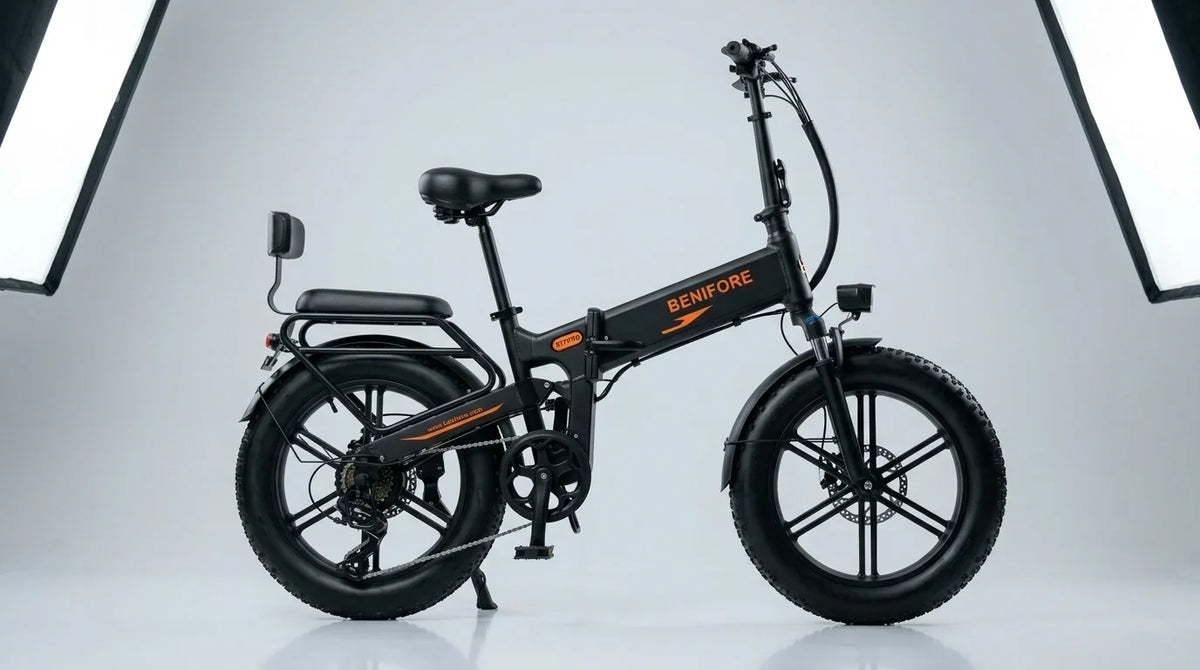
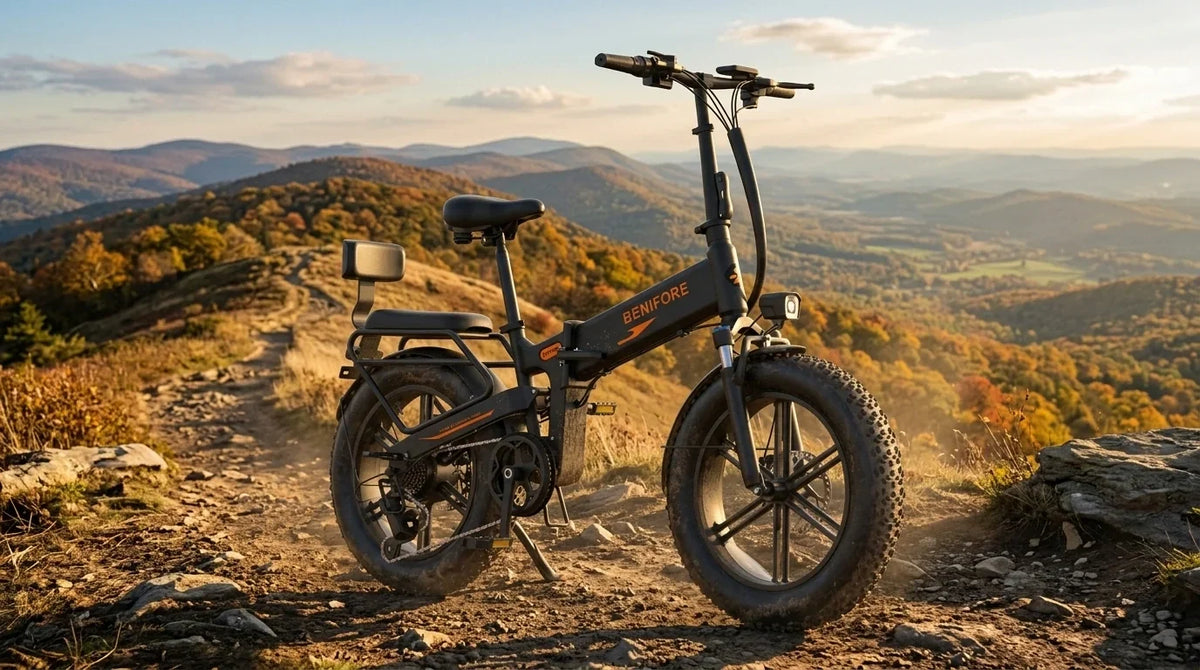
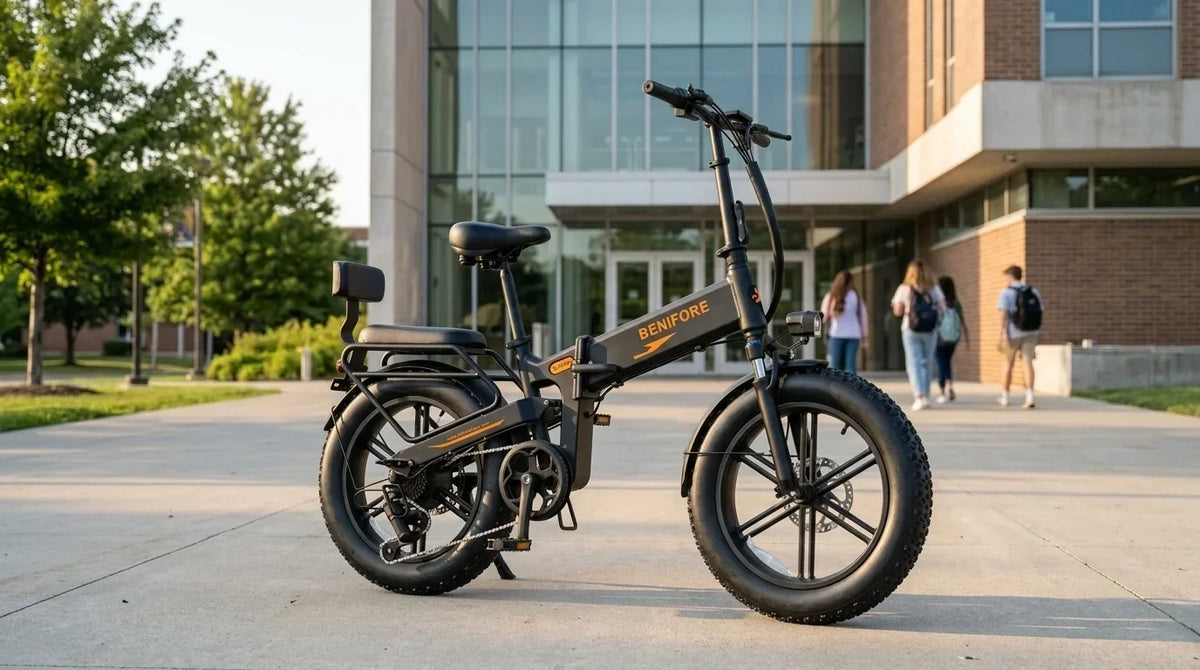
Benifore X1T PRO for Everyday Errands
The Benifore X1T PRO is built around a combination of performance and practical carrying capability.
Its key specifications include:
- 1500W peak motor
- 90Nm torque
- 48V 20Ah battery
- Up to 65 miles of range
- 35 MPH top speed
- 20×4.0 fat tires
- Full suspension
- Up to 400 lbs load capacity
For everyday riders, several of these specifications have direct practical value.
The 48V 20Ah battery provides substantial energy capacity for repeated local trips.
The up to 400 lbs load capacity provides flexibility when carrying the rider and everyday cargo.
The full suspension can help make rough neighborhood roads more comfortable.
The 20×4.0 fat tires provide a stable riding platform across a variety of surfaces.
And the 1500W peak motor with 90Nm torque provides strong assistance when acceleration or terrain demands more from the bike.
The important point is that these specifications should work together rather than being considered separately.
What Is the Best Electric Bike for Errands?
There is no single answer for every rider.
The right choice depends on what your errands actually look like.
If your trips are short and flat, you may prioritize comfort and convenience.
If you regularly carry groceries, load capacity and cargo options become more important.
If your neighborhood has hills, motor performance and torque become more relevant.
If your roads are rough, tire design and suspension deserve more attention.
The best eBike is ultimately the one that fits the transportation problems you actually have.
Frequently Asked Questions
What is the best electric bike for running errands?
A good errand eBike should offer comfortable riding, sufficient battery capacity, practical load capacity, reliable braking, and a setup suitable for your local roads.
Can I use an electric bike for grocery shopping?
Yes. With appropriate cargo equipment, an eBike can be practical for carrying groceries and other small purchases.
How much cargo can an eBike carry?
It depends on the manufacturer's load rating. Always calculate the combined weight of the rider, cargo, accessories, and passenger if passenger use is permitted.
Is a 48V 20Ah battery good for everyday errands?
A 48V 20Ah battery provides substantial energy capacity and can be useful for repeated daily trips. Actual range depends on riding conditions.
Do fat tires make an eBike better for city errands?
Fat tires can provide a stable feel and handle a variety of surfaces, although they are only one part of overall bike performance.
Is suspension necessary for an errand eBike?
Not necessarily, but suspension can improve comfort on potholes, cracked pavement, rough roads, and other uneven surfaces.
Should I buy an eBike with a high top speed for errands?
Not necessarily. Most short trips are better evaluated based on control, comfort, range, load capacity, and local regulations rather than maximum speed.
Can an eBike replace a car for errands?
For some short local trips, it can. However, cars remain more practical for large loads, long distances, multiple passengers, and certain weather conditions.
How do I carry groceries on an eBike?
Use a secure cargo solution such as an appropriate rack, pannier, basket, or bag. Keep cargo balanced and away from moving components.
How often should I charge an eBike used for errands?
It depends on how much you ride. Check the battery before longer days and establish a charging routine that keeps the bike ready for your normal trips.
Final Thoughts
The most useful eBike is not always the one with the biggest numbers.
For everyday errands, practicality matters.
You want a bike that is:
Comfortable enough to use regularly.
Powerful enough for your roads.
Capable of carrying what you need.
Equipped with enough battery for your routine.
Stable across different surfaces.
Easy to control in everyday traffic.
The Benifore X1T PRO combines a 1500W peak motor, 90Nm torque, 48V 20Ah battery, up to 65 miles of range, 35 MPH top speed, 20×4.0 fat tires, full suspension, and up to 400 lbs load capacity into a platform that can handle more than occasional recreational rides.
For riders looking to replace some short car trips with an eBike, the real advantage may not be how fast the bike can go.
It may simply be how often you can say:
“I can just ride there.”
Share: