




If you live somewhere with hills, you already know one thing:
Speed doesn’t matter as much as people think.
A bike can advertise high MPH, but when the road tilts upward, everything comes down to a single factor:
👉 torque
That’s what actually decides whether a bike climbs smoothly or starts slowing down halfway up.
Why hills expose weak e-bikes
Flat roads hide a lot of differences between bikes.
Hills don’t.
On an incline, a few things happen at the same time:
- the motor has to work harder just to maintain speed
- battery drain increases quickly
- low-torque systems start to feel “heavy” or strained
- rider input becomes more important
This is where underpowered bikes usually feel inconsistent.
⚙️ What actually matters for hill riding
Instead of focusing on a single spec, hill performance comes from a combination of factors:
Motor torque (most important)
Real climbing ability usually starts to feel solid around 80Nm and above.
Motor power output
Higher wattage helps maintain speed under load, especially on longer climbs.
Tire grip
Wider tires help maintain traction when the surface is uneven or loose.
Braking control
Descending matters just as much as climbing—stability on the way down is often overlooked.
🚴 Real-world hill performance setup
A well-balanced hill-capable e-bike is not just about raw power—it’s about keeping control under load.
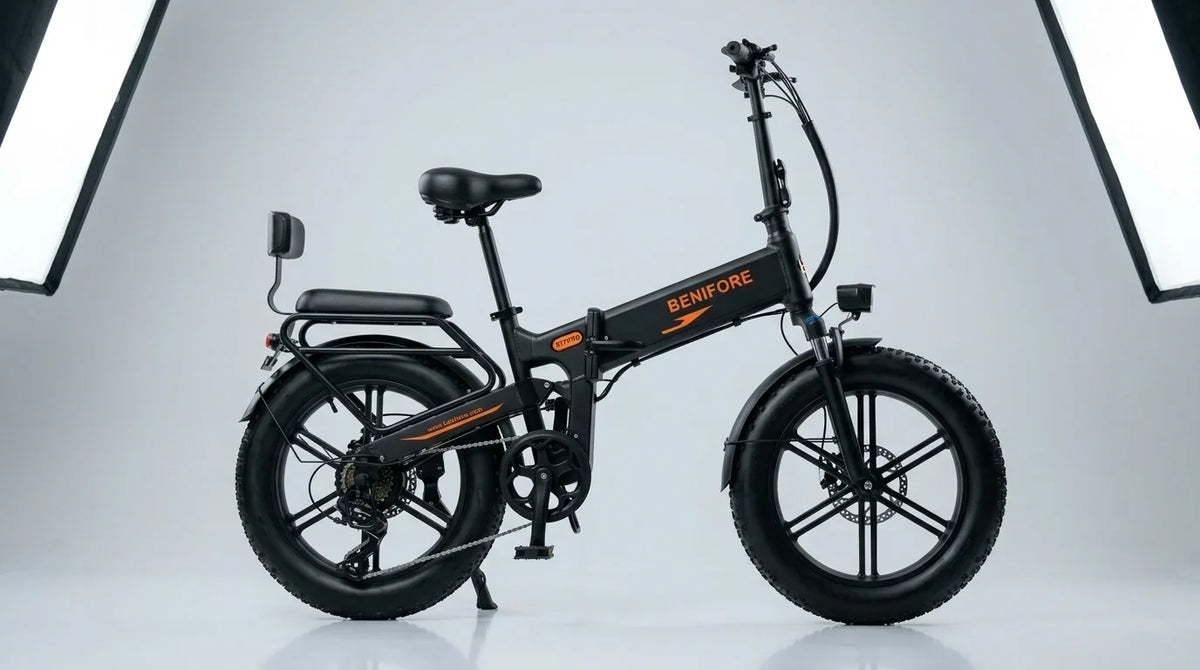
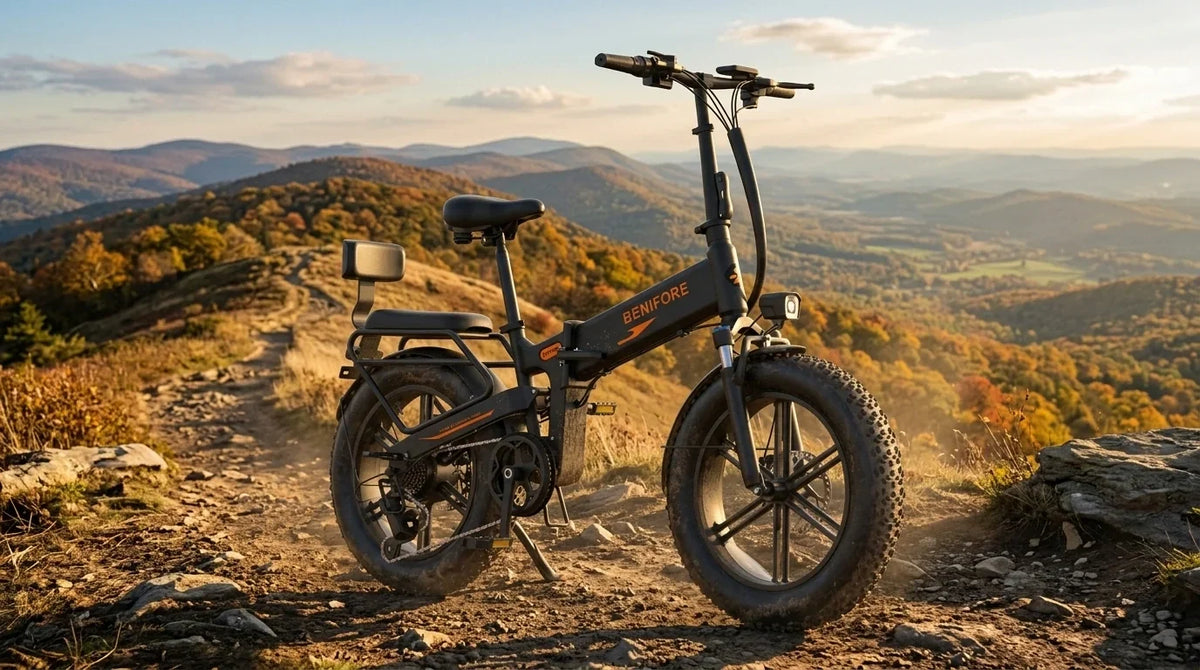
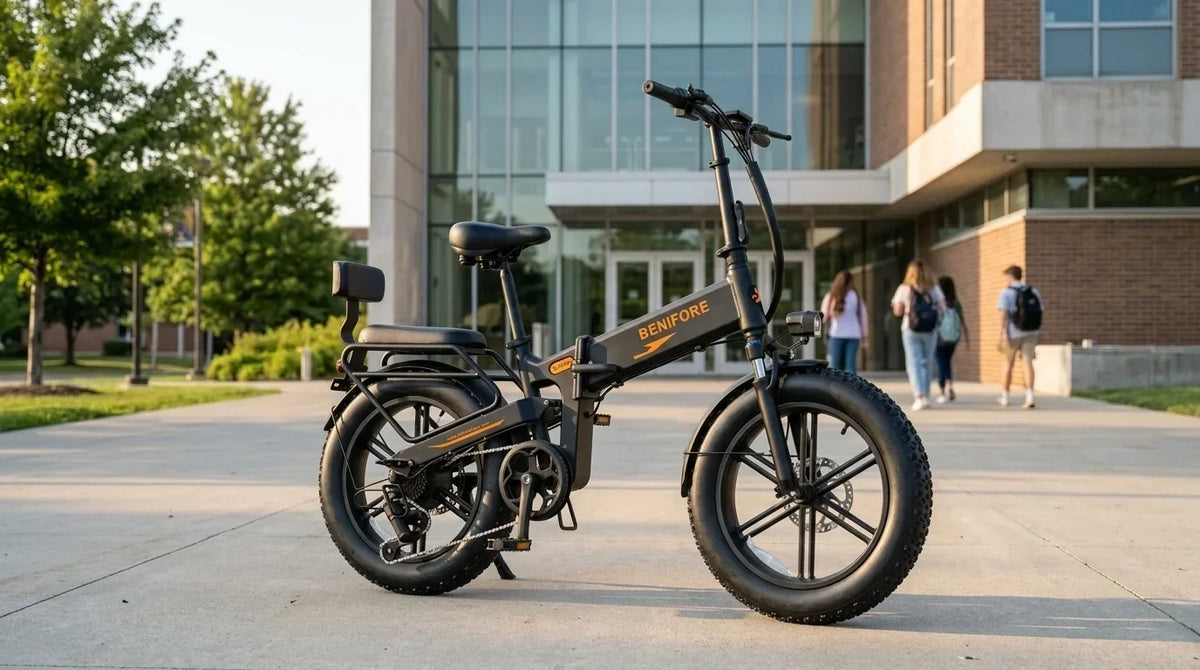
Benifore X1T PRO is built around this idea with:
- 1500W peak motor output for sustained climbing power
- 90Nm torque for low-speed hill control
- fat tire platform for better road grip
- full suspension for stability on uneven inclines
Instead of feeling like the bike is “pushing hard,” the ride stays more controlled even when the slope increases.
⚡ What changes in real riding
Compared to lower-torque e-bikes, the difference on hills is noticeable in a few ways:
- the bike holds speed more consistently on climbs
- less need for full throttle to maintain momentum
- smoother transition when terrain changes mid-climb
- more predictable handling when descending
It doesn’t feel like a dramatic “power boost”—it feels like less effort is required to do the same climb.
Common mistake most buyers make
A lot of people still choose based on top speed.
But in hilly areas, top speed is almost irrelevant because:
- you rarely reach max speed uphill
- control matters more than acceleration spikes
- sustained torque is what keeps the ride usable
A fast bike that can’t climb well is frustrating in daily use.
Final takeaway
For hilly terrain, the real hierarchy looks like this:
- low torque bikes → struggle on sustained climbs, require more rider effort
- high torque bikes → maintain smoother, more controlled climbing performance
👉 In real-world riding, torque matters more than top speed, especially when the road stops being flat
Share: