




Riding an electric bike on flat streets can feel completely different from riding the same bike on hills.
A short neighborhood ride may be easy on level pavement, while a route with repeated climbs can quickly expose the differences between eBike motors, batteries, tires, gearing, rider position, and overall bike design.
That is why choosing an electric bike for hilly roads requires more than looking at the advertised top speed.
For riders who regularly deal with hills, the more useful questions are:
How well does the bike climb?
How does it perform when starting on an incline?
How much battery does climbing consume?
Can the bike maintain a comfortable riding speed without excessive motor strain?
This guide explains what to look for when choosing an electric bike for hilly roads, how hills affect motor performance and battery consumption, and which specifications deserve the most attention.
Why Hills Are Different From Flat Roads
On a flat road, an eBike mainly needs to overcome:
- Rolling resistance
- Air resistance
- Bike weight
- Rider weight
On a hill, gravity becomes a much larger factor.
The steeper the road, the more force is required to move the combined weight of:
Rider + Bike + Cargo
upward.
This is why an eBike that feels powerful on flat pavement may feel very different when climbing a long or steep hill.
For riders living in hilly neighborhoods, motor performance should therefore be evaluated based on climbing needs rather than maximum speed alone.
What Makes a Good Electric Bike for Hills?
There is no single specification that determines hill-climbing performance.
A capable hill-climbing eBike is the result of several systems working together.
Important factors include:
- Motor torque
- Motor power
- Battery voltage
- Battery capacity
- Rider and bike weight
- Tire pressure
- Gearing
- Riding mode
- Terrain
- Gradient
- Braking system
Among these, torque and overall motor performance deserve particular attention.
Torque vs Power for Hill Climbing
Power and torque describe different aspects of motor performance.
Torque describes rotational force.
Power describes the rate at which work can be performed.
When riding uphill from a low speed, torque can be especially noticeable.
For example, starting from a stop at the bottom of a steep residential street places a different demand on the motor than maintaining speed on flat pavement.
This is one reason riders who frequently encounter hills should not evaluate an eBike solely by its advertised top speed.
Why Low-Speed Climbing Performance Matters
Many hills are encountered at relatively low speeds.
A rider may approach a steep section, slow down, and then need the motor to continue providing useful assistance.
This is different from cruising at high speed on flat pavement.
A good hill-oriented eBike should therefore provide useful motor assistance throughout the speed range that the rider actually uses.
This is especially important on:
- Residential hills
- Long inclines
- Mountain roads
- Steep driveways
- Rolling terrain
- Stop-and-go uphill routes
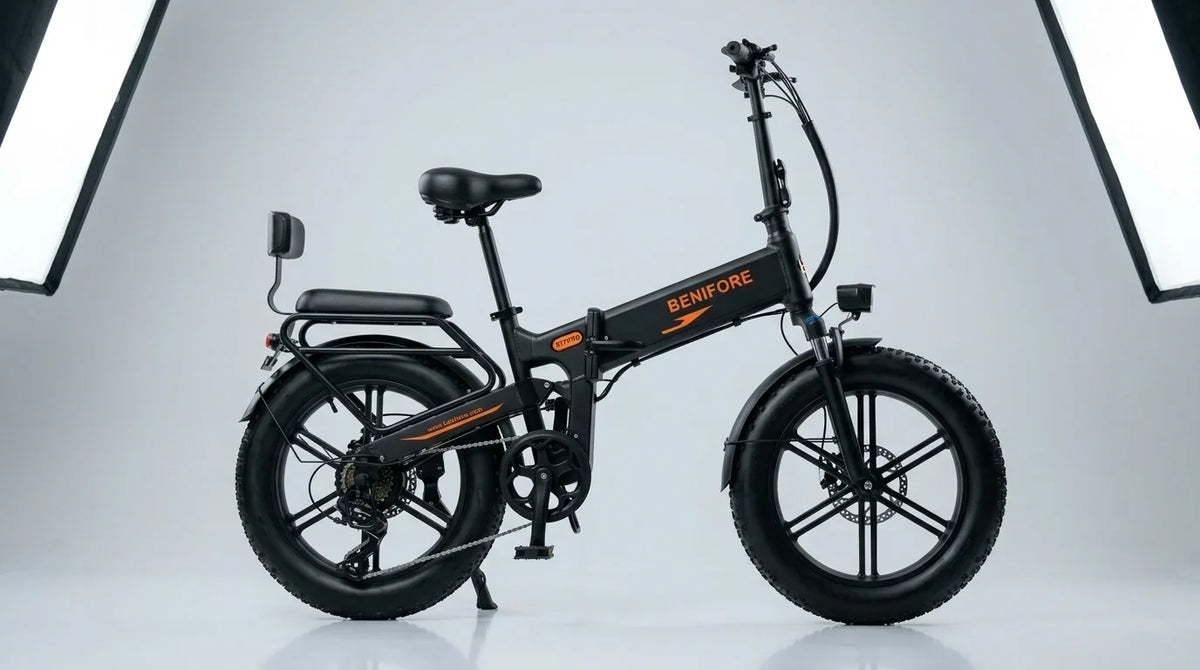
The Benifore X1T PRO Motor
The Benifore X1T PRO uses a:
1500W peak motor
and provides:
90Nm of torque
These specifications give the X1T PRO strong motor capability for demanding riding situations.
The 90Nm torque figure is particularly relevant when considering acceleration and climbing.
However, no motor specification should be interpreted as a guarantee that the bike will climb every hill at the same speed.
Actual performance depends on:
- Rider weight
- Gradient
- Surface
- Battery charge
- Temperature
- Tire pressure
- Riding mode
- Wind
How Steep Is Too Steep for an eBike?
There is no universal hill percentage that applies to every electric bike.
A hill's difficulty depends on much more than the slope.
Consider two roads:
Hill A: 8% grade for 100 feet
Hill B: 8% grade for half a mile
The percentage is the same, but the riding experience is very different.
The longer climb requires the motor and battery to provide assistance for much longer.
This is why riders should consider both:
Grade + Distance
when evaluating a hilly route.
What Does Road Grade Mean?
Road grade describes how much elevation changes relative to horizontal distance.
For example:
A 10% grade means the elevation rises approximately 10 feet for every 100 feet of horizontal distance.
A steeper percentage means a steeper road.
Understanding grade can help riders evaluate whether their typical routes are relatively flat or demanding.
Mapping applications can also help identify elevation changes before planning a longer ride.
Why Battery Capacity Matters on Hills
Hill climbing generally requires more energy than riding the same distance on flat terrain.
The motor has to perform additional work against gravity.
The Benifore X1T PRO uses:
48V 20Ah battery
This equals approximately:
960Wh
of nominal battery energy.
A substantial battery can provide a useful energy reserve for riders who regularly encounter hills.
However, battery capacity does not translate directly into a fixed number of miles.
Actual consumption changes according to riding conditions.
Why Hilly Routes Can Reduce Range
Suppose two riders travel the same distance.
One rides mostly on flat roads.
The other climbs several long hills.
The second rider may use substantially more battery.
Reasons include:
- More motor assistance
- Higher energy demand
- More acceleration
- Greater load
- Increased use of higher assistance levels
That is why an advertised maximum range should not be treated as a guaranteed range for hilly riding.
The X1T PRO is rated for:
Up to 65 miles of range
but actual range varies with real-world riding conditions.
Rider Weight and Hill Climbing
The total weight being moved uphill has a direct effect on the amount of work required.
The system includes:
Rider + Bike + Cargo
A heavier total load requires more energy to climb the same hill.
This does not mean heavier riders cannot enjoy hilly eBike riding.
It means that riders should choose a bike with specifications appropriate for their expected load.
The X1T PRO provides:
Up to 400 lbs load capacity
which gives riders substantial payload flexibility.
Why Tire Pressure Matters on Hills
Tire pressure affects rolling resistance and handling.
If tires are significantly underinflated, rolling resistance can increase.
If they are excessively inflated, comfort and traction can be affected depending on the surface.
For hill riding, the goal is to maintain the manufacturer's recommended tire pressure while considering the riding conditions.
The X1T PRO uses:
20×4.0 fat tires
which provide a wide contact patch and are suitable for a range of road and mixed-surface conditions.
Fat Tires on Hilly Roads
Fat tires are often associated with off-road riding, but they can also be useful on rough or uneven paved roads.
Their wider profile can provide a stable, planted feel.
This can be useful when a hill includes:
- Cracked pavement
- Gravel
- Loose material
- Uneven shoulders
- Rough residential roads
However, fat tires do not magically make a hill easier.
Motor capability, gearing, rider weight, and riding technique remain important.
Gearing and Hill Climbing
Traditional bicycles often rely heavily on gearing when climbing.
An appropriate lower gear allows the rider to maintain a manageable pedaling cadence while climbing.
On an eBike, the motor provides additional assistance, but gearing can still affect how the rider contributes to the ride.
For riders who want to pedal actively rather than rely entirely on the motor, understanding the bike's drivetrain can be useful.
A lower gear can make steep sections more manageable for the rider.
Should You Pedal on Hills?
Even with a powerful electric motor, pedaling can be useful on climbs.
Pedaling can:
- Reduce motor demand
- Improve efficiency
- Help maintain momentum
- Extend battery range
- Make climbing feel smoother
This does not mean riders need to pedal aggressively.
A comfortable, consistent effort can work well with motor assistance.
The best results often come from using the motor and rider input together.
Why Momentum Matters
Momentum can make a noticeable difference on moderate hills.
Approaching a climb at a reasonable speed can allow the bicycle to carry some momentum into the incline.
However, riders should never prioritize momentum over safety.
If visibility is poor, traffic is present, or the hill is particularly steep, controlled speed is more important.
The objective is not to attack every hill at maximum speed.
The objective is to maintain stable, predictable control.
Starting From a Stop on a Hill
Starting on an incline can be one of the most demanding situations for an eBike.
The bike must immediately overcome gravity while accelerating from zero.
A few habits can help:
- Select an appropriate assistance level.
- Use an appropriate gear if available.
- Position yourself securely.
- Apply smooth pedal pressure.
- Avoid unnecessarily aggressive acceleration.
A strong motor can make this situation easier, but technique still matters.
Long Hills vs Short Hills
Not all hills place the same demands on an eBike.
Short, steep hill
Requires strong initial motor assistance and torque.
Long, moderate hill
Places greater sustained demand on the motor and battery.
Rolling terrain
Requires repeated acceleration and climbing.
Mountain route
May combine steep grades, long climbs, descents, rough surfaces, and changing weather.
This is why riders should think about the entire route rather than asking only:
"Can this eBike climb a hill?"
How Hills Affect Braking
Going uphill is only half of the equation.
Eventually, the bike may need to come back down.
Descending a hill increases the importance of:
- Braking
- Tire grip
- Steering control
- Rider positioning
- Road awareness
A rider should not assume that a bike that climbs well will automatically feel safe at high speed downhill.
Good hill riding includes both climbing and descending control.
Why Downhill Speed Should Be Controlled
Gravity can quickly increase speed on a descent.
This can become particularly noticeable with:
- Heavier riders
- Passengers
- Cargo
- Long downhill sections
Instead of waiting until the bottom to brake heavily, use controlled braking to manage speed throughout the descent.
Avoid sudden steering movements.
Keep your attention on the road surface ahead.
Full Suspension on Hilly Roads
The Benifore X1T PRO features:
Full suspension
This can be useful when a hilly route includes uneven pavement, potholes, rough transitions, or mixed surfaces.
Suspension can help reduce the impact transmitted through the bike when riding over uneven terrain.
It can also contribute to a more comfortable riding position.
However, suspension should not be used as a reason to maintain excessive speed over rough terrain.
Hills and Electric Bike Comfort
A good hill-climbing eBike is not just about getting to the top.
The entire ride matters.
A rider may spend:
- 10 minutes climbing
- 5 minutes descending
- Several minutes navigating corners
- Additional time stopping and restarting
Comfort, control, and stability therefore remain important throughout the route.
A powerful motor is useful, but it should be part of a balanced riding system.
How to Prepare an eBike for Hilly Routes
Before a longer hilly ride, check:
Battery
Make sure the battery is sufficiently charged.
Tires
Check pressure and inspect for visible damage.
Brakes
Confirm that braking feels normal.
Chain and drivetrain
Make sure everything operates smoothly.
Suspension
Check for obvious issues.
Controls
Confirm that the display and assistance controls are working correctly.
A few minutes of preparation can prevent unnecessary problems halfway through a ride.
How to Save Battery on Hills
You do not need to use maximum assistance on every climb.
Instead:
Maintain a steady pace
Avoid unnecessary acceleration.
Pedal when practical
Even moderate rider input can help.
Choose an appropriate assistance level
Use only as much motor assistance as needed.
Avoid unnecessary weight
Extra cargo means additional work.
Plan your route
If possible, choose smoother and less demanding roads.
Battery management is especially useful on routes with multiple climbs.
Should You Use Maximum Assistance on Every Hill?
Not necessarily.
Maximum assistance can be useful for a particularly steep section.
But using the highest level continuously can consume more energy.
A more efficient strategy is to adjust assistance according to the terrain.
For example:
Flat road → lower assistance
Moderate incline → moderate assistance
Steeper climb → higher assistance
This approach can help balance performance and battery consumption.
Electric Bike for Hilly Roads vs Flat Roads
The ideal eBike specification can differ depending on where you live.
Mostly flat area
You may place more emphasis on:
- Range
- Comfort
- Efficiency
- Riding position
Rolling terrain
You may want:
- Good motor response
- Useful torque
- Adequate battery capacity
Steep terrain
You should pay greater attention to:
- Torque
- Motor performance
- Battery capacity
- Braking
- Tire grip
- Overall load capacity
This is why there is no single "best eBike" for every rider.
The right choice depends on the environment.
What Should You Look For When Buying an eBike for Hills?
Use this checklist:
Motor performance
Does it provide enough assistance for your terrain?
Torque
Is there enough pulling force for starts and climbs?
Battery
Is there enough energy for your route?
Load capacity
Can the bike support your complete riding load?
Tires
Are they appropriate for your road surfaces?
Brakes
Can you confidently control speed on descents?
Suspension
Will it improve comfort on your typical roads?
Riding position
Can you remain comfortable during longer climbs?
A Practical Hill-Climbing Example
Imagine a rider traveling a 12-mile route.
The route includes:
- 4 miles of relatively flat roads
- 3 miles of rolling terrain
- 2 miles of continuous climbing
- 3 miles of downhill and flat riding
This is very different from a 12-mile flat route.
The rider may use significantly more battery during the 2-mile climb than during several miles of flat riding.
A rider planning this type of route should therefore choose an eBike based on the whole route, not simply the total mileage.
What About Steep Driveways?
Steep driveways can create a surprisingly demanding situation.
The rider may need to start from almost zero speed while climbing immediately.
This is where:
- Motor response
- Torque
- Tire traction
- Rider positioning
- Smooth acceleration
all matter.
If the driveway is extremely steep or slippery, walking the bike may be safer than attempting the climb.
Electric Bike Hill-Climbing Technique
A few simple habits can improve the experience.
Before the hill
Build a comfortable, controlled pace.
During the climb
Maintain a steady cadence.
When the slope increases
Increase assistance as needed.
On very steep sections
Keep your body position stable.
Near the top
Do not suddenly accelerate simply because the slope becomes easier.
Smooth control is more important than speed.
Common Mistakes When Riding an eBike on Hills
Mistake 1: Choosing Based on Top Speed
Top speed does not tell you how effectively a bike handles a climb.
Mistake 2: Ignoring Torque
Torque is particularly relevant during low-speed climbing.
Mistake 3: Assuming Maximum Range Applies to Hills
Real-world range varies significantly with terrain.
Mistake 4: Forgetting About Descents
Braking and control matter just as much as climbing.
Mistake 5: Using Maximum Assistance Constantly
This can consume battery unnecessarily.
Mistake 6: Ignoring Tire Pressure
Tire condition and pressure affect rolling resistance and handling.
Mistake 7: Carrying Too Much Weight
Additional weight increases the demands placed on the motor and battery.
Benifore X1T PRO for Hilly Riding
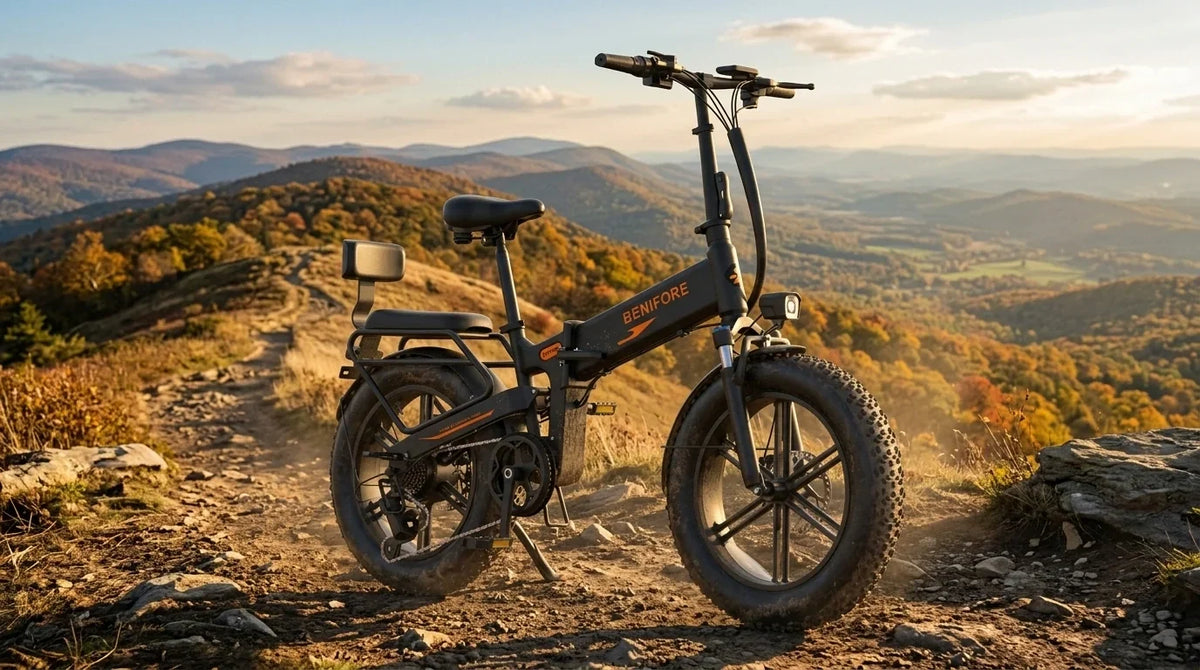
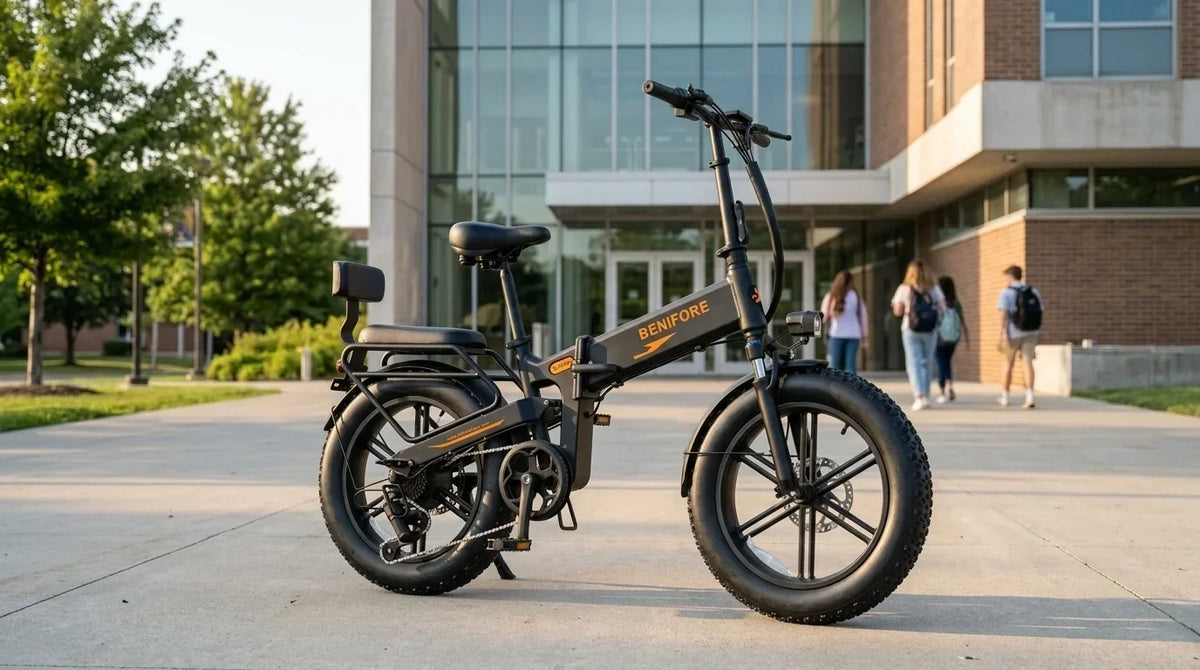
The Benifore X1T PRO has several specifications that are relevant to riders who regularly encounter hills.
Its core specifications include:
- 1500W peak motor
- 90Nm torque
- 48V 20Ah battery
- Up to 65 miles of range
- 35 MPH top speed
- 20×4.0 fat tires
- Full suspension
- Up to 400 lbs load capacity
The 1500W peak motor and 90Nm torque provide strong motor performance for demanding riding situations.
The 48V 20Ah battery provides a substantial energy reserve, while the 20×4.0 fat tires offer a wide contact patch for a variety of road conditions.
Full suspension can also improve comfort on uneven roads.
For riders carrying heavier loads, the up to 400 lbs load capacity provides additional flexibility.
Actual hill-climbing performance will depend on the rider, terrain, slope, surface, battery level, riding mode, and other conditions.
Is a High-Power eBike Always Better for Hills?
Not automatically.
A high-power motor can provide strong assistance, but the complete bike still matters.
Consider two eBikes:
Bike A
- High motor output
- Limited load capacity
- Small battery
- Basic tires
Bike B
- Strong motor
- Useful torque
- Larger battery
- High load capacity
- Full suspension
- Wide tires
For a rider living in a hilly area, Bike B may provide a more balanced overall package.
The best choice is not necessarily the bike with the largest motor number.
It is the bike that matches the rider's actual conditions.
Final Buying Checklist for Hilly Roads
Before purchasing an electric bike for hills, ask:
1. How steep are my regular roads?
2. How long are the climbs?
3. How much do I and my cargo weigh?
4. Does the bike have sufficient load capacity?
5. What torque does the motor provide?
6. Is the battery large enough for my route?
7. Are the tires suitable for my roads?
8. How does the bike handle downhill?
9. Is the suspension appropriate for my terrain?
10. Can I comfortably control the bike throughout the route?
These questions are much more useful than simply comparing top-speed numbers.
Frequently Asked Questions
What is the best electric bike for hilly roads?
The best eBike depends on the rider's weight, hill gradient, distance, terrain, and riding style. Motor performance, torque, battery capacity, braking, tires, suspension, and load capacity are all important.
Is torque important for electric bikes on hills?
Yes. Torque represents rotational force and can be particularly useful during low-speed acceleration and climbing.
Is 1500W enough for hills?
Motor performance depends on many variables, including rider weight, hill gradient, terrain, battery level, and riding mode. A 1500W peak motor can provide strong assistance, but no wattage number guarantees performance on every hill.
Does climbing hills drain an eBike battery faster?
Generally, demanding climbs require more energy than comparable flat riding. Long or repeated climbs can therefore reduce real-world range.
Are fat tires good for hilly roads?
Fat tires can provide a stable and planted feel, particularly on rough or mixed surfaces. They do not, however, determine climbing ability by themselves.
Does rider weight affect hill-climbing performance?
Yes. The motor has to move the combined weight of the rider, bicycle, and any cargo uphill.
Does suspension help on hills?
Suspension can improve comfort and control when a hilly route includes potholes, broken pavement, or uneven surfaces.
Should I pedal while climbing an eBike hill?
Pedaling can help share the workload with the motor, potentially reducing energy consumption and improving the overall riding experience.
Should I use maximum pedal assistance on steep hills?
Higher assistance can be useful when needed, but using maximum assistance continuously can consume more battery. Adjust assistance according to the terrain and riding conditions.
Is descending a hill harder than climbing?
They present different challenges. Climbing requires motor and rider effort, while descending places greater emphasis on speed control, braking, traction, and steering.
Final Thoughts
Hilly roads reveal the differences between electric bikes quickly.
A model that feels perfectly adequate on flat pavement may not provide the same experience when faced with repeated climbs.
For riders who regularly deal with hills, look beyond top speed.
Pay attention to:
Motor performance
Torque
Battery capacity
Load capacity
Tires
Braking
Suspension
Riding position
Real-world terrain
The Benifore X1T PRO combines a 1500W peak motor, 90Nm torque, 48V 20Ah battery, up to 65 miles of range, 20×4.0 fat tires, full suspension, and up to 400 lbs load capacity into a single eBike platform designed for riders who want strong performance and practical versatility.
For hilly riding, the goal is not simply to reach the top as quickly as possible.
It is to climb with consistent assistance, maintain control, manage battery use, and enjoy the ride from the bottom of the hill to the top.
Share: