




If you have been shopping for an electric bike in the United States, you have probably seen terms such as Class 1, Class 2, and Class 3.
At first, the system looks simple.
Three classes.
Three different types of electric bikes.
But the reality is more complicated.
The classification system is based primarily on how the motor assists the rider and the speed at which that assistance stops. State and local regulations can then determine where a particular eBike can be ridden and what rules apply.
That distinction matters.
A bike's advertised motor power, top speed, throttle configuration, pedal assistance, and legal classification are not necessarily the same thing.
This guide explains the three commonly used eBike classes, how they differ, what the classifications actually tell you, why state laws matter, and what buyers should check before purchasing an electric bike.
What Are the Three Classes of Electric Bikes?
The three-class system is a framework used by many states to categorize lower-speed electric bicycles.
The commonly recognized definitions are:
Class 1: Pedal-assist only, with motor assistance stopping at 20 MPH.
Class 2: Throttle-capable, with motor propulsion available without pedaling, generally stopping at 20 MPH.
Class 3: Pedal-assist, with motor assistance stopping at 28 MPH.
PeopleForBikes describes these as the three commonly used classes and notes that state laws can differ.
The important point is that these categories are not simply a ranking from “basic” to “best.”
A Class 3 eBike is not automatically better than a Class 1 eBike.
Each class represents a different operating design.
Class 1 Electric Bikes Explained
A Class 1 eBike provides electric assistance only while the rider is pedaling.
When the bike reaches approximately:
20 MPH
the motor assistance stops under the standard class definition.
This makes Class 1 eBikes similar to traditional bicycles in the way the rider initiates propulsion.
The rider pedals.
The motor assists.
The rider stops pedaling.
The motor stops assisting.
This setup can appeal to people who want an electric boost without relying on a throttle.
How Class 1 Pedal Assist Works
A Class 1 eBike typically uses sensors to detect rider input.
Depending on the system, the bike may detect:
- Pedaling movement
- Pedal rotation
- Rider effort
- Speed
The motor then provides assistance according to the bike's control system.
For example:
You begin pedaling.
The system detects your input.
Motor assistance begins.
You continue pedaling.
The motor continues helping.
You reach the system's assistance limit.
Motor assistance stops.
This creates a riding experience that still feels closely connected to the rider's own pedaling.
Advantages of Class 1 eBikes
Class 1 can make sense for riders who primarily want:
- Pedal assistance
- A bicycle-like riding experience
- Assistance on moderate inclines
- Help maintaining speed
- A natural transition between human power and electric assistance
The lack of throttle propulsion also means the rider must pedal to activate the motor.
For some riders, that is exactly what they want.
Class 2 Electric Bikes Explained
A Class 2 eBike is generally defined as an electric bicycle equipped with a motor that can propel the bike without the rider pedaling.
In other words:
The throttle can provide motor propulsion.
Under the commonly used three-class definition, motor assistance or propulsion stops at:
20 MPH
PeopleForBikes describes Class 2 as a throttle-capable electric bicycle whose motor is not capable of providing propulsion once the bike reaches 20 MPH.
Why Do Riders Choose Class 2?
The biggest difference is the throttle.
A rider can use motor power without continuously pedaling.
That can be useful when:
- Starting from a stop
- Moving through an intersection
- Getting moving after stopping
- Dealing with short bursts of effort
- Riding when the rider wants temporary motor propulsion
The exact control system can vary by eBike.
Some use a thumb throttle.
Others may use a different control arrangement.
The important characteristic is that the motor can propel the bike without requiring continuous pedaling.
Class 1 vs Class 2
The simplest way to understand the difference is:
| Feature | Class 1 | Class 2 |
|---|---|---|
| Pedal assist | Yes | Yes, depending on bike |
| Motor propulsion without pedaling | No | Yes |
| Common assistance limit | 20 MPH | 20 MPH |
| Main difference | Pedal required | Throttle available |
So the biggest distinction is not necessarily speed.
It is how the motor is activated.
This is an important point for new eBike buyers.
Two bikes may have the same 20 MPH assistance limit while providing completely different riding experiences.
Class 3 Electric Bikes Explained
A Class 3 eBike is commonly defined as a pedal-assist electric bicycle that provides motor assistance until:
28 MPH
The rider must pedal to receive motor assistance under the standard definition.
Compared with Class 1, the major difference is the higher assistance speed.
Class 1:
20 MPH
Class 3:
28 MPH
PeopleForBikes identifies Class 3 as pedal-assist with assistance ceasing at 28 MPH.
Why Would Someone Want a Class 3 eBike?
Class 3 can appeal to riders who want more speed potential while maintaining a pedal-assist riding style.
The additional assistance speed can be useful for:
- Longer road rides
- Faster urban travel
- Open-road cycling
- Riders comfortable with higher speeds
- Maintaining momentum on suitable roads
However, higher speed also increases the importance of rider control, road awareness, braking distance, visibility, and local regulations.
A higher classification should not be interpreted as permission to ride at any speed in any location.
Class 2 vs Class 3
These two classes are often confused because both can provide substantial motor assistance.
The key distinction is:
Class 2 = throttle propulsion up to 20 MPH
Class 3 = pedal-assist up to 28 MPH
That difference changes the riding experience.
A Class 2 rider can use the throttle without pedaling.
A standard Class 3 rider needs to pedal for motor assistance.
Class 1 vs Class 3
Both Class 1 and Class 3 are generally pedal-assist categories.
The major difference is the assistance limit.
Class 1
Motor assistance stops at 20 MPH.
Class 3
Motor assistance stops at 28 MPH.
For riders who prefer a more traditional cycling experience, both can feel natural because pedaling remains central to motor activation.
The choice comes down to riding goals, regulations, terrain, traffic environment, and preferred speed.
Is Class 3 Faster Than Class 1?
Under the standard three-class definitions, yes.
Class 1 assistance stops at approximately:
20 MPH
Class 3 assistance stops at approximately:
28 MPH
But that does not mean every Class 3 bike is physically limited to exactly 28 MPH in every situation.
A bicycle can potentially continue moving through rider input, gravity, or other factors after motor assistance stops.
The classification primarily describes the behavior of the motor assistance system.
Does Class Mean Motor Power?
This is one of the biggest misconceptions.
Class and motor wattage are not interchangeable terms.
A rider might see:
500W
750W
1000W
or another motor specification.
That number describes motor power.
Class describes how the electric assistance system operates under the applicable classification framework.
They answer different questions.
Why You Should Not Choose an eBike by Class Alone
Imagine two riders.
Rider A
Wants a relaxed neighborhood bicycle.
Mostly flat roads.
No need for throttle propulsion.
Rider B
Wants stronger performance and a higher assistance speed.
They have very different needs.
Even if both riders understand the class system, they still need to consider:
- Motor characteristics
- Battery capacity
- Braking system
- Tires
- Suspension
- Frame design
- Rider weight
- Cargo
- Intended terrain
- Local laws
The class is only one piece of the buying decision.
Are Class 1, 2, and 3 Laws the Same in Every State?
No.
This is extremely important for American eBike buyers.
Electric bicycle regulations can differ between states and may also vary by local jurisdiction or specific riding environment.
PeopleForBikes maintains state-specific eBike law information and explicitly notes that electric bike laws are different in every state.
A rider should therefore avoid assuming:
“It's Class 3, so I can ride it anywhere a bicycle can go.”
That may not be true for every road, trail, sidewalk, park, or municipality.
Why State Laws Matter
A state may define the three classes but impose different rules regarding:
- Bike paths
- Multi-use trails
- Sidewalks
- Roads
- Age requirements
- Helmets
- Equipment
- Registration
- Local restrictions
Some states have also adopted rules that differ substantially from the common three-class framework.
For example, New Jersey changed its eBike regulatory structure in 2026, creating a notably different framework from the traditional three-class model.
This is why responsible eBike shopping should include checking the laws where you actually intend to ride.
What About Federal eBike Rules?
Federal regulations also matter.
The U.S. Consumer Product Safety Commission's bicycle regulations define a bicycle, in relevant part, as a two- or three-wheeled vehicle with fully operable pedals and an electric motor of less than 750 watts, subject to the federal definition's speed conditions.
That federal definition should not simply be treated as a complete substitute for state and local operating rules.
There are multiple layers of regulation.
Think of it as:
Federal requirements
↓
State law
↓
Local rules
↓
Specific trail or property rules
All four can matter depending on where you ride.
Why the 750W Number Can Be Confusing
Many shoppers see:
750W
and assume it automatically means:
Class 3
That is incorrect.
Motor power and classification are different concepts.
The three-class definitions commonly used in state legislation are tied to specific operational characteristics, including how the motor assists and the applicable speed limit.
The federal bicycle definition also uses a less-than-750W threshold.
So a buyer should never determine legal classification from a wattage number alone.
What Does This Mean for High-Power eBikes?
This is where things become especially important.
Not every electric two-wheeler sold as an “eBike” necessarily fits the traditional three-class low-speed electric bicycle framework.
PeopleForBikes explicitly distinguishes products that exceed the power or speed limitations of the three-class system and describes these as outside the low-speed eBike classification framework.
Therefore, buyers should look at the complete specification rather than assuming:
“It has pedals, so it must be a Class 1, 2, or 3 eBike.”
That conclusion may not be legally correct.
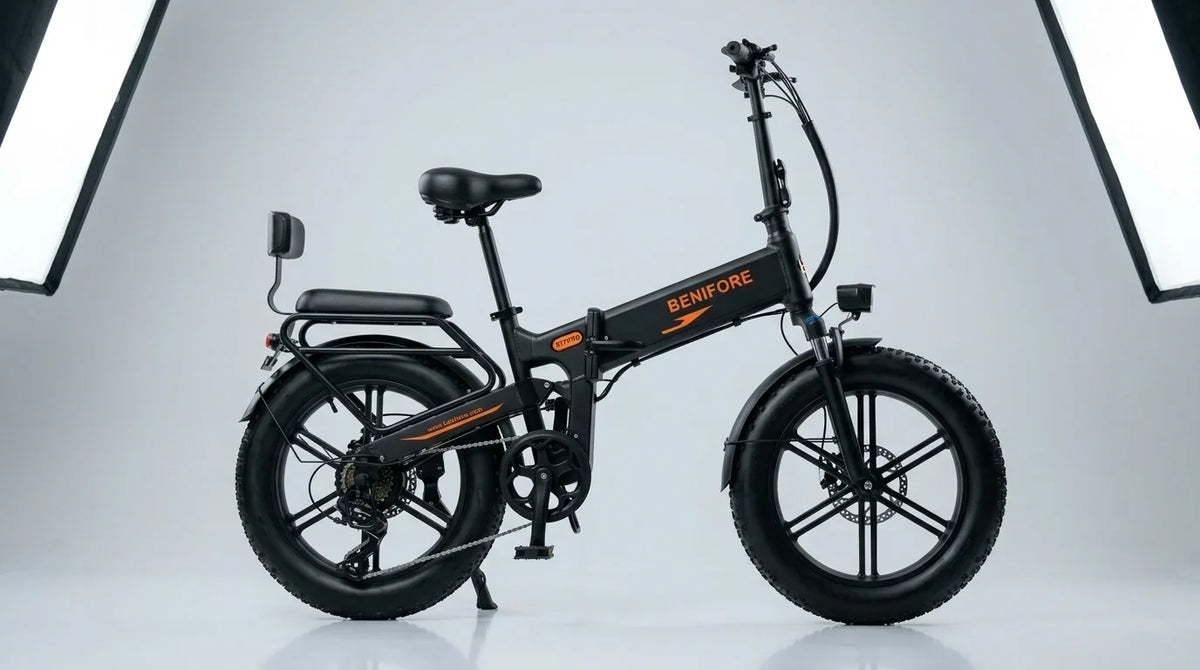
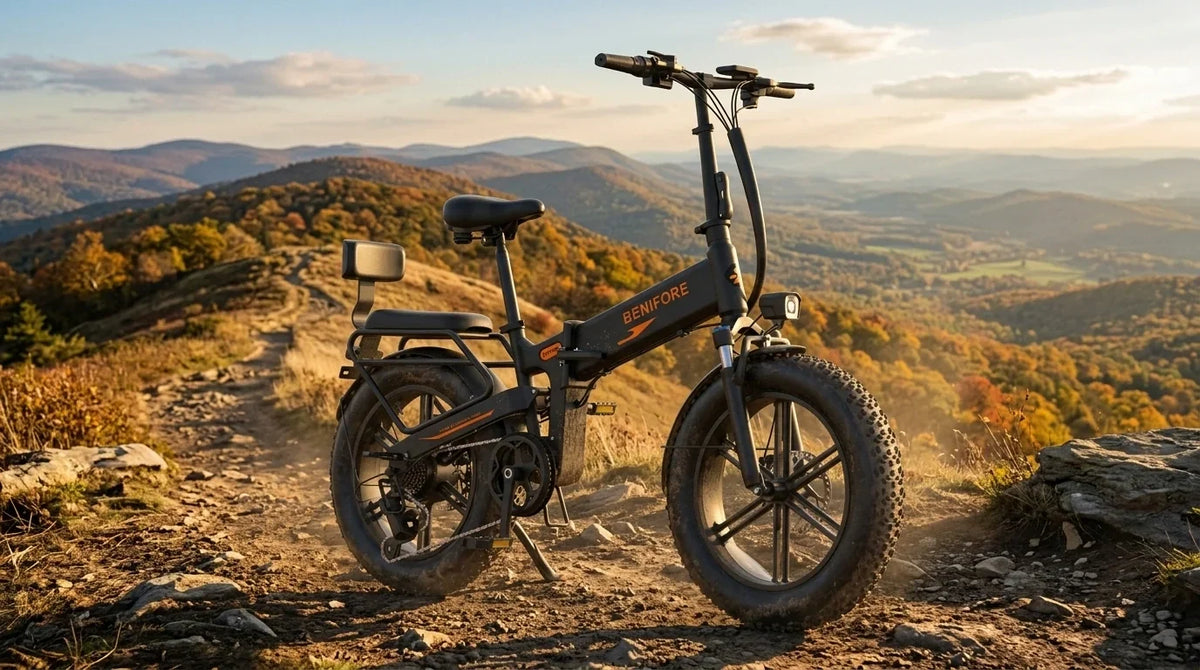
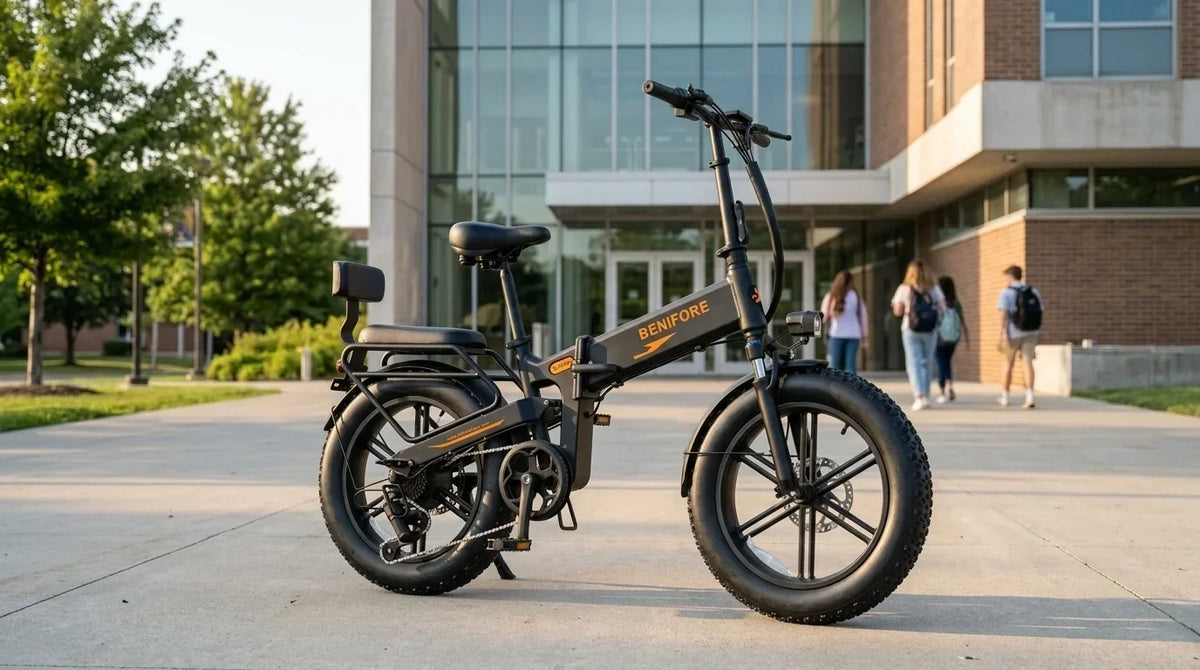
Where Does the Benifore X1T PRO Fit?
The Benifore X1T PRO is designed as a higher-performance electric bike with:
- 1500W peak motor
- 90Nm torque
- 48V 20Ah battery
- Up to 65 miles of range
- 35 MPH top speed
- 20×4.0 fat tires
- Full suspension
- Up to 400 lbs load capacity
Because its published specifications exceed the traditional low-speed three-class framework in power and top-speed capability, it should not be casually labeled Class 1, Class 2, or Class 3 simply for marketing purposes.
This is actually an important distinction for consumers.
A product's specifications should be presented accurately.
Riders should then determine the rules applicable to that type of vehicle in their state and intended riding environment.
Why Accurate Product Classification Matters
Imagine buying an eBike expecting to ride it on a particular trail.
You see:
35 MPH top speed
and assume:
“That means I can ride 35 MPH there.”
That is not how regulations work.
A manufacturer's top-speed specification describes the product's capability.
The legal speed limit or permitted vehicle type at a particular location is a separate issue.
Responsible riders need to understand both.
Product Capability vs Legal Operation
This distinction is useful for every eBike buyer.
Product capability
What can the bike physically do?
Motor assistance
How does the motor provide power?
Classification
How is the vehicle categorized under applicable law?
Legal operation
Where and how can you actually ride it?
These four questions should not be treated as interchangeable.
Why eBike Classes Matter When Buying
Understanding classifications can help you avoid buying the wrong type of bike.
For example:
If you specifically want throttle propulsion, a Class 1-only bike may not meet your expectations.
If you want higher pedal-assist speeds, a Class 1 bike may feel too limited.
If you primarily ride on regulated bike paths, local access rules may be more important than the advertised motor size.
If you are considering a higher-power eBike, you may need to look beyond the three-class system entirely.
Class 1, Class 2, or Class 3: Which Is Best?
There is no universally best class.
Choose Class 1 if:
You prefer pedal assistance and a more bicycle-like riding experience.
Consider Class 2 if:
Throttle propulsion is important to you.
Consider Class 3 if:
You want higher pedal-assist speeds where permitted.
Consider a higher-performance eBike separately if:
You want substantially more power or speed than the traditional low-speed classification framework provides.
In that situation, do not force the product into Class 1, 2, or 3.
First determine how the product is legally categorized where you plan to ride.
Questions to Ask Before Buying an eBike
Instead of asking only:
“What class is this eBike?”
ask a broader set of questions.
1. How does the motor activate?
Pedal assist?
Throttle?
Both?
2. At what speed does motor assistance stop?
This is important for understanding the bike's operating characteristics.
3. What is the motor's rated and peak output?
Power specifications provide additional context.
4. What is the advertised top speed?
This helps establish the bike's performance capability.
5. Where do I plan to ride?
Roads?
Bike lanes?
Multi-use paths?
Private property?
Trails?
6. What does my state law say?
Never rely entirely on a product page.
7. Are there local restrictions?
City, county, park, or trail rules may apply.
Does a Higher Class Mean a Better Bike?
No.
Classification is not a quality rating.
A Class 1 eBike can be better for one rider than a Class 3 eBike.
A Class 2 bike can be more practical for someone who wants throttle control.
A high-performance eBike can be appropriate for another rider who needs substantially more capability.
The best product depends on the intended use.
What Should First-Time eBike Buyers Understand?
If this is your first eBike, don't let classification terminology overwhelm you.
Start with four basic questions:
How do I want the bike to assist me?
How fast do I actually need to travel?
Where will I ride?
What does local law allow?
Then look at the technical specifications.
This approach is much more useful than choosing a bike based only on the number printed next to “Class.”
Why Speed Limits Should Not Be Confused With Riding Speed
A motor assistance limit does not automatically mean a rider must always travel below that number.
For example, a Class 1 motor stops assisting around 20 MPH.
That does not necessarily mean the bicycle physically cannot move faster through other means.
Similarly, Class 3's 28 MPH assistance limit does not mean every road permits riding at 28 MPH.
The classification describes the bike's motor assistance behavior.
Road rules determine how the vehicle may actually be operated.
eBike Classes and Trail Access
Trail access is another area where riders should be careful.
Even when a state recognizes Class 1, 2, and 3 eBikes, a particular trail may have its own rules.
A land manager may:
- Allow certain classes
- Restrict certain classes
- Limit speeds
- Prohibit eBikes entirely
- Create separate access rules
Federal land management policies can also involve specific rules for eBike access.
Before riding a new trail, check the current rules for that specific location.
Why the Three-Class System Is Useful
Despite its limitations, the three-class system provides a common language.
Instead of saying:
“This bike has a throttle and goes about 20 MPH.”
a retailer or rider can describe it as:
Class 2
when the applicable legal definition supports that classification.
That makes it easier to discuss:
- Motor operation
- Speed limits
- Trail access
- Regulations
- Consumer expectations
The system is designed to reduce confusion, although differences between state laws still exist.
Why the Three-Class System Is Not Enough for Every eBike
Modern electric mobility products vary significantly.
Some have:
- Higher motor outputs
- Higher speeds
- Motorcycle-style frames
- Larger batteries
- Different controls
- Different intended uses
These products may not fit neatly into the traditional low-speed bicycle framework.
PeopleForBikes specifically notes that products exceeding the power or speed limitations of the three-class system should not simply be inserted into those categories.
That distinction becomes increasingly important as the e-mobility market expands.
A Simple Class Comparison
| Category | Class 1 | Class 2 | Class 3 |
|---|---|---|---|
| Pedal assist | Yes | May be available | Yes |
| Throttle propulsion | No | Yes | Generally no under standard definition |
| Typical motor assistance limit | 20 MPH | 20 MPH | 28 MPH |
| Main characteristic | Pedal-assist | Throttle-capable | Faster pedal-assist |
| Best understood as | Bicycle-like assistance | Throttle convenience | Higher-speed pedal assistance |
These are the commonly used definitions, but riders should always confirm the rules applicable in their state and riding location.
Common eBike Classification Mistakes
Mistake 1: Assuming Wattage Equals Class
It does not.
Power and classification are different concepts.
Mistake 2: Assuming Every eBike Must Be Class 1, 2, or 3
Some higher-powered or higher-speed products fall outside the traditional low-speed framework.
Mistake 3: Assuming Every State Uses Exactly the Same Rules
They do not.
State regulations can differ significantly.
Mistake 4: Assuming Class 3 Means You Can Ride 28 MPH Everywhere
The classification does not override local speed limits or trail rules.
Mistake 5: Looking Only at the Product Page
The manufacturer's specifications tell you what the product is designed to do.
They do not necessarily tell you every rule governing where you can ride it.
Mistake 6: Confusing “Peak Power” With Legal Classification
Peak motor output is a performance specification.
Classification depends on the applicable legal framework and operating characteristics.
What Should You Check Before Your First Ride?
Before riding a new eBike in an unfamiliar area:
Check your state eBike law.
Check local road rules.
Check trail or park restrictions.
Understand your bike's motor operation.
Know the advertised speed capability.
Understand whether your product fits the local eBike definition.
This takes a few minutes and can prevent major misunderstandings.
Final Thoughts
Class 1, Class 2, and Class 3 are useful terms for understanding many electric bicycles in the United States.
But they should be viewed as a classification framework, not a simple ranking system.
The basic distinction is:
Class 1 — pedal assist up to 20 MPH
Class 2 — throttle propulsion up to 20 MPH
Class 3 — pedal assist up to 28 MPH
The exact legal application depends on the jurisdiction.
For buyers, the most important lesson is to separate four things:
Motor power
Motor operation
Product capability
Legal classification
They are related, but they are not the same.
For higher-performance products such as the Benifore X1T PRO, which uses a 1500W peak motor and has a published 35 MPH top speed, it is especially important not to force the product into a traditional low-speed class simply because it is marketed as an eBike.
Instead, buyers should understand the product's actual specifications and check the laws that apply to their location and intended riding environment.
The more clearly you understand those differences before buying, the easier it becomes to choose an electric bike that actually fits the way you plan to ride.
Share: