




When you think about electric bike safety, you probably think about the brakes themselves.
Brake pads, rotors, calipers, brake levers, and stopping distance are all important.
But an electric bike has another part of the braking system that many riders rarely notice:
The brake cutoff sensor.
A brake cutoff sensor helps communicate with the eBike's electrical system when the rider activates the brakes.
Instead of the motor continuing to provide power while the rider is trying to stop, the electrical system can respond to the brake signal and stop or reduce motor assistance according to its design.
This small component can play an important role in the relationship between:
Brake input → Electrical signal → Motor assistance
Understanding how brake cutoff sensors work can help riders better understand eBike controls, troubleshoot certain problems, and choose an electric bike with a complete and well-integrated control system.
This guide explains what brake cutoff sensors are, how they work, why they matter, what happens when they activate, and what riders should know if an eBike suddenly stops providing motor assistance.
What Is an eBike Brake Cutoff Sensor?
An eBike brake cutoff sensor is an electrical sensing component associated with the brake controls.
Its primary purpose is to communicate a braking signal to the eBike's electrical system.
When the rider activates the brake lever, the sensor can send a signal to the controller.
The controller can then interrupt motor assistance.
A simplified sequence looks like this:
Rider pulls brake lever
↓
Brake cutoff sensor detects the input
↓
Signal reaches the controller
↓
Motor assistance is interrupted
The exact implementation varies between eBike systems.
Some bikes use sensors integrated directly into brake levers.
Other designs can use separate magnetic or electronic sensors.
The basic purpose remains similar:
Tell the electrical system that braking is happening.
Why Does an eBike Need a Brake Cutoff?
An electric bike can produce significant motor assistance.
If the rider is actively braking, continued motor assistance would not be desirable.
A brake cutoff provides an additional communication path between the braking controls and the motor control system.
This can make the interaction between braking and motor assistance more predictable.
For example, imagine that you are using pedal assist and suddenly need to slow down.
You pull the brake lever.
The brake cutoff signal tells the controller that braking has started.
The controller can then stop motor assistance according to the system's programmed behavior.
This creates a simple relationship:
Brake → Motor assistance stops
Brake Cutoff vs Mechanical Braking
These are two different functions.
The mechanical brake system physically slows the bicycle.
The brake cutoff sensor communicates with the electrical system.
The mechanical braking components can include:
- Brake lever
- Brake cable or hydraulic line
- Caliper
- Brake pads
- Rotor
The electrical cutoff system can include:
- Brake sensor
- Wiring
- Controller
- Motor control logic
The sensor does not physically stop the bicycle.
The brakes do that.
The sensor helps tell the motor system to stop providing assistance.
How Does a Brake Cutoff Sensor Work?
The exact design depends on the eBike.
One common approach is an electrical switch inside or near the brake lever.
When the lever is pulled, the switch changes state.
The controller detects the change.
Another approach uses a magnetic sensor.
A magnet and sensor are positioned so that movement of the brake lever changes the sensor's state.
In both cases, the goal is similar:
Convert brake lever movement into an electrical signal.
The controller then interprets that signal.
What Happens When You Pull the Brake Lever?
Several things can happen almost simultaneously.
First, the mechanical braking system begins applying braking force.
Second, the brake cutoff sensor changes its electrical state.
Third, the controller receives the braking signal.
Fourth, motor assistance is interrupted according to the system's programming.
This process happens quickly enough that riders generally experience it as one combined action.
You brake.
The bike slows.
The motor stops assisting.
Does the Brake Cutoff Stop the Motor Completely?
The exact behavior depends on the eBike's electrical system.
In many systems, activating the brake cutoff causes motor assistance to stop.
However, the motor itself does not necessarily become physically disconnected from the battery.
The controller simply stops commanding the motor to provide propulsion.
This distinction is useful when troubleshooting.
A brake cutoff is primarily a control signal.
It is not the same thing as physically disconnecting the battery.
Brake Cutoff and Throttle Control
Brake cutoff sensors are particularly important on eBikes equipped with throttles.
A throttle allows the rider to request motor power directly.
If the rider activates the throttle and the brake at the same time, the system needs a clear way to prioritize braking.
The brake signal can tell the controller:
Stop motor assistance.
This creates an important control relationship:
Throttle requests power
while
Brake cutoff requests motor interruption
The controller determines how these signals are handled.
Brake Cutoff and Pedal Assist
Brake cutoff sensors also work with pedal-assist systems.
Imagine you are riding in PAS mode.
You are pedaling.
The motor is providing assistance.
You approach an intersection and need to stop.
You pull the brake lever.
The brake cutoff signal tells the controller to interrupt motor assistance.
You can then complete the stop without the motor continuing to push the bike forward.
This is one reason the braking system and electrical system should be considered together when evaluating an eBike.
What If the Brake Cutoff Sensor Activates Accidentally?
This can create a confusing riding problem.
The rider may pedal or use the throttle but receive little or no motor assistance.
The battery may appear normal.
The display may still be powered.
The motor may not be damaged.
One possibility is that the controller is receiving a brake signal even though the rider is not intentionally braking.
Potential causes can include:
- Misaligned sensor
- Damaged brake lever
- Wiring problem
- Loose connector
- Faulty sensor
- Mechanical interference
- Water or contamination around a connector
The exact cause needs to be diagnosed based on the specific eBike system.
How Can You Tell If a Brake Sensor Is Causing a Problem?
One common symptom is:
The display works, but the motor does not provide assistance.
Other symptoms may include:
- Throttle does not respond
- Pedal assist does not activate
- Motor cuts out unexpectedly
- Motor works intermittently
- Assistance returns after moving the brake lever
- An error indication appears
However, these symptoms can have other causes.
A problem with the battery, controller, motor, wiring, sensor system, or display can create similar symptoms.
Do not assume that a brake sensor is the cause without checking the complete system.
Why Brake Lever Adjustment Matters
Mechanical brake adjustment can affect how the brake lever behaves.
If a lever does not return completely to its normal position, the brake cutoff sensor may remain activated depending on the design.
This can create a situation where the rider is not actively braking but the controller still receives a brake signal.
Regularly checking the brake levers can therefore help identify problems early.
The lever should move smoothly and return properly.
If it feels loose, sticky, damaged, or unusual, it should be inspected.
What Is a Magnetic Brake Sensor?
Some eBike brake systems use a magnetic sensor.
A small magnet can be positioned near a sensor.
When the brake lever moves, the relative position between the magnet and sensor changes.
The sensor detects this change and sends a signal to the controller.
One advantage of this type of design is that the sensing mechanism can be relatively compact.
However, correct alignment is important.
If the magnet or sensor moves out of its intended position, the system may not operate correctly.
What Is an Integrated Brake Sensor?
Some eBike brake levers are designed with the cutoff switch or sensor integrated into the lever assembly.
This can reduce the number of external components and simplify the appearance of the handlebar area.
The exact design depends on the manufacturer.
An integrated system can also make diagnosis different from a separate external sensor.
If the sensor is built into the brake lever, replacing or repairing it may require replacing the lever assembly or using manufacturer-specific parts.
Hydraulic Brakes and Brake Cutoff Sensors
Hydraulic brakes create an interesting design challenge because the braking force is transmitted through hydraulic fluid rather than a traditional mechanical cable.
The hydraulic brake itself does not automatically tell the motor controller that the brake has been activated.
An electrical sensor can therefore be added to communicate the brake input to the controller.
This allows a hydraulic braking system and electronic motor cutoff system to work together.
The mechanical and electrical systems remain separate, but they communicate through the sensor.
Mechanical Brake vs Hydraulic Brake
The brake cutoff sensor should not be confused with the type of brake itself.
An eBike can have:
Mechanical brakes + cutoff sensors
or
Hydraulic brakes + cutoff sensors
The brake type determines how braking force is physically generated.
The cutoff sensor determines how braking input is communicated to the motor control system.
They are related but different components.
Why Brake Cutoff Response Matters
The faster and more predictably the system responds to a braking signal, the more natural the control experience can feel.
Riders do not want to think:
"I need to brake, then wait for the motor to stop."
They want the bike to respond as one system.
This is why controller programming, sensor design, wiring, and brake lever operation all matter.
A good eBike is not simply a motor attached to a bicycle.
It is an integrated mechanical and electrical system.
Brake Cutoff Sensors and Riding in Traffic
Urban riding often involves frequent changes in speed.
You may need to:
- Slow for intersections
- Stop for pedestrians
- React to vehicles
- Reduce speed on shared paths
- Make quick turns
- Stop suddenly when conditions change
In these situations, predictable motor cutoff behavior can be useful.
The rider should be able to transition from acceleration to braking without unexpected motor assistance.
This is particularly important for riders who frequently switch between pedal assist, throttle control, and braking.
Brake Cutoff Sensors on High-Power eBikes
The importance of coordinated controls becomes more noticeable as motor capability increases.
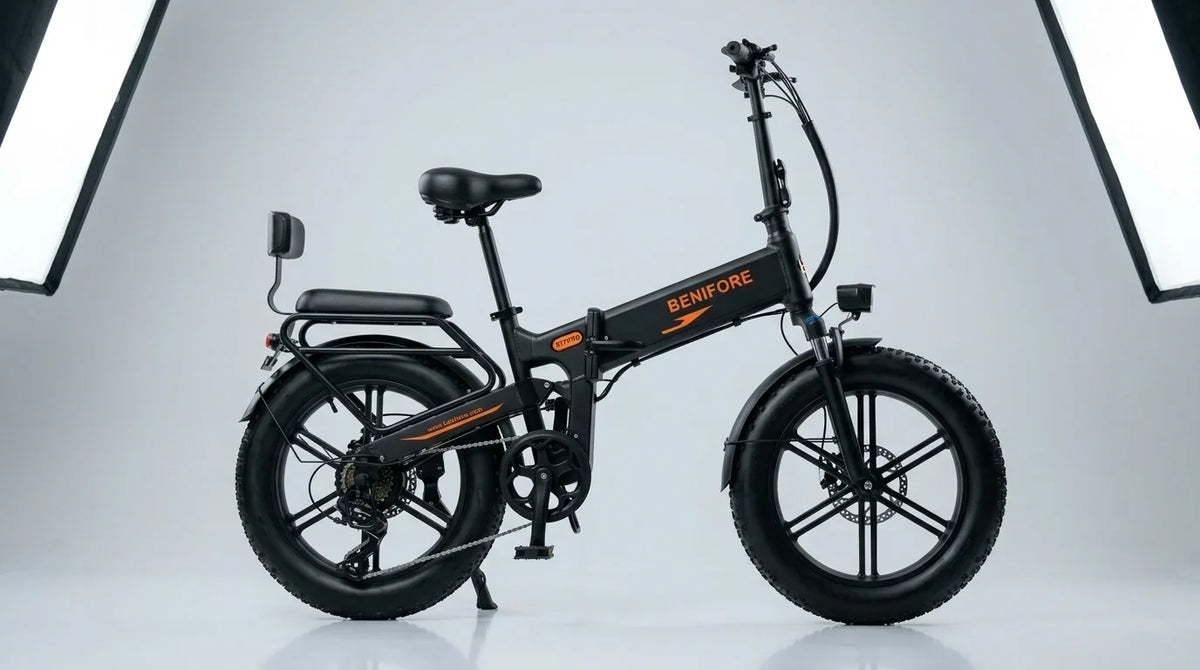
The Benifore X1T PRO uses a:
1500W peak motor
with:
90Nm torque
and a:
35 MPH top speed
These specifications describe a performance-oriented eBike system.
The more capable the propulsion system is, the more important it becomes for the rider to have predictable controls.
Braking, throttle, pedal assist, controller response, and motor output should work together.
The brake cutoff is one small part of that larger system.
Brake Cutoff Does Not Replace Good Brakes
This is extremely important.
A brake cutoff sensor is not a braking system.
It does not replace:
- Brake pads
- Rotors
- Calipers
- Brake fluid
- Brake cables
- Proper brake adjustment
If motor assistance is interrupted but the mechanical brakes are not working correctly, the bike still cannot stop properly.
The rider must maintain the physical braking system according to the manufacturer's recommendations.
The cutoff sensor is an additional electrical control feature.
Why Brake Maintenance Still Matters
Even if the motor cutoff system works perfectly, the mechanical brakes still need regular inspection.
Check for:
- Brake pad wear
- Rotor condition
- Lever feel
- Cable condition
- Hydraulic fluid condition
- Loose components
- Unusual noise
- Reduced braking performance
If braking performance changes noticeably, stop and inspect the system before continuing to ride.
Can Brake Cutoff Sensors Wear Out?
Yes.
Like many electrical and mechanical components, sensors and their associated wiring can eventually develop problems.
Potential causes include:
- Repeated mechanical movement
- Connector damage
- Water exposure
- Cable damage
- Sensor misalignment
- Physical impact
- Component aging
The expected service life varies by design and usage.
A sensor that begins causing intermittent motor cutoff should be diagnosed rather than ignored.
What Happens If the Sensor Fails?
The behavior depends on the sensor design and controller logic.
Possible symptoms can include:
- No motor assistance
- Intermittent motor assistance
- Motor assistance stopping unexpectedly
- Throttle not working
- Pedal assist not working
- Error messages
Some systems may fail in a way that prevents motor operation.
Others may show different symptoms.
Because electrical systems vary, diagnosis should follow the manufacturer's service procedures.
Should You Disconnect a Brake Cutoff Sensor?
It is generally not a good idea to permanently disable a safety-related control feature simply to solve a motor cutoff problem.
If the sensor appears to be faulty, the better approach is to identify the cause.
Possible solutions may include:
- Inspecting the brake lever
- Checking sensor alignment
- Inspecting connectors
- Checking wiring
- Testing the sensor
- Replacing the appropriate component
Disabling a control feature can create a different problem rather than fixing the original one.
Why Connector Inspection Matters
Electrical connectors are small but important.
A loose or damaged connector can interrupt the signal between the brake sensor and controller.
When troubleshooting an eBike, look for:
- Loose plugs
- Damaged wires
- Bent connector pins
- Corrosion
- Water intrusion
- Cable tension
- Pinched wiring
Always follow the manufacturer's instructions before disconnecting electrical components.
Brake Sensors and Water Exposure
Electric bikes are often used outdoors.
Rain, splashes, mud, and humidity can expose electrical components to moisture.
A properly designed eBike should have appropriate protection for its electrical components, but riders should still follow the manufacturer's guidance regarding water exposure.
If a bike develops an electrical problem after significant water exposure, allow the system to be inspected before assuming a mechanical component has failed.
Never charge a battery that has been damaged or exposed to conditions outside the manufacturer's recommendations.
Do All eBikes Use the Same Brake Cutoff System?
No.
Different manufacturers use different electrical architectures.
The sensor may be:
- Integrated into the brake lever
- Mounted externally
- Magnetic
- Mechanical
- Electronic
- Connected through dedicated wiring
The controller may also interpret the signal differently.
This is why replacement components should be selected based on compatibility rather than appearance alone.
Can You Add a Brake Cutoff Sensor Later?
In some eBike systems, aftermarket sensors can be installed.
However, compatibility is important.
You need to consider:
- Brake type
- Lever design
- Controller input
- Connector type
- Voltage or signal characteristics
- Physical mounting
- Controller programming
A sensor that physically fits may not necessarily communicate correctly with the controller.
For this reason, manufacturer-supported components are generally preferable.
Brake Cutoff vs Motor Brake
These terms can sometimes be confusing.
A brake cutoff is an electrical signal that tells the motor control system to stop or reduce assistance.
A motor brake or regenerative braking system refers to using the motor or drivetrain to help slow the bike.
These are not the same thing.
Most conventional eBikes do not use regenerative braking in the same way that many electric cars do.
Therefore, do not assume that an eBike with a brake cutoff automatically has regenerative braking.
Can Brake Cutoff Improve Battery Efficiency?
The primary purpose of a brake cutoff is control and protection rather than improving range.
However, stopping motor assistance whenever the rider is braking means the motor is not intentionally providing propulsion during that braking input.
This is logical from a control perspective.
But riders should not expect a brake cutoff itself to produce a meaningful increase in battery range.
Range is influenced by much larger factors such as:
- Riding speed
- Terrain
- Rider weight
- Assistance level
- Acceleration
- Wind
- Tire pressure
- Battery capacity
How the Brake Cutoff Fits Into the Full eBike System
An eBike can be understood as several connected systems.
Rider Input
Throttle, pedals, brake levers, and other controls.
Sensors
Pedal-assist sensors, torque sensors, cadence sensors, brake cutoff sensors, and other inputs.
Controller
Interprets electrical signals and manages motor operation.
Battery
Provides electrical energy.
Motor
Converts electrical energy into mechanical movement.
Mechanical System
Frame, wheels, tires, drivetrain, brakes, and suspension transfer and control that movement.
A brake cutoff sensor is therefore only one piece of the overall system.
But it is a useful piece because it connects rider braking input with motor control.
What Should Riders Check Before Buying an eBike?
When comparing eBikes, do not only look at:
Motor wattage
or
Battery capacity
Also consider the control system.
Useful questions include:
- How does pedal assist respond?
- Does the bike use a torque or cadence sensor?
- Does it have a throttle?
- Does braking interrupt motor assistance?
- What type of brakes are installed?
- How does the controller respond to brake input?
- Are replacement sensors available?
- Is technical support provided?
- Are electrical components properly integrated?
These details may not look as impressive on a product specification sheet, but they can influence the everyday riding experience.
A Complete Control System Matters
The best riding experience comes from the interaction of many components.
A rider may have a powerful motor, but poor controls can make the bike feel difficult to manage.
Likewise, excellent brakes alone do not create a complete eBike control system.
The bike needs the different systems to work together.
Pedal input
↓
Sensor
↓
Controller
↓
Motor
↓
Brake input
↓
Motor assistance interruption
This relationship creates the foundation for predictable eBike control.
Frequently Asked Questions
What does an eBike brake cutoff sensor do?
It sends a braking signal to the controller so the motor assistance can be stopped or reduced when the brake is activated.
Does a brake cutoff physically stop the bike?
No. The mechanical or hydraulic brake system physically slows the bicycle. The cutoff communicates with the motor control system.
Do all electric bikes have brake cutoff sensors?
Not every eBike uses the same design or configuration. The exact system depends on the manufacturer.
Can a brake sensor cause the motor to stop working?
Yes. If the controller incorrectly detects a brake signal, it may prevent motor assistance from activating.
Why does my eBike display work but the motor does not?
Possible causes include a brake cutoff signal, battery issue, controller problem, motor problem, wiring fault, or another sensor issue.
Can I ride without a brake cutoff sensor?
The answer depends on the eBike's design, but disabling a safety-related control feature is generally not recommended.
Do hydraulic brakes need brake cutoff sensors?
Hydraulic braking and electrical motor cutoff are separate functions. An eBike can use hydraulic brakes together with electrical brake sensors.
Does brake cutoff increase eBike range?
Not significantly. Its main purpose is to coordinate braking input with motor assistance.
Final Thoughts
A brake cutoff sensor may be a small component, but it plays an important role in the interaction between the rider, brakes, controller, and motor.
When you pull the brake lever, you are not only activating the mechanical braking system.
On an eBike equipped with a brake cutoff, you are also sending an electrical message:
Stop providing motor assistance.
That simple communication helps connect the mechanical and electrical sides of the bike.
For riders, understanding this system can also make troubleshooting easier.
If an eBike suddenly stops providing assistance while the display remains powered, the problem may not always be the battery or motor.
The brake sensor, lever position, wiring, controller, or another electrical component could also be involved.
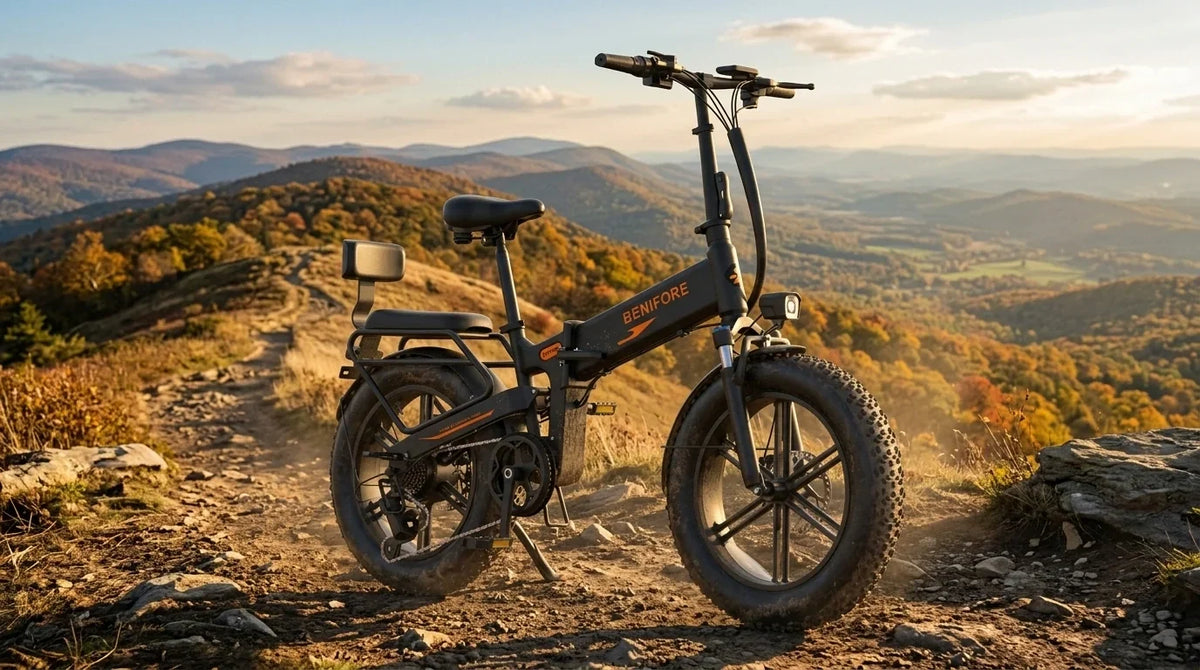
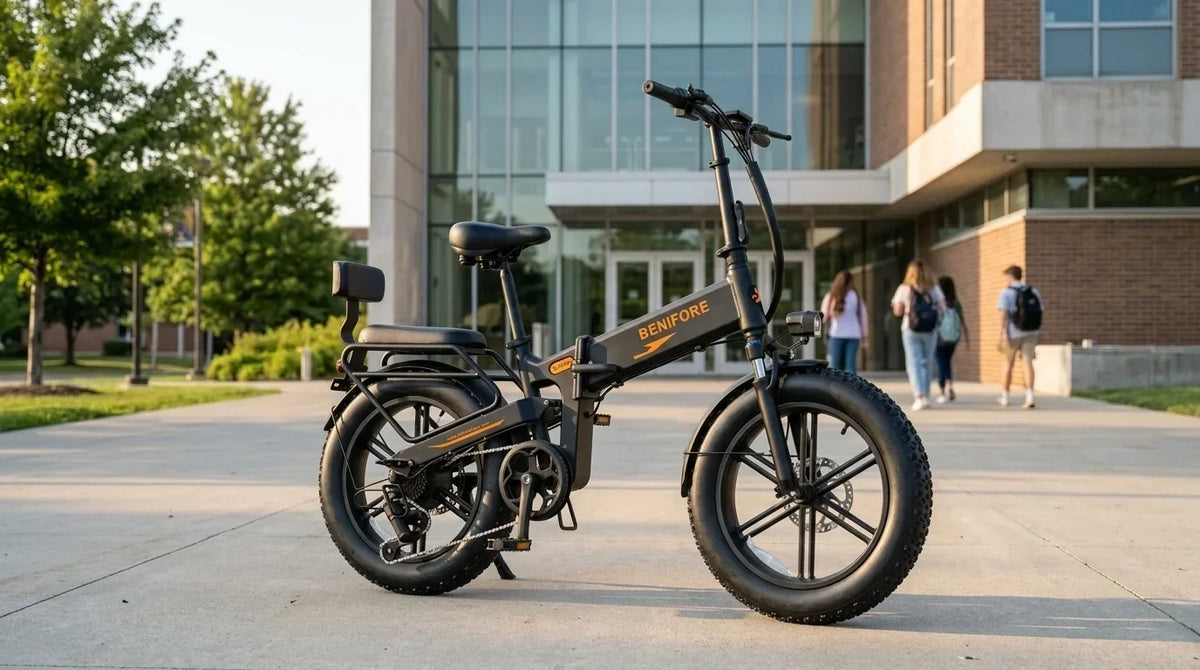
For a performance-oriented eBike such as the Benifore X1T PRO, which combines a 1500W peak motor, 90Nm torque, 35 MPH top speed, 20×4.0 fat tires, full suspension, and up to 400 lbs load capacity, the complete control system matters just as much as individual specifications.
A powerful motor gets you moving.
A well-designed control system helps determine how predictably you accelerate, assist, and stop.
That is why eBike technology should always be evaluated as a complete system rather than as a list of isolated numbers.
Share: