




If you are shopping for an electric bike in the United States, you have probably seen terms such as Class 1, Class 2, and Class 3.
But what do these classifications actually mean?
Are they based on motor wattage?
Does a Class 3 eBike always have a more powerful motor?
Can every eBike be ridden on the same bike path?
And what happens if an electric bike has a higher advertised top speed?
These questions are important because buying an eBike is not only about comparing motor power, battery capacity, range, or price.
Where and how you plan to ride also matters.
The three-class system is commonly used as a framework for describing certain types of electric bicycles, particularly in the United States. However, state, local, trail, park, and road rules can vary, so riders should always check the regulations that apply to the specific place where they intend to ride.
This guide explains the basic differences between Class 1, Class 2, and Class 3 eBikes, what the classifications generally describe, how they relate to pedal assist and throttles, and what riders should consider before choosing an electric bike.
What Is the eBike Class System?
The eBike class system is a way of categorizing electric bicycles based primarily on how motor assistance works.
The three commonly referenced categories are:
Class 1
Pedal-assist eBikes without a throttle.
Class 2
eBikes equipped with a throttle, generally designed to provide motor assistance without requiring continuous pedaling.
Class 3
Pedal-assist eBikes with a higher permitted assisted speed than Class 1, generally without a throttle under the common three-class framework.
These descriptions are simplified.
The exact legal definition can depend on the jurisdiction.
That is why riders should treat the class label as a useful starting point rather than assuming that one classification automatically determines where a particular bike can be ridden.
Class 1 eBike: What Does It Mean?
A Class 1 electric bicycle generally provides motor assistance only while the rider is pedaling.
There is no throttle used to propel the bike independently.
The motor assists the rider rather than functioning like a standalone motor vehicle.
This type of eBike can appeal to riders who want an experience that remains relatively close to traditional cycling while reducing the physical effort required.
Class 1 eBikes are commonly associated with:
- Pedal assistance
- No throttle
- Lower assisted-speed limits
- Commuting
- Recreation
- Bike-path riding where permitted
The actual rules still depend on the location.
Class 2 eBike: What Makes It Different?
A Class 2 eBike generally includes a throttle.
The throttle allows the motor to provide propulsion without requiring the rider to continuously pedal.
This can be useful when:
- Starting from a stop
- Getting through an intersection
- Recovering from fatigue
- Moving at a steady low speed
- Navigating situations where continuous pedaling is inconvenient
However, throttle operation and speed limits are still subject to the applicable bike classification and local regulations.
Having a throttle does not mean that the eBike can legally operate at any speed.
Class 3 eBike: What Is Different?
Class 3 generally refers to an electric bicycle where pedal assistance can continue to a higher assisted speed than Class 1.
The rider still pedals to receive motor assistance.
Class 3 eBikes are often attractive to riders who want:
- Faster commuting
- Longer road trips
- Efficient transportation
- Stronger assistance at higher riding speeds
Because Class 3 bikes operate at higher assisted speeds, local rules can be especially important.
Some bike paths, trails, or facilities may have different access rules for Class 3 eBikes.
Class 1 vs Class 2 vs Class 3
The simplest way to understand the three categories is to look at the type of motor assistance.
| Feature | Class 1 | Class 2 | Class 3 |
|---|---|---|---|
| Pedal assist | Yes | Usually available | Yes |
| Throttle | No | Yes | Generally no under the common framework |
| Motor assistance | Pedaling required | Throttle can activate motor | Pedaling required |
| Typical assisted-speed category | Lower | Lower | Higher |
| Best suited for | Traditional cycling feel | Convenience | Faster road-oriented riding |
This table is a simplified explanation of the common three-class framework.
Local law can define the categories differently or impose additional restrictions.
Are eBike Classes Based on Motor Wattage?
Not primarily.
This is one of the biggest misconceptions among new eBike buyers.
Many people assume:
Higher wattage = higher class
That is not how the classification system should be understood.
Motor wattage describes the motor's power specification.
The class system is more closely related to:
- How the motor provides assistance
- Whether a throttle is present
- The assisted speed
- The bicycle's configuration under applicable regulations
Therefore, you should not determine an eBike's legal classification simply by looking at the wattage printed on its product page.
Why Motor Wattage and eBike Class Are Different
Consider two different specifications:
Motor power
describes the capability of the motor system.
eBike class
describes how the bicycle is configured and classified for certain regulatory purposes.
They answer different questions.
For example:
A rider may ask:
"How powerful is this motor?"
That is a performance question.
Another rider may ask:
"What class is this eBike?"
That is a classification and regulatory question.
The two should not be confused.
What About a 1500W Peak eBike?
This is particularly important for high-performance eBikes.
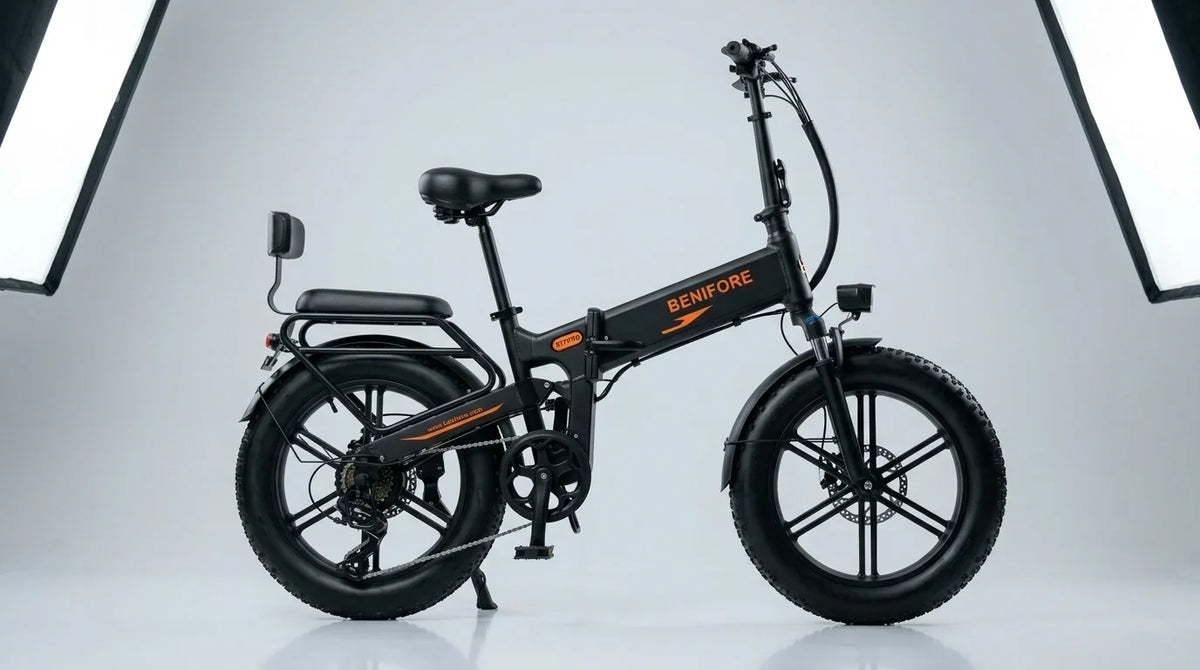
The Benifore X1T PRO is equipped with a:
1500W peak motor
That specification describes peak motor capability.
It does not, by itself, determine the legal classification of the bicycle everywhere.
Other specifications include:
- 90Nm torque
- 48V 20Ah battery
- Up to 65 miles of range
- 35 MPH top speed
- 20×4.0 fat tires
- Full suspension
- Up to 400 lbs load capacity
These specifications describe the bike's performance and design.
Classification and legal operation are separate questions.
Why Top Speed Matters
Top speed becomes particularly important when discussing eBike classifications.
A bike capable of traveling at a higher speed may not fit the same legal category as a lower-speed eBike in every jurisdiction.
But there is an important distinction:
Mechanical capability
is not necessarily the same thing as:
Legal assisted speed.
An eBike may have the mechanical capability to travel at a certain speed under particular conditions, while the motor assistance may be configured differently.
Riders should therefore check the actual configuration and local rules rather than relying only on the advertised maximum speed.
Does Class 3 Mean the Bike Can Go 28 MPH Everywhere?
No.
The classification does not give riders unlimited permission to travel at a particular speed in every location.
There can be additional rules involving:
- Roads
- Bike lanes
- Multi-use paths
- Parks
- Trails
- Shared-use facilities
- Local speed restrictions
Even if an eBike is technically capable of a certain speed, riders are still responsible for following the rules where they ride.
Why Local eBike Laws Matter
The three-class framework is useful, but eBike regulations in the United States are not completely uniform.
Different states and local jurisdictions can have their own requirements.
Rules may address:
- Maximum assisted speed
- Motor power
- Throttle use
- Minimum rider age
- Helmet requirements
- Bike-path access
- Trail access
- Registration
- Equipment
- Where certain classes may operate
This means a rider should not assume:
"It's legal in one state, so it must be legal everywhere."
Always check the rules for your actual riding location.
Do You Need a License for an eBike?
Whether a license is required depends on the legal classification of the vehicle and the applicable jurisdiction.
Many standard electric bicycles do not require the same licensing process as motorcycles or automobiles.
However, riders should not assume that every high-performance electric bike is treated identically.
The key questions are:
- How is the bike legally classified?
- What is its assisted speed?
- Does it use a throttle?
- What are the local requirements?
When in doubt, check the official state or local transportation rules.
Does an eBike Need Registration?
Registration requirements vary by jurisdiction and vehicle classification.
For a conventional eBike that fits the local definition of an electric bicycle, registration may not be required.
But riders should verify the current rules where they live.
This becomes especially important for higher-performance eBikes because a bike with specifications outside a jurisdiction's standard eBike definition may be treated differently.
What About Helmets?
Helmet requirements also depend on local laws and the rider's age, eBike class, and riding location.
Even when a helmet is not legally required for a particular rider, wearing an appropriate helmet remains a sensible safety practice.
Higher riding speeds increase the importance of protective equipment.
Can You Ride an eBike on a Bike Path?
There is no single answer for every location.
Some jurisdictions allow certain eBike classes on bike paths.
Others restrict access based on:
- Class
- Speed
- Path type
- Local authority
- Park rules
Some private or recreational trails can also have their own restrictions.
Before riding an unfamiliar route, check the local rules.
Can Class 3 eBikes Use Bike Lanes?
In many locations, Class 3 eBikes can operate on roads and bike lanes where permitted.
But this should never be assumed universally.
Local transportation agencies may establish specific restrictions.
The safest approach is to check the rules for the city, county, state, park, or trail where you plan to ride.
Why eBike Riders Should Know Their Local Rules
Knowing your local eBike regulations can prevent unnecessary problems.
Before your first long ride, determine:
Where can you ride?
Roads, bike lanes, paths, trails, or private property may have different rules.
What class is your bike?
Make sure you understand how your bike is configured.
What is the permitted assisted speed?
Do not confuse advertised top speed with legally permitted assistance.
Is a throttle permitted?
Different classifications and jurisdictions can treat throttles differently.
Are there age or helmet requirements?
Check the current local rules.
How Throttle and Pedal Assist Affect Classification
The presence of a throttle is one of the easiest ways to understand why different eBike classes exist.
A pedal-assist system requires the rider to pedal.
A throttle can activate the motor independently of pedaling.
This creates two different riding experiences.
Pedal Assist
The rider contributes pedal input.
The motor provides assistance.
Throttle
The rider activates motor propulsion through a control.
Neither system is automatically better.
They are simply different approaches to electric assistance.
Is a Throttle Better Than Pedal Assist?
Not necessarily.
It depends on what you want from the bike.
Pedal assist may be better if you want:
- More active riding
- A traditional bicycle feel
- Efficient long-distance riding
- Different levels of motor support
Throttle may be useful if you want:
- Easier starts
- Instant motor assistance
- Reduced physical effort
- Convenience in stop-and-go situations
Many riders appreciate having both types of control, where legally permitted and properly configured.
How eBike Class Affects the Riding Experience
Classification is not just a legal topic.
It can also help describe how an eBike feels to ride.
A lower-speed pedal-assist bike may feel more like an enhanced traditional bicycle.
A throttle-equipped bike may feel more convenient in urban environments.
A higher-speed pedal-assist bike may feel better suited to riders who cover longer distances on roads.
The right option depends on how you plan to use the bike.
Choosing an eBike Based on Your Riding Style
Instead of starting with:
"Which class is the best?"
start with:
"How am I actually going to ride?"
Think about:
- Daily distance
- Road type
- Terrain
- Average speed
- Fitness level
- Cargo
- Riding frequency
- Local regulations
- Storage
- Desired riding experience
Then compare eBike configurations.
For Relaxed Recreational Riding
If you primarily ride:
- Neighborhood streets
- Low-speed bike routes
- Recreational paths
- Short distances
a lower-assistance configuration may be enough.
The priority may be comfort, control, and simplicity rather than maximum performance.
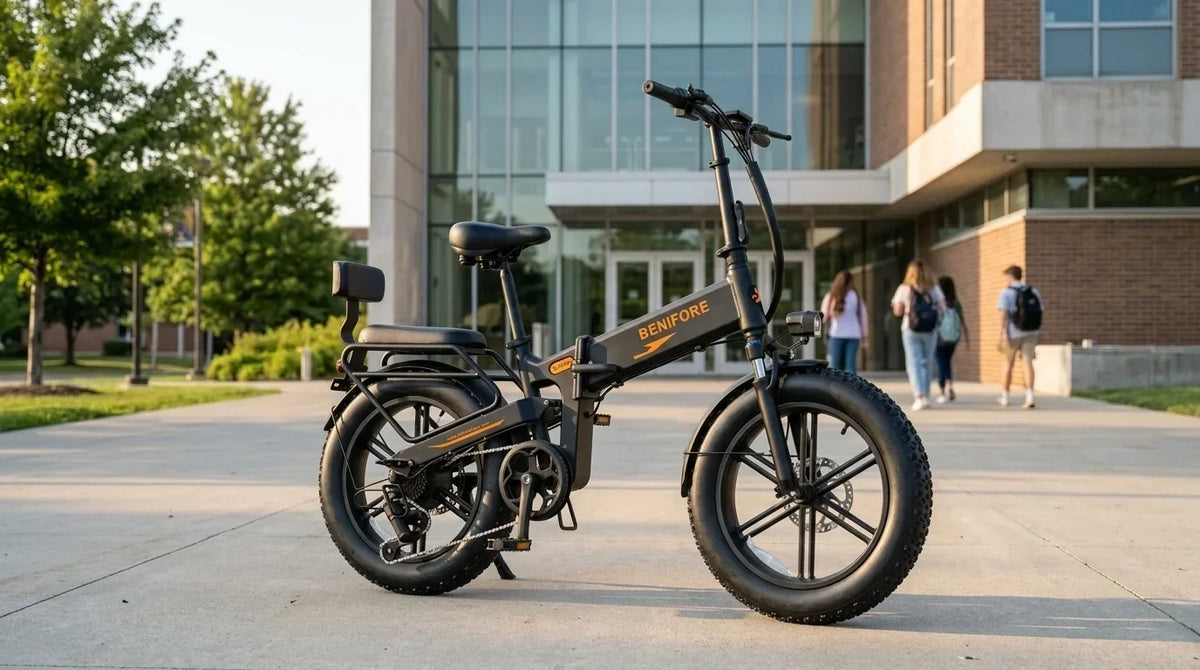
For Daily Commuting
Commuters may care more about:
- Riding speed
- Battery range
- Comfort
- Traffic conditions
- Reliability
- Weather
- Storage
- Local access rules
If your commute involves longer roads and higher average speeds, a higher-speed pedal-assist configuration may be more appropriate where legal.
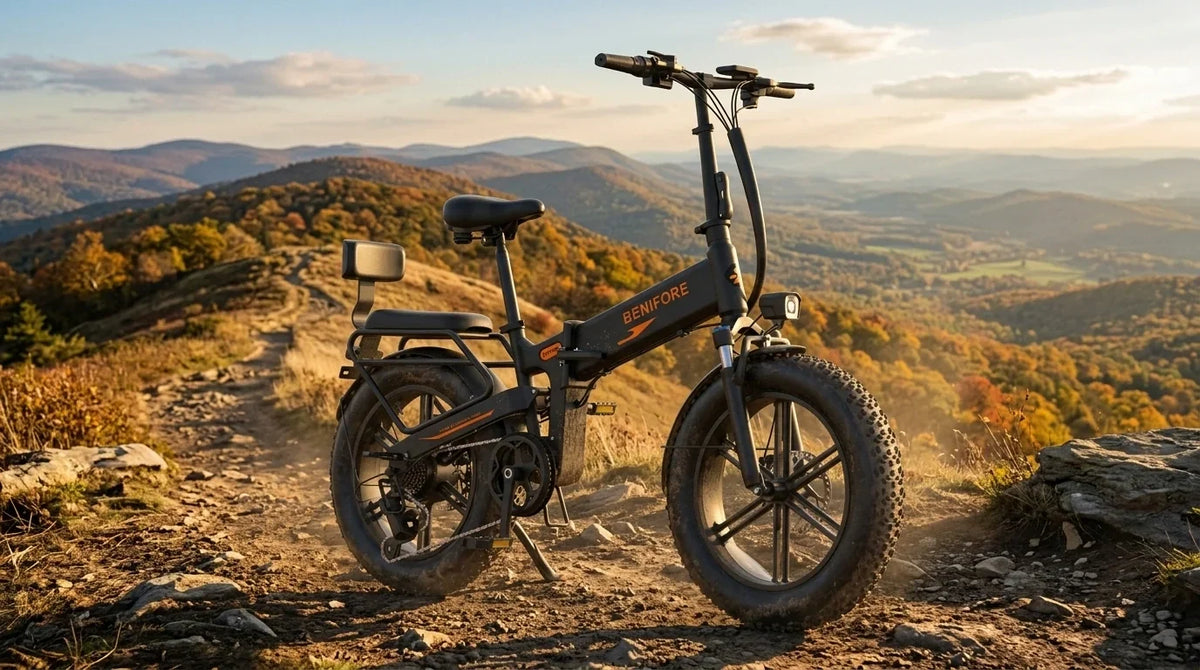
For Longer Outdoor Riding
Outdoor riders may prioritize:
- Range
- Tires
- Suspension
- Motor torque
- Battery capacity
- Load capacity
- Terrain capability
Classification still matters, but it is only one part of the buying decision.
A bike designed for rough terrain may have very different priorities from a lightweight urban commuter.
For Riders Who Carry Cargo
If you frequently carry:
- Groceries
- Tools
- Camping equipment
- Fishing equipment
- Work gear
look beyond the eBike class.
Pay attention to:
Total load capacity
Frame strength
Braking system
Tire design
Motor performance
Battery capacity
A classification label cannot tell you whether the bike is suitable for your specific load.
Why Total Load Matters
The bike does not only carry the rider.
The actual riding load can include:
Rider + bike + cargo + accessories
The Benifore X1T PRO has an up to 400 lbs load capacity.
That capacity is useful for riders who need additional flexibility, but riders should always remain within the manufacturer's specified limits.
More load can also affect:
- Acceleration
- Braking
- Handling
- Range
- Climbing
- Tire pressure
This is another reason to evaluate the complete bike rather than relying on one specification.
Does eBike Class Affect Range?
Not directly.
Range is primarily influenced by the relationship between:
- Battery capacity
- Motor consumption
- Riding speed
- Terrain
- Rider weight
- Wind
- Tire pressure
- Assistance level
However, riding at higher speeds generally requires more energy.
So the type of riding associated with a particular class can indirectly influence battery consumption.
Does eBike Class Affect Motor Power?
The class label itself does not simply determine motor power.
Motor power and classification should be evaluated separately.
A rider should look at:
Motor specification
Battery specification
Controller configuration
Assistance behavior
Speed limits
Local regulations
This provides a more accurate understanding of the bike.
Why You Should Not Choose an eBike by Class Alone
Imagine two bikes.
Bike A:
- Lower power
- Lightweight
- Small battery
- Simple pedal assist
Bike B:
- Larger battery
- Stronger motor
- Full suspension
- Fat tires
- Higher load capacity
Even if both fall into a similar legal classification, they may provide completely different riding experiences.
The class tells you something important.
But it does not tell you everything.
What to Check Before Buying a Classed eBike
Before ordering an electric bike, look at these areas.
1. Motor
What is the rated and peak output?
2. Torque
How does the bike perform during acceleration and climbing?
3. Battery
What is the voltage and capacity?
4. Range
How was the advertised range measured?
5. Assisted Speed
What speed does the motor actually assist to?
6. Throttle
Does the bike have one?
7. Tires
Are they suitable for your roads and terrain?
8. Suspension
Will it provide enough comfort for your riding conditions?
9. Load Capacity
Can it safely support your intended rider and cargo load?
10. Local Regulations
Is the configuration permitted where you intend to ride?
Understanding "Top Speed" vs "Assisted Speed"
This distinction deserves special attention.
When a product page says:
Top Speed: 35 MPH
that does not automatically answer every legal question.
A rider should also ask:
At what speed does motor assistance stop?
and:
How is the bike configured for the market and jurisdiction?
The terms can refer to different things.
For example, a bicycle may be physically capable of moving faster than its motor-assisted speed because of:
- Downhill momentum
- Pedaling
- Wind
- Terrain
That does not mean the motor is continuously providing assistance at that speed.
Why Regulations Can Change
Transportation regulations are not permanently fixed.
Cities and states can update:
- Speed rules
- Trail access
- Class definitions
- Helmet requirements
- Age requirements
- Equipment requirements
Therefore, articles and social media posts can become outdated.
When making a purchase decision, use current official government information for the location where you plan to ride.
eBike Class and Safety
Classification should never be viewed as a substitute for safe riding.
Regardless of class:
- Wear appropriate protective equipment.
- Follow posted speed limits.
- Use lights when required.
- Yield appropriately.
- Maintain safe following distance.
- Inspect brakes and tires.
- Keep the bike properly maintained.
- Adjust speed to road conditions.
A legal speed is not always a safe speed for every road condition.
Why Higher-Speed eBikes Require More Awareness
As speed increases, the rider has less time to react to unexpected situations.
Higher speeds can affect:
- Stopping distance
- Cornering
- Road hazards
- Pedestrian interaction
- Traffic awareness
This is why riders moving from a conventional bicycle to a faster eBike should gradually become familiar with the bike.
The first goal should be control.
Speed comes second.
Common eBike Class Mistakes
Mistake 1: Assuming Wattage Determines Class
It does not.
Mistake 2: Assuming Every State Uses Identical Rules
They do not.
Mistake 3: Assuming Class 3 Means "Legal Everywhere"
It does not.
Mistake 4: Confusing Top Speed With Assisted Speed
These are not necessarily the same thing.
Mistake 5: Ignoring Throttle Configuration
Throttle operation can affect classification.
Mistake 6: Choosing Based Only on Class
Class does not tell you battery capacity, comfort, suspension, tires, or load capacity.
Mistake 7: Using Outdated Legal Information
Always check current local regulations.
A Simple Way to Choose the Right eBike
Use this four-step process.
Step 1: Define Your Riding
Ask where you will actually ride.
Step 2: Define Your Desired Assistance
Do you want:
- Pedal assist?
- Throttle?
- Both?
- Lower-speed assistance?
- Higher-speed pedal assistance?
Step 3: Compare the Complete Bike
Look at:
- Motor
- Battery
- Torque
- Tires
- Suspension
- Brakes
- Load capacity
Step 4: Check Local Rules
Confirm that the bike's configuration is appropriate for your intended riding areas.
This process is much more useful than choosing a bike simply because the product page says "Class 3."
What the eBike Class System Does Not Tell You
An eBike class does not tell you:
- How comfortable the bike is
- How powerful the motor feels
- How long the battery lasts
- How stable the bike is
- How strong the frame is
- How good the suspension is
- How much cargo you can carry
- How well the bike performs on hills
- How it feels on rough roads
These factors still need to be evaluated separately.
Where the Benifore X1T PRO Fits Into the Conversation
The Benifore X1T PRO is designed as a high-performance electric bike platform with:
1500W peak motor
90Nm torque
48V 20Ah battery
Up to 65 miles of range
35 MPH top speed
20×4.0 fat tires
Full suspension
Up to 400 lbs load capacity
These specifications are intended to provide strong performance across a range of real-world riding situations.
But riders should not use the motor's peak power or advertised top speed alone to determine legal classification.
Instead, look at the bike's actual configuration and the rules that apply where you ride.
This distinction is especially important when comparing high-performance eBikes.
Class vs Performance: Two Different Questions
When shopping for an eBike, keep these two questions separate.
Question 1:
How does the bike perform?
Look at:
- Motor
- Torque
- Battery
- Range
- Tires
- Suspension
- Load capacity
Question 2:
How is the bike legally classified?
Look at:
- Pedal-assist configuration
- Throttle
- Assisted speed
- Applicable regulations
Both questions matter.
Neither replaces the other.
Frequently Asked Questions
What are Class 1, Class 2, and Class 3 eBikes?
They are common categories used to describe different types of electric bicycle assistance, particularly whether a throttle is present and how fast motor assistance is permitted to operate.
Is Class 3 better than Class 1?
Not necessarily. Class 3 may be better for riders who want higher-speed pedal assistance, while Class 1 may be better for riders who prefer a simpler, more traditional cycling experience.
Is Class 2 better because it has a throttle?
Not automatically. A throttle provides convenience, but some riders prefer pedal assist because it encourages more active riding.
Does 1500W automatically make an eBike Class 3?
No. Motor wattage alone does not determine eBike class.
Does a 35 MPH eBike automatically count as Class 3?
Not necessarily. Classification depends on the bike's actual configuration and applicable law. Do not determine classification from advertised top speed alone.
Can Class 3 eBikes ride on bike paths?
It depends on the jurisdiction and the specific path. Check local regulations before riding.
Do all states use the same eBike class rules?
No. State and local requirements can vary.
Does an eBike class determine battery range?
No. Range depends on battery capacity, motor use, speed, terrain, rider weight, weather, tires, and riding style.
Does an eBike class determine motor power?
No. Motor power is a separate specification.
What should I check before buying an eBike?
Check the complete system: motor, torque, battery, range, assisted speed, throttle configuration, tires, suspension, load capacity, and local regulations.
Final Thoughts
Understanding electric bike classes makes it easier to compare different eBikes, but the class label should never be the only thing you look at.
Class 1 generally focuses on pedal assistance without a throttle.
Class 2 generally adds throttle-based propulsion.
Class 3 generally provides higher-speed pedal assistance.
But the exact legal requirements depend on the jurisdiction.
The most important lesson is this:
eBike class and eBike performance are not the same thing.
Motor wattage does not automatically determine class.
Battery capacity does not determine class.
Torque does not determine class.
And an advertised top speed does not tell you the entire legal picture.
When choosing an eBike, evaluate two things separately:
How the bike performs
and
how the bike is legally configured where you ride.
For a high-performance model such as the Benifore X1T PRO, specifications such as a 1500W peak motor, 90Nm torque, 48V 20Ah battery, up to 65 miles of range, 35 MPH top speed, 20×4.0 fat tires, full suspension, and up to 400 lbs load capacity describe the bike's capabilities.
They do not replace the need to understand local eBike regulations.
A smart eBike purchase is therefore not simply about finding the biggest motor or highest speed.
It is about finding the right combination of:
Performance + comfort + control + range + intended use + legal compatibility.
Once those factors line up, you can choose an electric bike with much more confidence—and spend more time riding instead of wondering whether the bike actually fits your needs.
Share: