




When people shop for an electric bike, they usually focus on the motor, battery, tires, range, and top speed.
One important component is often overlooked: the electric bike controller.
The controller does not receive as much attention as the motor or battery because it is hidden inside the bike. Riders usually cannot see it working, but it plays an important role every time the throttle is pressed, pedal assist is activated, or the motor changes its output.
In simple terms, the controller acts as an electronic connection between the battery, motor, throttle, pedal-assist system, display, and other electrical components.
It helps determine how electrical power is delivered to the motor and how the bike responds to rider input.
Understanding the controller can therefore help buyers make better decisions when comparing electric bikes, especially when two bikes appear to have similar motor and battery specifications but feel very different on the road.
This guide explains what an electric bike controller does, how it works with the rest of the electrical system, what controller specifications mean, and why the controller is an important part of the overall riding experience.
What Is an Electric Bike Controller?
An electric bike controller is an electronic device that manages the flow of electricity from the battery to the motor.
Think of the controller as the traffic manager of the eBike's electrical system.
The battery stores electrical energy.
The motor converts that energy into mechanical power.
The controller helps determine when, how, and how much electrical energy is delivered to the motor.
When a rider presses the throttle, the controller receives an electrical signal indicating that motor assistance is requested.
When the rider uses pedal assist, sensors provide information about pedaling, and the controller processes that information to determine the appropriate motor response.
This happens continuously while the eBike is operating.
Although the rider may only notice the motor accelerating or slowing down, several electrical components are communicating in the background.
How Does an Electric Bike Controller Work?
The basic process is relatively straightforward.
Battery
The battery supplies electrical energy to the system.
Rider Input
The rider provides input through controls such as:
- Throttle
- Pedal assist
- Display controls
- Other electronic controls
Controller
The controller interprets those signals and manages electrical current flowing toward the motor.
Motor
The motor converts electrical energy into mechanical rotation.
Rear Wheel or Drive System
That mechanical output ultimately helps move the bicycle forward.
The controller therefore sits between rider input and motor output.
This is why controller behavior can influence how an electric bike feels even when the motor and battery specifications appear similar.
Why Can't the Battery Simply Power the Motor Directly?
A battery stores energy, but it does not automatically know how much power the motor needs at any given moment.
If the battery were simply connected directly to the motor, the system would not have the same level of electronic control required for normal riding.
The controller provides that management layer.
During acceleration, the motor may need substantially more electrical current than during steady cruising.
When the rider releases the throttle, the system needs to respond accordingly.
When the rider changes pedal-assist levels, the controller needs to adjust the motor's behavior.
The controller helps coordinate these changes.
This is particularly important on a higher-output electric bike because the electrical system may need to manage significantly more power during acceleration, hill climbing, or heavier-load riding.
Controller vs Motor: What Is the Difference?
The motor and controller work together, but they are not the same component.
The motor produces mechanical power.
The controller manages electrical power going to the motor.
A useful way to think about it is:
Battery = energy storage
Controller = electrical management
Motor = mechanical output
All three are important.
A powerful motor cannot operate properly without an appropriate electrical system.
Likewise, a large battery does not automatically make an eBike powerful.
The complete system needs to work together.
This is one reason why buyers should avoid judging an electric bike exclusively by one specification.
Controller vs Battery: What Is the Difference?
The battery and controller also have completely different jobs.
A battery is generally described using specifications such as:
- Voltage
- Amp-hours
- Watt-hours
These numbers describe the electrical energy storage characteristics of the battery.
A controller, on the other hand, is associated with the management of electrical current and motor operation.
This distinction matters because a large battery does not necessarily mean that an electric bike will accelerate aggressively.
Likewise, a high-output motor does not automatically mean that the bike will have long range.
The battery, controller, motor, rider, terrain, and riding conditions all contribute to the final experience.
What Does Controller Current Mean?
One of the more technical specifications buyers may encounter is controller current.
Current is measured in amps (A).
The controller manages the amount of electrical current delivered to the motor according to the system design and operating conditions.
Higher current capability can allow a motor system to receive more electrical power under appropriate conditions.
However, simply choosing the controller with the largest possible current rating is not necessarily the correct approach.
The controller needs to be compatible with:
- Battery voltage
- Motor design
- Battery output capability
- Wiring
- Connectors
- Thermal requirements
- Other electrical components
The entire system needs to be designed to work together.
Why Voltage Compatibility Matters
Voltage is another important part of controller compatibility.
For example, many modern electric bikes use a 48V electrical architecture.
A controller designed for a particular voltage system must be compatible with the battery and motor.
This is why replacing an eBike controller is not simply a matter of finding a component with a higher number.
The electrical system should be treated as a complete system rather than a collection of unrelated parts.
For riders who are not experienced with electrical components, replacing or modifying a controller should be handled carefully and according to the manufacturer's specifications.
What Is a Sine Wave Controller?
Electric bike controllers are commonly discussed in terms such as sine wave and square wave.
These terms describe how the controller delivers electrical signals to the motor.
Sine wave controllers are often associated with smoother and quieter motor operation.
Depending on the motor and overall system design, riders may notice:
- Smoother acceleration
- Quieter operation
- More refined low-speed behavior
- More natural motor response
However, controller type is only one part of the equation.
The motor's design, software, sensors, gearing, and other electrical components also influence how the bike feels.
A buyer should therefore avoid assuming that one controller characteristic alone determines the entire riding experience.
Why Controller Quality Can Affect Riding Feel
Two electric bikes can have similar headline specifications but feel different while riding.
For example, imagine two bikes with similar:
- Motor power
- Battery voltage
- Battery capacity
- Tire size
One may feel smoother when starting from a stop.
Another may respond more aggressively to throttle input.
A third may feel more predictable when climbing at lower speeds.
The controller and the way the complete electrical system is calibrated can contribute to these differences.
This is one reason specifications should be evaluated as a complete package.
A good eBike is not simply a list of large numbers.
The components need to work together.
Controller Response During Acceleration
Acceleration is one of the situations where riders may notice the electrical system most clearly.
When a rider requests more power, the controller responds by managing the electrical energy delivered to the motor.
A well-integrated system should provide predictable power delivery.
This is especially important on a powerful electric bike.
An aggressive response may be useful in some riding situations, but smooth and controllable power delivery is also important.
For everyday riding, many riders value an eBike that responds consistently rather than simply producing the largest possible burst of acceleration.
Controllers and Hill Climbing
Hill climbing places additional demands on an electric bike.
When riding uphill, the motor generally needs to work harder to overcome gravity and maintain forward movement.
The controller plays an important role in managing electrical power during this process.
However, hill-climbing performance should never be judged by the controller alone.
Other factors include:
- Motor torque
- Motor efficiency
- Battery condition
- Rider weight
- Total load
- Hill gradient
- Riding speed
- Tire characteristics
This is why torque and system design remain important when evaluating an eBike for hilly terrain.
The controller is one part of the system that allows these components to work together.
How Rider Weight Affects the Electrical System
The total weight carried by an electric bike affects how much work the motor needs to perform.
A rider traveling alone on flat pavement creates a very different demand from a rider carrying additional equipment uphill.
The heavier the total load, the more energy may be required to accelerate and climb.
For an eBike designed to support up to 400 lbs of total load, system integration becomes particularly important.
The motor, battery, controller, frame, tires, and braking system all need to work together to provide a predictable riding experience under the intended load conditions.
This is another reason why buyers should look beyond one specification when choosing an electric bike.
Controller Heat and Why It Matters
Electrical components generate heat when they operate.
Controllers are no exception.
Heat management becomes particularly important when an eBike is operating under demanding conditions for extended periods.
Examples include:
- Long uphill climbs
- High loads
- Repeated acceleration
- Hot weather
- Extended high-power operation
A controller that operates within its intended design parameters should be matched to the rest of the electrical system.
Riders should also pay attention to unusual behavior.
If an electric bike repeatedly experiences unexpected power interruptions, error messages, or abnormal electrical behavior, it is better to stop riding and investigate the issue rather than continuing to operate the system under potentially unsafe conditions.
Does a Bigger Controller Always Mean a Better eBike?
No.
This is a common misconception.
A larger or higher-rated controller is not automatically better.
The controller needs to match the motor, battery, wiring, and overall electrical architecture.
An improperly matched controller can create problems rather than improve performance.
For consumers, the more useful question is not:
"How powerful is the controller?"
A better question is:
"Is the controller properly matched to the motor and battery system?"
That is a much more meaningful way to evaluate an eBike.
Why System Balance Matters More Than Individual Numbers
Electric bike marketing often focuses on individual specifications.
You may see:
Motor: high wattage
Battery: high amp-hours
Top speed: high number
Tires: wide profile
These numbers can be useful, but they do not tell the entire story.
Consider the electrical system as a chain:
Battery → Controller → Motor → Wheel
If one part is poorly matched to the others, increasing one specification does not automatically improve the entire system.
A well-designed electric bike should balance:
- Power
- Torque
- Battery capacity
- Electrical management
- Thermal performance
- Mechanical components
- Rider control
- Intended use
This system-level approach provides a much more useful way to evaluate an eBike.
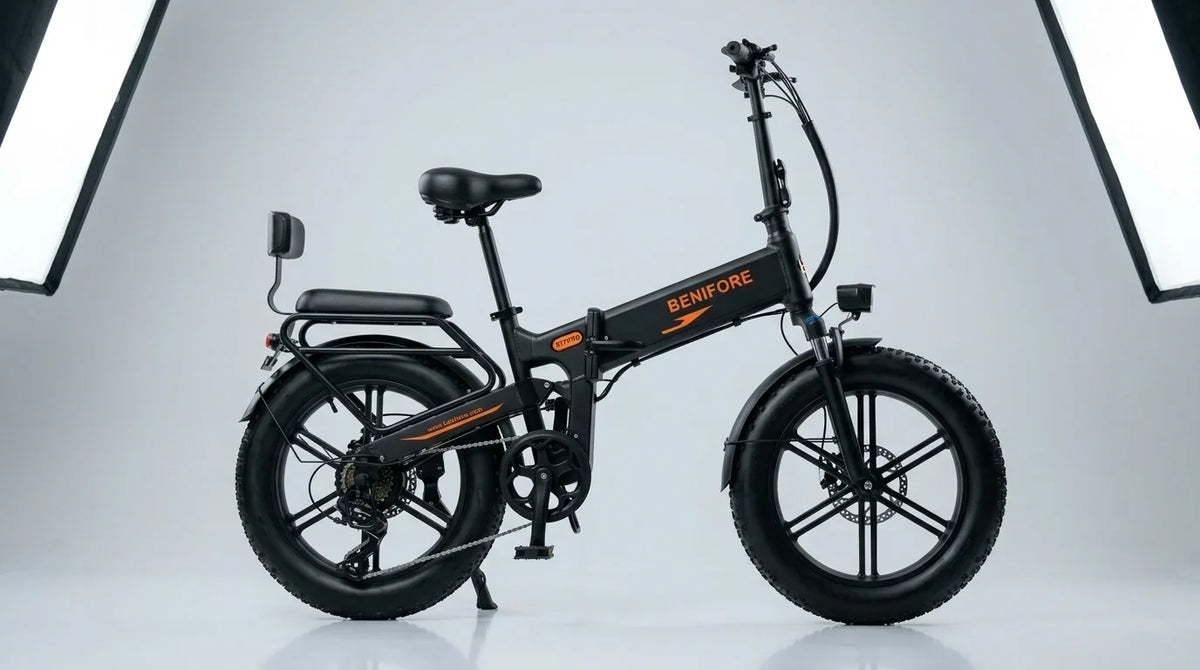
The Controller in the Benifore X1T PRO
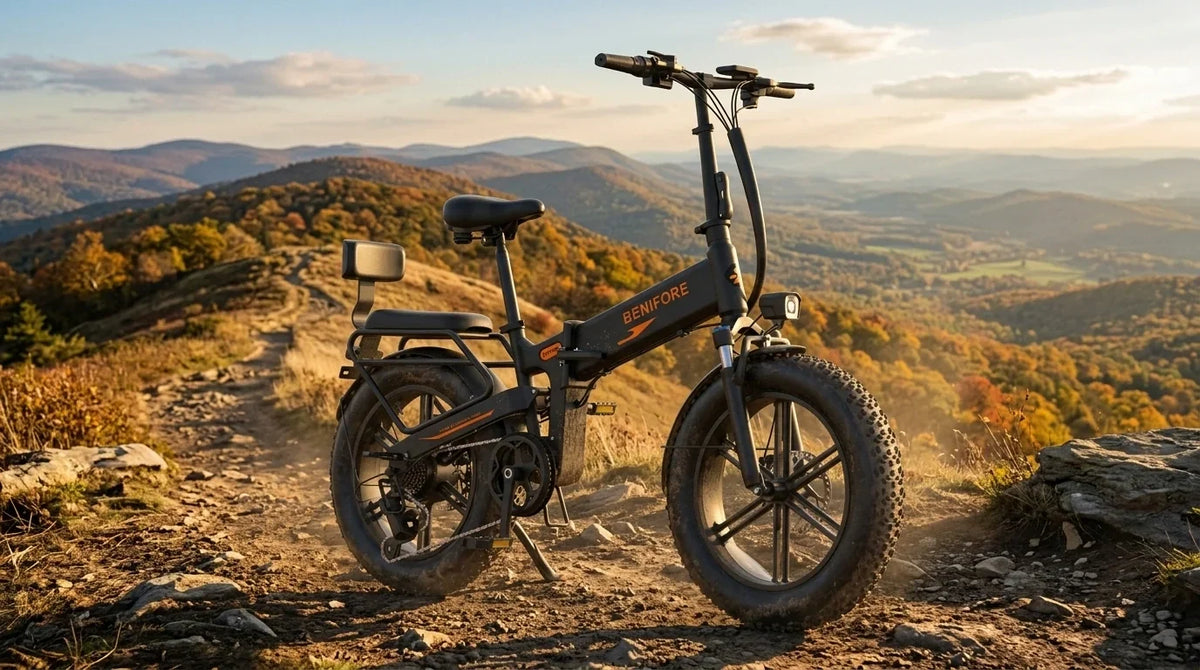
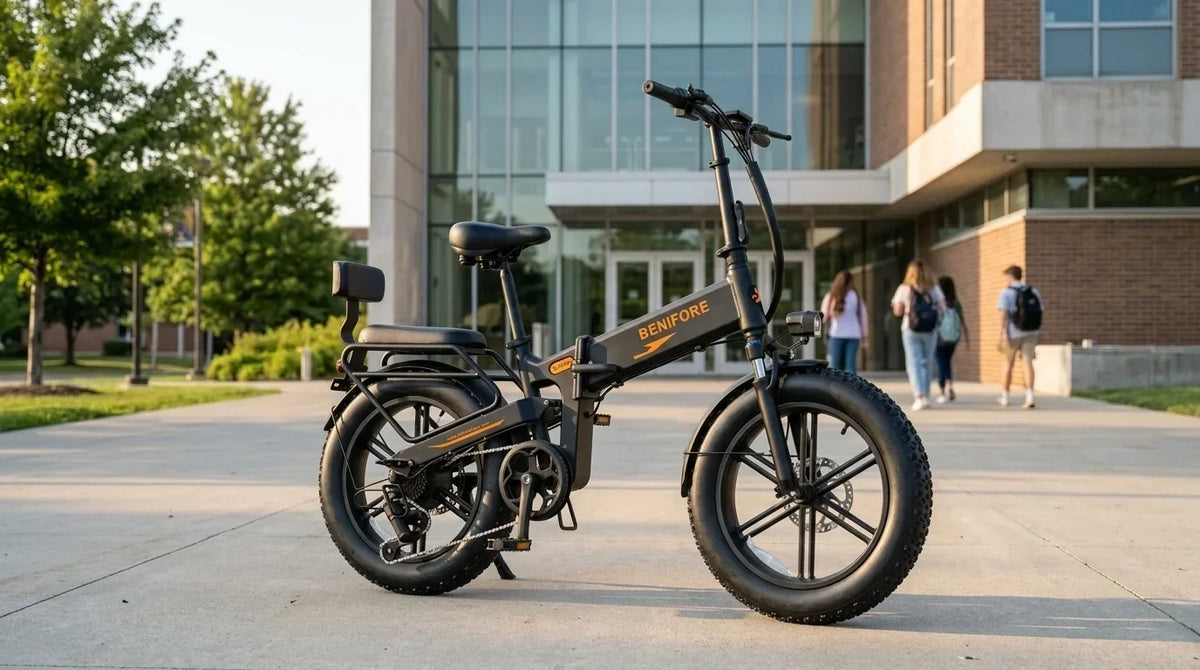
The Benifore X1T PRO is built around a high-output electrical system designed for riders who want substantial performance without limiting the bike to one narrow riding environment.
Its key specifications include:
- 1500W peak motor
- 90Nm torque
- 48V 20Ah battery
- Up to 65 miles of range
- 35 MPH top speed
- 20×4.0 fat tires
- Full suspension
- Up to 400 lbs load capacity
These specifications should be viewed as a complete system rather than independent numbers.
The 48V 20Ah battery provides the electrical energy storage, while the motor provides mechanical output. The controller sits between these parts and manages electrical power delivery based on rider input and operating conditions.
For a higher-output eBike, this system integration is particularly important.
The purpose is not simply to place the largest possible components on a frame.
The goal is to make the components work together in a predictable way.
Should You Replace an Electric Bike Controller?
Most riders should not replace a controller simply because another controller has a higher rating.
Controller replacement may become necessary if the original component has failed or if a manufacturer-approved replacement is required.
Before changing a controller, compatibility should be confirmed across the entire electrical system.
Important considerations include:
- Battery voltage
- Motor compatibility
- Current requirements
- Connector configuration
- Display compatibility
- Throttle compatibility
- Pedal-assist sensors
- Wiring
- Firmware or system communication
- Thermal requirements
Using an incompatible component can cause poor performance or electrical problems.
For most riders, the safest approach is to use the manufacturer's recommended replacement component or have qualified technical support verify compatibility.
Signs That an Electric Bike May Have an Electrical Problem
Not every performance problem is caused by the controller.
However, unusual electrical behavior can indicate that the system needs inspection.
Potential warning signs include:
- Sudden power interruptions
- Repeated error codes
- Unusual motor behavior
- Throttle response that changes unexpectedly
- Display communication problems
- Electrical components becoming unusually hot
- Intermittent motor assistance
These symptoms can have multiple causes.
The battery, wiring, connectors, sensors, display, motor, and controller can all potentially be involved.
Instead of immediately replacing one component, proper troubleshooting is the better approach.
How Buyers Should Evaluate an eBike Electrical System
When comparing electric bikes, start with the specifications that directly relate to your intended riding.
Then consider how those specifications work together.
A useful checklist includes:
Motor
Look at rated and peak power, torque, and intended riding conditions.
Battery
Consider voltage, capacity, and expected real-world range.
Controller
Look for a properly matched electrical system rather than simply chasing the largest current rating.
Controls
Consider throttle response, pedal assist, display information, and ease of operation.
Thermal Management
Higher-output systems need appropriate heat management.
Mechanical Components
Tires, brakes, frame, suspension, and wheels must also match the bike's intended performance.
Total Load
Consider the combined weight of rider, bike, and equipment.
This approach provides a much clearer picture than comparing one specification at a time.
Final Thoughts
The electric bike controller may not be the most visible component on an eBike, but it is an important part of the electrical system.
It helps manage the relationship between the battery, motor, throttle, pedal-assist system, and rider input.
Understanding the controller also explains why two electric bikes with similar advertised motor and battery specifications can provide noticeably different riding experiences.
The most important lesson for buyers is simple:
An electric bike is a system, not a collection of individual numbers.
Motor power matters.
Battery capacity matters.
Torque matters.
But how those components work together matters just as much.
For riders considering a higher-output eBike such as the Benifore X1T PRO, understanding the complete electrical architecture can make it easier to evaluate performance claims and choose a bike based on the way it is actually intended to be used.
Rather than asking which bike has the biggest individual specification, look at the complete system and ask whether the motor, battery, controller, chassis, tires, suspension, and load capacity make sense together.
That is a much better starting point for choosing an electric bike built for real-world riding.
Share: