




Choosing an electric bike is not exactly the same for every rider.
For lighter riders, factors such as frame size, range, riding position, and appearance may be enough to narrow down the options.
For heavier riders, there is another question that should come much earlier:
Can the electric bike comfortably and safely handle the total riding load?
That means looking beyond the number printed next to the motor.
A good electric bike for a heavier rider needs to work as a complete system. The frame, wheels, tires, motor, brakes, suspension, battery, and overall geometry all contribute to how the bike performs on the road.
This guide explains what heavier riders should look for when shopping for an electric bike, how weight capacity is calculated, why motor performance matters, how rider weight can affect range, and which specifications deserve the most attention before making a purchase.
What Makes an Electric Bike Suitable for a Heavy Rider?
The first thing to understand is that weight capacity is not the same as motor power.
An eBike may have a powerful motor but still have a relatively limited recommended payload.
Another bike may have a more moderate motor but a stronger frame and higher load rating.
For a heavier rider, the better approach is to evaluate the entire bicycle.
Important specifications include:
- Maximum load capacity
- Frame construction
- Wheel and tire size
- Motor output
- Torque
- Battery capacity
- Braking system
- Suspension
- Riding position
- Overall bike stability
These components work together.
A bike that performs well for a 150-pound rider may feel very different when carrying a much heavier total load.
What Does eBike Load Capacity Actually Mean?
Load capacity refers to the maximum weight the manufacturer specifies that the bicycle can support.
This is generally more useful than simply looking at the rider's body weight.
Why?
Because the bike does not carry only the rider.
The total load can include:
Rider + clothing + backpack + cargo + accessories
For example, if a rider weighs 300 lbs and carries 20 lbs of equipment, the bicycle needs to accommodate approximately 320 lbs of total riding load.
That is why riders should always compare their expected total weight with the manufacturer's stated capacity.
Rider Weight vs Total Payload
This distinction is easy to overlook.
Suppose an eBike has a maximum load capacity of 400 lbs.
That does not necessarily mean the rider should weigh exactly 400 lbs while carrying additional cargo.
If you are carrying:
- A backpack
- Groceries
- Tools
- A child seat
- Camping equipment
- Work equipment
those items contribute to the total load.
A safer buying decision leaves some practical room below the maximum specification rather than treating the maximum number as a target.
Why Frame Strength Matters
The frame is the foundation of the entire eBike.
When additional weight is placed on the bicycle, the frame experiences greater forces during:
- Acceleration
- Braking
- Cornering
- Bumps
- Descents
- Uneven pavement
- Off-road riding
A strong frame can contribute to a more stable and predictable ride.
For heavier riders, a sturdy frame should therefore be considered alongside motor power and battery size.
A large motor cannot compensate for an eBike that is not designed for the intended total load.
Why Fat Tires Can Be Useful for Heavier Riders
Tires play an important role in how an eBike feels under load.
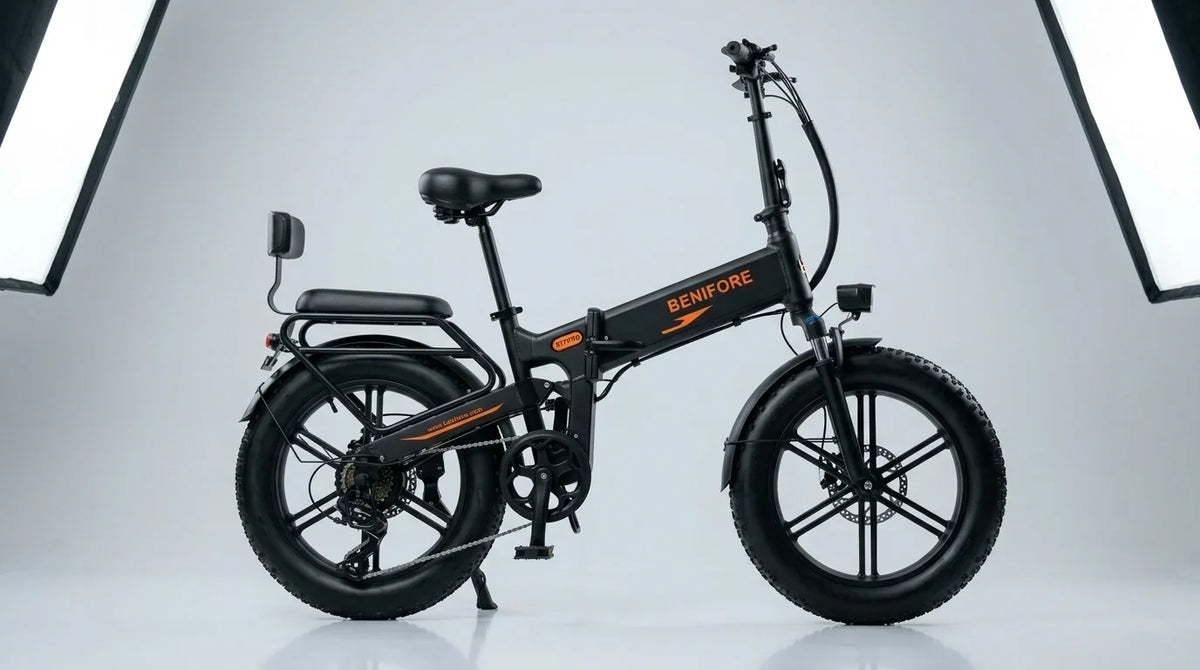
The Benifore X1T PRO uses:
20×4.0 fat tires
The wider tire profile provides a larger contact area and can contribute to a planted feeling on different surfaces.
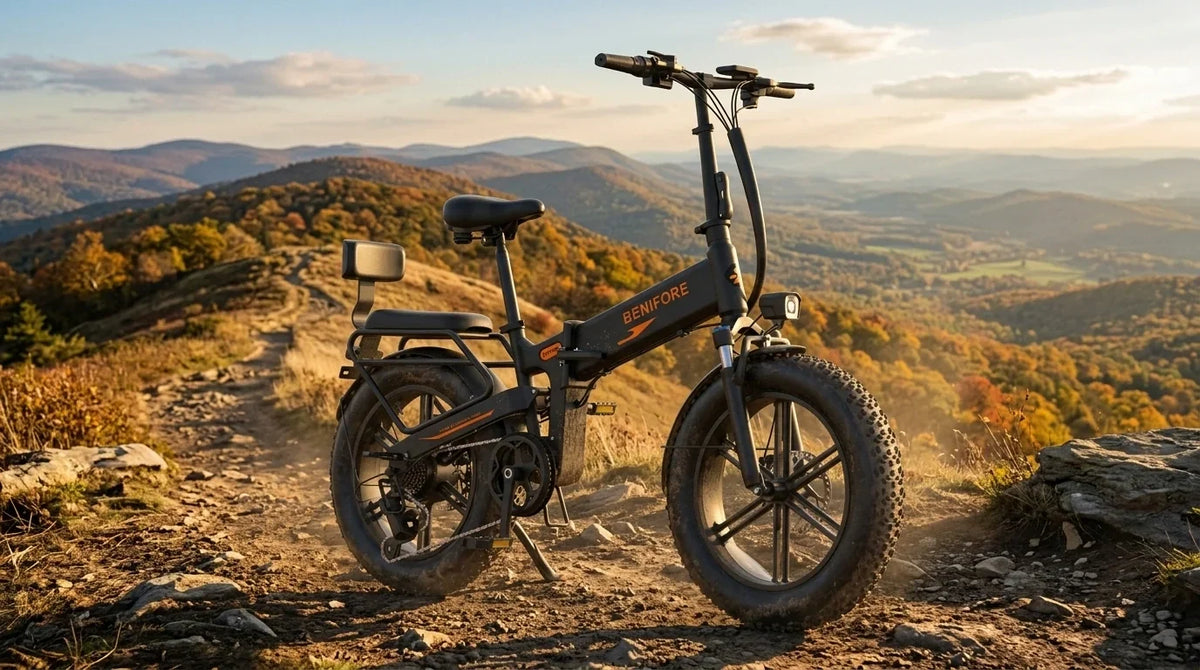
Fat tires can be particularly useful for riders who frequently encounter:
- Rough pavement
- Gravel
- Dirt paths
- Loose surfaces
- Uneven roads
However, tire pressure still matters.
The correct pressure should follow the manufacturer's recommendations and be adjusted appropriately for the riding conditions.
How Rider Weight Affects Handling
Weight changes the way an eBike behaves.
A heavier total load can affect:
- Acceleration
- Steering response
- Cornering
- Braking
- Suspension behavior
- Climbing
- Battery consumption
This does not mean that heavier riders cannot enjoy an eBike.
It simply means that the bicycle should be selected for the rider rather than assuming every model will feel the same.
A properly sized and appropriately rated eBike can provide a much more comfortable experience.
Motor Power Matters, But It Is Not Everything
Motor power becomes particularly noticeable when an eBike carries more weight.
A heavier system requires more energy to:
- Accelerate
- Climb hills
- Maintain speed
- Start from a stop
The Benifore X1T PRO uses a:
1500W peak motor
and produces:
90Nm of torque
These specifications provide the motor system with substantial performance capability.
But motor power should still be considered alongside the frame, tires, brakes, battery, and load rating.
A powerful motor is only one part of the equation.
Why Torque Is Important Under Load
Torque describes the rotational force produced by the motor.
For heavier riders, torque can become especially noticeable during acceleration and climbing.
Imagine two situations.
On flat pavement, the motor may have relatively little difficulty maintaining a moderate speed.
On a steep hill, however, the bike needs significantly more force to move the combined weight of the rider and bicycle uphill.
This is where torque becomes important.
The X1T PRO provides:
90Nm of torque
which is one of the specifications heavier riders should consider when comparing high-capacity eBikes.
How Rider Weight Affects Range
Manufacturers often advertise a maximum range under specific test conditions.
Real-world range can vary.
One of the reasons is rider weight.
A heavier total load can require the motor to use more energy, particularly when:
- Riding uphill
- Accelerating frequently
- Riding into strong wind
- Traveling at higher speeds
- Using higher assistance levels
Therefore, a rider carrying a heavier load should not automatically expect the same range as a lighter rider under identical battery conditions.
The Benifore X1T PRO is rated for:
Up to 65 miles of range
but actual range depends on riding conditions and usage.
Battery Capacity for Heavier Riders
Battery capacity becomes more important when the motor needs to work harder.
The X1T PRO uses a:
48V 20Ah battery
Battery energy can be calculated from voltage and amp-hours:
48V × 20Ah = 960Wh
A larger energy reserve can be useful for riders who frequently travel longer distances or ride under demanding conditions.
However, battery capacity should not be viewed as a guaranteed mileage number.
Real-world energy consumption depends on how the bike is ridden.
Does a Heavy Rider Need a High-Power eBike?
Not always.
The answer depends on:
- Rider weight
- Terrain
- Desired speed
- Distance
- Cargo
- Frequency of hill climbing
- Riding style
A heavier rider who mostly travels on flat roads may have different requirements from someone who regularly climbs steep hills.
The important point is to select a bike whose complete system is designed around your intended load and riding environment.
Why Braking Performance Matters More With More Weight
Braking is particularly important when total system weight increases.
More mass means more energy needs to be controlled when slowing down.
This becomes especially noticeable when riding:
- Downhill
- At higher speeds
- With cargo
- On wet roads
- On rough surfaces
For heavier riders, braking performance should therefore be part of the buying decision.
Do not focus exclusively on motor specifications.
The bike needs to be able to accelerate, control, and stop the total riding load.
Suspension Is More Than a Comfort Feature
Suspension is often discussed as a comfort upgrade.
For heavier riders, it can also affect how the bicycle handles uneven surfaces.
The X1T PRO uses:
Full suspension
This allows the bike to better manage impacts from:
- Potholes
- Broken pavement
- Gravel
- Uneven paths
- Small obstacles
Suspension setup still matters.
A heavier rider should make sure the suspension is appropriate for their weight and riding style rather than assuming every suspension system will perform identically.
Why Riding Position Matters
Comfort is not only about suspension.
A rider's position on the bike can affect:
- Weight distribution
- Back comfort
- Shoulder position
- Hip angle
- Visibility
- Control
For larger riders, a cramped frame can become uncomfortable quickly.
When comparing bikes, pay attention to:
- Frame dimensions
- Seat height
- Handlebar position
- Saddle size
- Step-over height
- Reach
A bike that technically supports your weight may still not be the right size.
Wheel Size and Stability
Wheel design can influence how an eBike handles different surfaces.
The X1T PRO uses:
20×4.0 tires
The combination of a compact wheel format and wide tire can provide a stable and substantial contact patch.
For heavier riders, stability is particularly important when:
- Starting
- Stopping
- Turning
- Riding over uneven pavement
- Carrying additional cargo
The goal is not simply to find the largest wheel.
The goal is to find a wheel and tire combination that matches the bike's overall geometry and intended use.
How to Calculate Whether an eBike Can Handle Your Weight
Use a simple calculation.
Step 1: Calculate rider weight
For example:
280 lbs
Step 2: Add your normal cargo
For example:
20 lbs
Step 3: Add accessories if necessary
For example:
10 lbs
Total:
310 lbs
If the eBike has a maximum load capacity of 400 lbs, the combined load is within the stated capacity.
This is a much better way to evaluate an eBike than looking only at your body weight.
Example: A 350 lb Rider
Suppose a rider weighs:
350 lbs
and normally carries:
10 lbs
of personal equipment.
The expected load is approximately:
360 lbs
An eBike rated for up to 400 lbs provides a meaningful margin compared with a bike rated for 250 or 300 lbs.
But the rider should still consider terrain, speed, braking, and manufacturer instructions.
Maximum capacity is a specification—not a guarantee of identical performance at every possible riding condition.
What Happens If You Exceed the Load Capacity?
Exceeding the manufacturer's recommended load can affect the entire bicycle.
Potential effects include:
- Reduced handling stability
- Increased braking distance
- Greater tire stress
- More suspension compression
- Higher motor load
- Faster component wear
- Reduced range
For that reason, riders should treat the manufacturer's load rating seriously.
If your expected total load is above the specification, choose a different bike rather than assuming the bike will simply "handle it."
Heavy Rider vs High-Performance eBike
These terms are related but not identical.
A heavy-rider eBike emphasizes:
- High load capacity
- Strong frame
- Stable handling
- Appropriate wheels and tires
- Suitable braking
- Comfortable geometry
A high-performance eBike may emphasize:
- Motor power
- Acceleration
- Torque
- Speed
- Battery capacity
The best option for a heavier rider is often a model that combines both characteristics.
What Specifications Should Heavy Riders Compare?
Instead of looking at only one number, create a checklist.
Load Capacity
Can the bike support the complete riding load?
Motor
Does it provide enough assistance for the terrain?
Torque
Will it perform well during starts and climbs?
Battery
Is there enough energy for your normal trip?
Tires
Are they suitable for your surfaces and load?
Brakes
Can they effectively control the total system weight?
Suspension
Can it provide appropriate support and comfort?
Frame
Is it designed for the intended load?
This gives you a much clearer picture of the bike.
Is a 400 lb Capacity eBike Better for a Heavy Rider?
If your total expected load is high, a higher-rated bicycle can provide more flexibility.
For example, a bike rated for:
400 lbs
gives a rider more available payload than a model rated for:
250 lbs
or:
300 lbs
But maximum capacity should never be the only buying criterion.
A good heavy-rider eBike should combine capacity with:
- Strong braking
- Stable geometry
- Appropriate tires
- Suitable suspension
- Adequate motor performance
- A comfortable riding position
Can a Heavy Rider Ride a Fat Tire eBike?
Yes.
Fat tire eBikes can be a practical choice for riders who value stability and comfort.
The wide tires can help provide a substantial contact patch, while the overall bike design can provide additional support.
But the tire itself does not determine the bike's maximum load.
Always check the manufacturer's specifications for the complete bicycle.
Can Heavy Riders Ride Long Distances?
Yes, but range expectations should be realistic.
Long-distance riding depends on more than the rider's weight.
Important factors include:
- Battery capacity
- Terrain
- Wind
- Speed
- Tire pressure
- Assistance level
- Number of stops
- Temperature
- Cargo
A heavier rider may use more energy under the same conditions.
That is why battery capacity and riding efficiency matter.
Tips for Improving Range With a Heavier Load
If you want to maximize battery range:
Keep tires properly inflated
Underinflated tires can increase rolling resistance.
Use an appropriate assistance level
Higher assistance generally consumes more energy.
Avoid unnecessary acceleration
Repeated hard acceleration uses more battery.
Maintain a steady pace
Consistent riding can be more efficient.
Reduce unnecessary cargo
Carry what you need rather than adding unnecessary weight.
Plan your route
Avoiding unnecessary steep climbs can reduce energy consumption.
What About Hill Climbing?
Hill climbing is one of the situations where rider weight becomes especially noticeable.
The motor needs to overcome:
- Gravity
- Rider weight
- Bike weight
- Cargo
- Rolling resistance
This is why heavier riders who live in hilly areas should pay close attention to torque and motor performance.
The X1T PRO's 90Nm torque provides strong pulling capability for demanding riding situations.
However, actual climbing performance depends on the slope, surface, rider weight, battery state, speed, and riding mode.
Heavy Rider eBike Buying Checklist
Before purchasing, ask these questions:
1. What is the maximum load capacity?
Do not guess.
2. Does that capacity include cargo?
Check the manufacturer's definition.
3. What is my realistic total riding weight?
Include equipment.
4. What type of terrain will I ride?
Flat roads and steep hills require different performance.
5. How far do I normally travel?
This helps determine battery requirements.
6. Do I need suspension?
If your roads are rough, suspension can be valuable.
7. Do I want fat tires?
Consider the surfaces you ride on.
8. Is the riding position comfortable?
A proper fit matters.
9. Can the braking system handle the intended load?
Do not overlook stopping performance.
10. Does the bike provide enough margin?
Avoid choosing a bike that is constantly operating at its maximum rated capacity.
Benifore X1T PRO for Larger Riders
The Benifore X1T PRO is built around a relatively high-capacity specification package.
Its key specifications include:
- 1500W peak motor
- 90Nm torque
- 48V 20Ah battery
- Up to 65 miles of range
- 35 MPH top speed
- 20×4.0 fat tires
- Full suspension
- Up to 400 lbs load capacity
For riders who need a bicycle capable of handling a larger overall load, the up to 400 lbs load capacity is particularly relevant.
The rest of the specification package also matters.
The 1500W peak motor and 90Nm torque are designed to provide strong motor performance, while the 48V 20Ah battery provides substantial energy capacity.
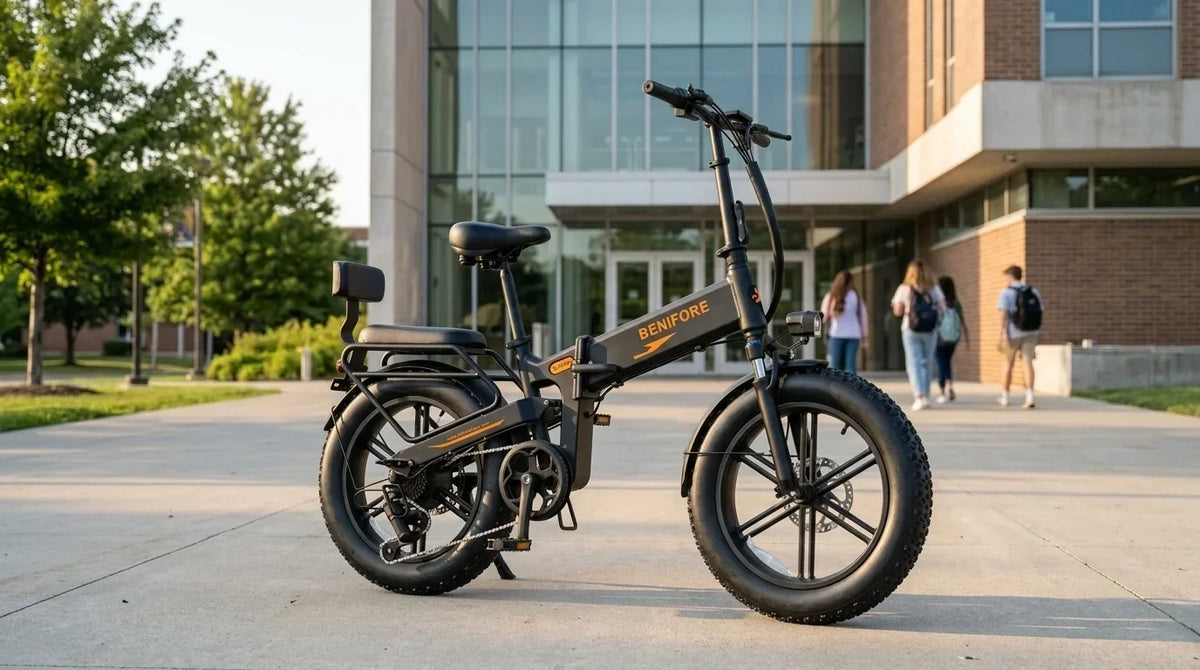
The 20×4.0 tires and full suspension are aimed at a stable and comfortable riding experience across different surfaces.
Again, riders should always stay within the manufacturer's stated limits and use the bicycle according to the applicable instructions and local regulations.
Comfort Is Just as Important as Capacity
One mistake heavier riders sometimes make is focusing entirely on the maximum weight number.
A bike can support your weight and still not be comfortable.
Pay attention to:
- Saddle
- Handlebar position
- Frame size
- Suspension
- Tire pressure
- Pedal position
- Riding posture
If you are planning to ride for one or two hours at a time, comfort becomes a major part of the ownership experience.
Don't Ignore the Seat
For heavier riders, the saddle can make a significant difference.
A saddle that is too narrow or poorly shaped can become uncomfortable during longer rides.
When selecting an eBike, consider:
- Saddle width
- Padding
- Shape
- Riding posture
- Seat height adjustment
A comfortable bike encourages you to ride more often.
Heavy Rider eBike: What Should You Avoid?
There are several warning signs.
Avoid a bike with an unclear load rating.
You should know exactly what the manufacturer specifies.
Avoid choosing based only on motor wattage.
A powerful motor does not automatically mean a high-capacity frame.
Avoid ignoring the brakes.
Stopping performance matters even more as total weight increases.
Avoid assuming advertised range is guaranteed.
Range changes with riding conditions.
Avoid riding above the manufacturer's capacity.
More weight does not simply mean more motor power is required.
The entire bicycle must be designed for the load.
Final Buying Advice
If you are a heavier rider shopping for an electric bike, do not start with:
"How many watts does it have?"
Start with:
"How much total weight is it designed to carry?"
Then evaluate the rest of the system.
A suitable eBike should provide an appropriate combination of:
Load capacity
Motor performance
Torque
Battery capacity
Braking
Tires
Suspension
Frame strength
Comfort
Real-world usability
For larger riders, these factors can make a much bigger difference than a single headline specification.
Frequently Asked Questions
What is the best electric bike for a heavy rider?
The best option depends on the rider's total weight, terrain, distance, riding style, and comfort requirements. Start with the manufacturer's maximum load rating and then compare the motor, battery, brakes, tires, suspension, and frame.
What weight can an electric bike hold?
It depends on the model. Some eBikes are designed for around 250–300 lbs, while higher-capacity models can support more. Always use the manufacturer's stated specification.
Is 400 lbs a high load capacity for an eBike?
A 400 lbs maximum load rating provides substantially more capacity than many conventional eBikes. It can be useful for riders with higher body weight or riders who regularly carry cargo.
Does a heavier rider need a more powerful motor?
Not always. Terrain and riding style matter. Heavier riders who regularly climb hills or carry additional cargo may benefit from stronger motor performance.
Does rider weight reduce eBike range?
It can. A heavier total load can require more energy, especially during acceleration and climbing.
Are fat tires good for heavier riders?
Fat tires can provide a stable, planted feel and work well on a variety of surfaces. However, tire size alone does not determine maximum load capacity.
Is suspension important for heavy riders?
It can be. Full suspension can improve comfort and control over uneven surfaces, but the suspension should be appropriate for the rider's weight and riding conditions.
What should a 300 lb rider look for in an eBike?
Look for an appropriate load rating with enough margin for clothing and cargo, along with strong braking, suitable tires, adequate motor performance, a comfortable frame, and sufficient battery capacity.
Can a 400 lb rider use an electric bike?
Only if the complete bicycle is specifically rated for the rider's total load. Never assume that an eBike can safely carry more than the manufacturer's stated maximum.
Final Thoughts
A heavier rider does not need to settle for an uncomfortable or underpowered electric bike.
The key is choosing the bike as a complete system.
Look beyond the motor headline and consider the things that actually affect the riding experience:
capacity, stability, braking, tires, suspension, motor performance, battery energy, and comfort.
For riders with higher total loads, a bicycle rated for up to 400 lbs can provide significantly more flexibility than a conventional lower-capacity model.
The Benifore X1T PRO combines an up to 400 lbs load capacity with a 1500W peak motor, 90Nm torque, 48V 20Ah battery, up to 65 miles of range, 20×4.0 fat tires, and full suspension, giving riders a specification package designed around strong performance and practical everyday use.
The right eBike is not necessarily the one with the biggest number.
It is the one that is properly matched to your weight, your route, your riding style, and the way you actually plan to use it.
Share: