




For many hunters, the hardest part of an outdoor trip is not necessarily the time spent in the field. It is getting from the vehicle, cabin, campsite, or trailhead to the areas where they actually want to spend their time.
Large properties, long access roads, gravel paths, forest service roads, and uneven trails can make walking impractical while using a full-size vehicle may be unnecessary or restricted.
An electric bike can provide another option.
A capable eBike can help riders cover longer distances while carrying essential outdoor equipment, making it easier to explore large areas without relying entirely on a car or truck.
But choosing an electric bike for hunting is different from choosing one for a normal city commute.
Hunters need to think about terrain, distance, equipment, battery planning, stability, tire design, carrying capacity, comfort, and how the bike will be used in a particular outdoor environment.
This guide explains the key factors to consider when choosing and preparing an electric bike for hunting and other outdoor trips.
Why Consider an Electric Bike for Hunting?
Hunting environments can vary considerably.
One trip might involve a maintained gravel road.
Another might involve a long dirt access road, grass, packed soil, or a combination of different surfaces.
Walking these distances can consume valuable time and energy before the day even begins.
A vehicle can cover the distance more quickly, but it may not always be the most practical choice for every access route.
An electric bike sits between the two.
It can provide powered assistance while remaining relatively compact and easy to maneuver compared with a full-size vehicle.
Depending on local rules and the specific property, an eBike may be useful for:
- Traveling between a parking area and a trailhead
- Exploring large outdoor properties
- Moving along gravel access roads
- Traveling between a campsite and outdoor areas
- Carrying personal equipment
- Exploring during scouting trips
- Moving around camp
- Combining hunting trips with camping and other outdoor activities
The important consideration is that an electric bike should complement your outdoor routine rather than replace every other form of transportation.
What Should You Look for in a Hunting eBike?
There is no single specification that determines whether an electric bike is suitable for outdoor hunting trips.
Instead, several features need to work together.
A practical hunting-oriented eBike should be evaluated based on:
- Motor performance
- Torque
- Battery capacity
- Real-world range
- Tire design
- Suspension
- Load capacity
- Braking performance
- Rider comfort
- Equipment-carrying options
- Overall handling
The right combination depends on the terrain and distance you expect to ride.
A rider traveling mostly on maintained roads may have very different requirements from someone crossing gravel roads, packed dirt, grass, and rough access trails.
1. Motor Performance Matters When Terrain Changes
Outdoor routes rarely remain perfectly flat.
Even a relatively easy-looking access road can include:
- Long inclines
- Loose gravel
- Soft ground
- Uneven surfaces
- Repeated small bumps
- Changes in elevation
Adding equipment and riding over these conditions increases the demands placed on the bike.
This is where motor performance becomes important.
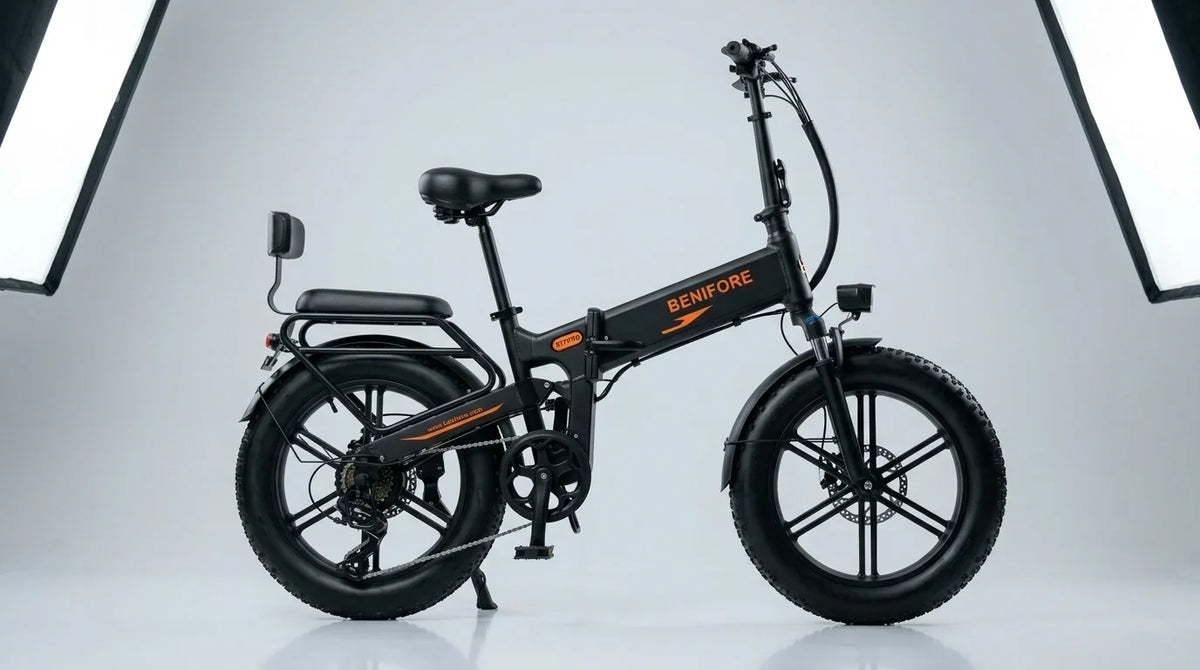
The Benifore X1T PRO uses a 1500W peak motor.
For an outdoor rider, the useful question is not simply how impressive the number looks on a specification sheet.
Instead, consider what motor performance means when the bike is carrying the rider and additional gear.
A capable motor can provide stronger assistance during acceleration and when dealing with changing terrain.
This can be particularly useful when starting from a low speed on an incline or moving through a section of rough access road.
However, motor power should always be considered together with torque, battery output, gearing, tires, rider weight, and terrain.
No single specification tells the entire story.
2. Torque Can Be Important on Outdoor Routes
Power and torque describe different aspects of motor performance.
While peak motor power can provide an indication of the system's potential output, torque is especially relevant when considering low-speed performance and changes in terrain.
The Benifore X1T PRO delivers 90Nm of torque.
For outdoor riders, strong torque can be useful when:
- Starting on an incline
- Carrying additional equipment
- Riding at lower speeds
- Moving across uneven surfaces
- Accelerating after slowing down
- Handling changing terrain
This is one reason an outdoor eBike should not be selected based only on top speed.
A hunting trip rarely requires maximum speed.
What matters more is having predictable and useful power when the terrain becomes more demanding.
3. Battery Capacity Should Be Planned Around the Entire Trip
Range is one of the most important considerations for any outdoor eBike.
The mistake is assuming that the advertised maximum range represents what you will always experience.
Real-world range changes with conditions.
Factors can include:
- Rider weight
- Equipment weight
- Riding speed
- Terrain
- Wind
- Temperature
- Tire pressure
- Pedal-assist level
- Throttle use
- Frequency of acceleration and braking
The Benifore X1T PRO uses a 48V 20Ah battery and offers up to 65 miles of range under suitable conditions.
That provides substantial capacity for longer recreational rides, but route planning is still important.
For an outdoor trip, do not calculate your battery needs using only the distance from the parking area to your destination.
Think about the entire route.
For example:
Vehicle → Access Road → Destination → Additional Riding → Return
If the total route is longer than expected, your battery reserve becomes increasingly important.
A sensible approach is to leave enough capacity for unexpected detours, terrain changes, weather conditions, and the return journey.
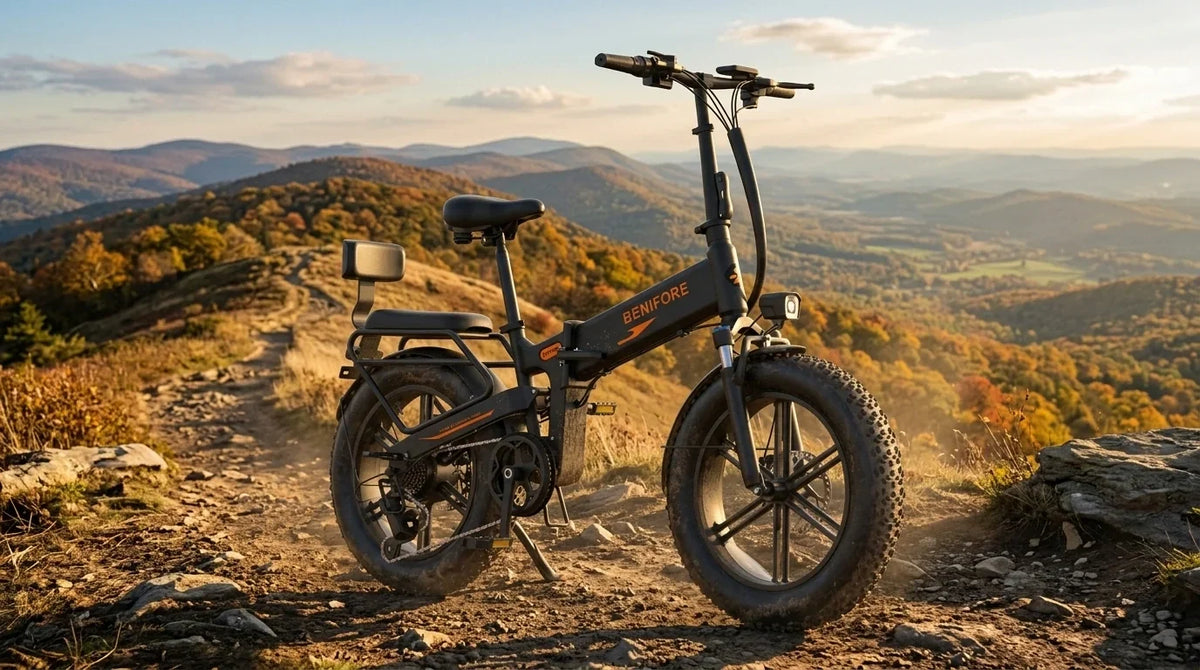
4. Fat Tires Can Help on Mixed Outdoor Surfaces
One of the defining features of many outdoor-oriented eBikes is the use of wider tires.
The Benifore X1T PRO uses 20×4.0 fat tires.
Compared with narrow road-oriented tires, wider tires provide a larger contact area with the riding surface.
That can be useful when riding on surfaces such as:
- Gravel
- Dirt
- Grass
- Packed soil
- Uneven roads
- Loose outdoor surfaces
For outdoor riding, tire choice affects more than appearance.
It influences how the bike feels underneath the rider.
A wider tire can provide a more planted feeling and additional cushioning when used at an appropriate pressure.
However, fat tires do not make every trail automatically suitable for an eBike.
Deep mud, extremely loose terrain, steep technical trails, and restricted areas can still present serious challenges.
The correct approach is to match the bike to the terrain instead of assuming a particular tire size makes all conditions safe.
5. Full Suspension Can Make Rough Access Roads More Comfortable
A route can look easy on a map and feel completely different once you ride it.
Small rocks, roots, potholes, washboard surfaces, and uneven sections can create repeated impacts.
This is where suspension can make a meaningful difference.
The X1T PRO features full suspension, providing suspension at both the front and rear of the bike.
For outdoor riding, the benefit is primarily related to comfort and control over uneven surfaces.
When the bike encounters repeated bumps, suspension can help reduce some of the impact transmitted to the rider.
This can be particularly useful during longer rides where small impacts accumulate over time.
It is important to remember that suspension does not turn an eBike into an unrestricted off-road vehicle.
Trail conditions, local regulations, manufacturer recommendations, and the rider's experience still determine where and how the bike should be used.
6. Load Capacity Becomes More Important Outdoors
One of the biggest differences between a normal recreational ride and an outdoor trip is equipment.
A rider might carry:
- Backpack
- Water
- Food
- Outdoor clothing
- Navigation equipment
- Phone
- Camera
- First-aid supplies
- Tools
- Emergency equipment
- Other personal gear
That additional weight needs to be considered.
The Benifore X1T PRO has an up to 400 lbs load capacity.
This gives riders additional capacity for the combined rider and properly secured equipment, within the manufacturer's guidelines.
But maximum load capacity is not the only consideration.
Weight distribution matters too.
A poorly positioned load can affect:
- Steering
- Braking
- Balance
- Acceleration
- Suspension behavior
Heavy items should be secured carefully and positioned as low and centrally as practical.
Avoid placing bulky or loose equipment where it can interfere with the wheels, pedals, drivetrain, brakes, suspension, or steering.
7. Equipment Organization Matters More Than You Think
An outdoor eBike can carry equipment, but that does not mean every item should simply be attached wherever there is space.
Good organization makes the ride easier.
Before a trip, divide your equipment into three groups:
Essential Equipment
These are items you actually need during the trip.
Examples include:
- Water
- Food
- Navigation equipment
- Required personal items
- Basic repair equipment
Frequently Used Equipment
These are items you may need to access during the ride.
They should be stored where they can be reached without completely unloading the bike.
Emergency Equipment
These items may not be used often but can become important when something goes wrong.
They should remain securely stored and protected from damage.
This simple organization approach can prevent the common problem of packing too much equipment without considering where it will go.
8. Choose Carrying Solutions Carefully
A bike used for outdoor trips should be equipped with carrying solutions that are appropriate for the specific model.
Depending on the bike and the trip, riders may consider compatible:
- Rear racks
- Cargo bags
- Panniers
- Baskets
- Handlebar bags
- Frame bags
The goal is not maximum storage.
The goal is secure and balanced storage.
For example, putting too much weight on one side of a rear rack can affect handling.
Likewise, large objects mounted near the handlebars can interfere with steering.
Before starting the ride, check that all equipment is firmly secured.
Nothing should be able to move into:
- The wheels
- Brake components
- Chain or drivetrain
- Pedals
- Suspension
- Steering area
A well-organized load is part of safe outdoor riding.
9. Stability Matters More Than Maximum Speed
A hunting or outdoor eBike does not need to be judged primarily by its top speed.
The Benifore X1T PRO has a 35 MPH top speed, but that specification should be understood as a performance capability rather than a target speed for every ride.
Outdoor environments often require slower riding.
You may encounter:
- Narrow roads
- Uneven ground
- Blind corners
- Other riders
- Hikers
- Campers
- Wildlife
- Vehicles
- Changing trail conditions
A controlled riding speed allows more time to respond to unexpected conditions.
When carrying equipment, it becomes even more important.
The heavier the combined rider and cargo load, the more important braking distance, balance, and speed management become.
Always follow local eBike laws, posted speed limits, property rules, and trail restrictions.
10. Quiet Riding Can Be Useful for Outdoor Exploration
One reason some riders appreciate electric bikes in outdoor environments is that they provide powered mobility without the size and operation of a conventional vehicle.
That can make an eBike useful for exploring an area during scouting or general outdoor recreation.
However, riders should not assume that every trail or property allows eBikes.
Access rules vary by:
- State
- County
- Land manager
- Park
- Private property
- Trail system
Before riding, check the rules for the specific area.
This is especially important on public land, where different trail classifications may have different requirements.
An electric bike should be used where it is legally permitted.
11. Consider Weather and Ground Conditions
Outdoor conditions can change quickly.
A route that is easy to ride when dry can become significantly more difficult after rain.
Mud can increase rolling resistance.
Wet leaves can reduce traction.
Loose gravel can change how the bike handles corners.
Cold temperatures can also affect battery performance.
For longer trips, check the weather before leaving and consider how it may affect the route.
If heavy rain is expected, a route that normally works well may no longer be appropriate.
Good outdoor riding is often about adapting the plan before conditions become a problem.
12. Plan Your Route Before You Leave
GPS navigation is useful, but it should not be your only source of information.
Before an outdoor trip, consider:
- Total distance
- Elevation changes
- Surface type
- Access restrictions
- Weather
- Battery capacity
- Available charging options
- Emergency exit points
- Cell coverage
- Expected daylight
A route that appears short on a map may take considerably longer if it contains rough terrain or steep elevation changes.
For longer trips, it is also worth identifying alternative routes.
If one section becomes inaccessible because of weather, construction, private property, or trail restrictions, you have another option.
13. How to Match the Bike to Your Outdoor Riding Style
Not every rider needs the same setup.
Occasional Outdoor Rider
If you only occasionally use an eBike for outdoor trips, prioritize versatility.
A good all-purpose configuration can provide value across:
- Recreation
- Camping
- Fishing
- Local riding
- Weekend exploration
Frequent Outdoor Rider
If you spend significant time riding on gravel and dirt roads, pay more attention to:
- Tires
- Suspension
- Motor performance
- Torque
- Battery capacity
- Load capacity
Long-Distance Explorer
If your trips regularly cover many miles, battery capacity becomes increasingly important.
Comfort also matters because a long ride exposes weaknesses in the bike's ergonomics.
Rider Carrying More Equipment
If you regularly carry substantial equipment, pay close attention to the bike's maximum load rating and how cargo can be distributed.
The objective is a balanced setup rather than simply maximizing the amount of equipment carried.
14. A Practical Pre-Ride Checklist
Before leaving for an outdoor ride, spend a few minutes checking the bike.
Battery
Confirm that the battery has enough charge for the planned route and a reasonable reserve.
Tires
Check pressure and inspect the tires for visible damage.
Brakes
Test the brakes before leaving.
Controls
Make sure the throttle, pedal-assist controls, display, and other controls work correctly.
Fasteners
Check that important components are secure.
Cargo
Make sure all bags and equipment are firmly attached.
Route
Confirm that eBikes are permitted on the planned route.
Weather
Check the forecast and ground conditions.
Communication
Bring a charged phone and any necessary navigation or emergency equipment.
A short pre-ride inspection can prevent many avoidable problems.
How the Benifore X1T PRO Fits Outdoor Riding
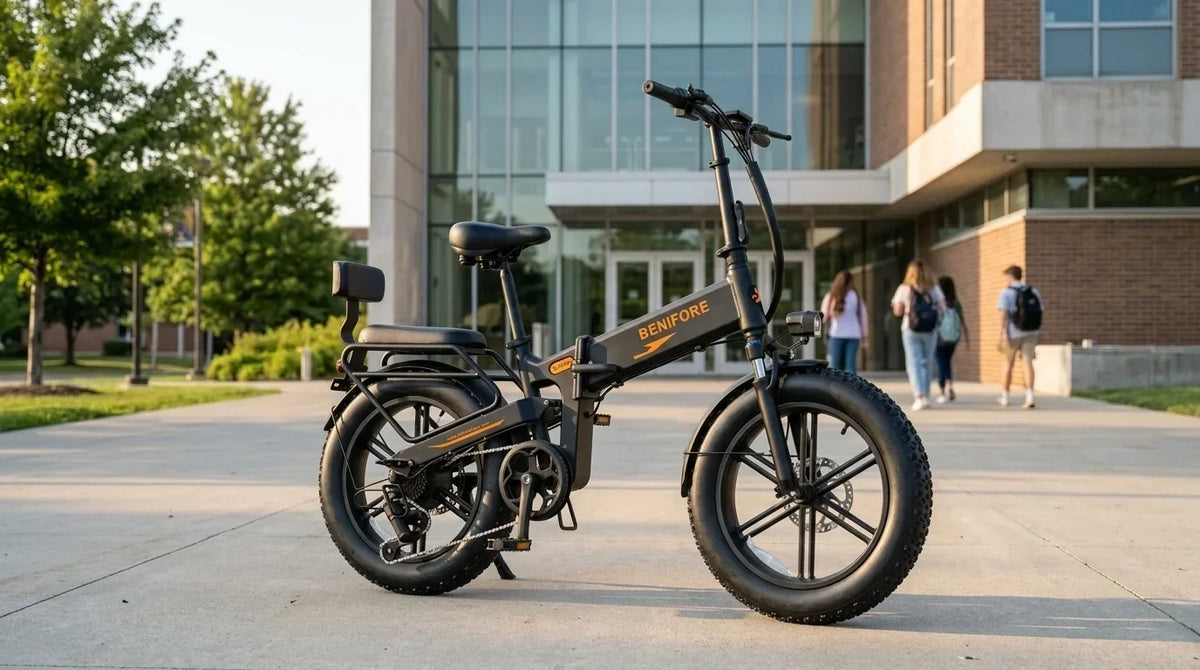
The Benifore X1T PRO combines several specifications that can be useful for riders who want one electric bike for both everyday use and outdoor recreation.
Its configuration includes:
- 1500W peak motor
- 90Nm torque
- 48V 20Ah battery
- Up to 65 miles of range
- 35 MPH top speed
- 20×4.0 fat tires
- Full suspension
- Up to 400 lbs load capacity
For an outdoor rider, the value is in how these specifications work together.
The motor and torque provide substantial performance capability.
The 48V 20Ah battery provides a large energy reserve for longer rides.
The 20×4.0 fat tires provide a wide tire platform for mixed riding surfaces.
Full suspension is designed to improve comfort over uneven terrain.
And the up to 400 lbs load capacity gives additional room for the rider and properly secured equipment.
This type of configuration can make sense for someone who does not want an eBike limited to a single purpose.
The same bike can be used for weekend recreation, camping trips, fishing access, local transportation, and outdoor exploration, provided the route and use are appropriate for the bike.
Is an Electric Bike a Good Choice for Outdoor Trips?
For the right rider and environment, an electric bike can be a practical outdoor transportation option.
Its biggest advantage is flexibility.
Instead of walking every mile or using a larger vehicle for every short-distance trip, an eBike can provide another way to move around.
But the bike should be chosen around the actual environment.
If your riding consists almost entirely of paved roads, you may not need a highly capable fat tire configuration.
If your trips regularly include gravel, dirt, uneven access roads, and longer distances, features such as suspension, battery capacity, tire design, torque, and load capacity become more important.
The best setup is the one that fits the conditions you actually ride in.
Final Thoughts
Choosing an electric bike for hunting is ultimately about more than motor wattage or maximum speed.
Outdoor riding places different demands on an eBike.
You need to think about the entire trip:
Where are you starting?
How far do you need to travel?
What type of terrain will you encounter?
How much equipment will you carry?
How much battery reserve will you need?
Is the route legally accessible to eBikes?
These questions are more useful than simply looking for the biggest number on a specification sheet.
A capable outdoor eBike should provide a balance of performance, comfort, stability, range, tire capability, suspension, and practical carrying capacity.
The Benifore X1T PRO offers a combination of 1500W peak motor performance, 90Nm torque, a 48V 20Ah battery, up to 65 miles of range, 35 MPH top speed, 20×4.0 fat tires, full suspension, and up to 400 lbs load capacity.
For riders who use an electric bike as part of a broader outdoor lifestyle, that combination provides the flexibility to move beyond ordinary paved-road riding.
Whether the trip involves a long gravel access road, a weekend camping trip, a fishing location, or general outdoor exploration, the right eBike should make the journey more practical without becoming the focus of the experience.
The best outdoor ride is ultimately the one that gets you where you need to go comfortably, responsibly, and with enough battery and equipment to make the trip back.
Share: