




When people compare electric bikes, most of the attention usually goes to the motor, battery, range, or top speed.
But there is another part of an eBike that can have a noticeable effect on everyday riding: the gearing system.
An electric bike can have a powerful motor and a large battery, but the drivetrain still determines how efficiently the rider can put pedal power into the bike.
Understanding gears can help you choose the right eBike for commuting, hills, recreational riding, mixed terrain, and longer trips.
This guide explains how electric bike gears work, what gear ratios actually mean, why cadence matters, and how to choose a drivetrain that matches the way you ride.
What Are Gears on an Electric Bike?
Electric bike gears work in a similar way to gears on a traditional bicycle.
The drivetrain uses different-sized gears to change the relationship between:
- Pedal rotation
- Wheel rotation
- Rider effort
- Riding speed
When you change gears, you are not changing the motor's rated power.
Instead, you are changing how your pedaling effort is transferred to the rear wheel.
This becomes particularly useful when riding on different types of terrain.
A gear that feels comfortable on flat pavement may feel too difficult when climbing a steep hill.
Likewise, a very low gear that makes climbing easier may not feel natural when riding quickly on a flat road.
That is why having multiple gears can make an eBike more adaptable.
How Does an eBike Gear System Work?
A typical bicycle drivetrain includes several major components:
- Chainring
- Crankset
- Chain
- Cassette or freewheel
- Rear derailleur
- Shifter
The chain connects the front chainring to one of the rear gears.
Changing gears changes the ratio between the front and rear gears.
For example, when the chain moves onto a larger rear sprocket, the rider generally gets an easier pedaling ratio.
When it moves onto a smaller rear sprocket, the rider gets a higher ratio that is better suited to faster riding.
The exact behavior depends on the combination of front and rear gearing.
What Is a Gear Ratio?
A gear ratio describes the relationship between the size of the front and rear gears.
A simple example can make this easier to understand.
Imagine a front chainring with 42 teeth and a rear sprocket with 21 teeth.
The ratio is:
42 ÷ 21 = 2.0
That means the rear wheel turns approximately two times for each complete rotation of the front chainring, assuming a direct relationship without accounting for other system factors.
Now imagine using a larger rear sprocket.
If the rear sprocket has 28 teeth:
42 ÷ 28 = 1.5
The ratio becomes lower.
The rider gets an easier pedaling setup, which is useful when climbing or starting from a stop.
What Is a Low Gear?
A low gear is designed to make pedaling easier.
It usually uses:
A smaller front gear + a larger rear sprocket
Low gears are useful when:
- Climbing hills
- Starting from a stop
- Carrying additional weight
- Riding slowly on technical terrain
- Pedaling against strong resistance
The trade-off is that you need to pedal more revolutions to travel the same distance.
That is completely normal.
The purpose of a low gear is not maximum speed.
Its purpose is to make it easier to maintain a comfortable pedaling cadence when resistance increases.
What Is a High Gear?
A high gear makes the relationship between pedal rotation and wheel rotation higher.
It generally uses:
A larger front gear + a smaller rear sprocket
High gears can be useful for:
- Flat roads
- Faster cruising
- Descending
- Maintaining speed
- Riding with lower pedal resistance
However, a high gear is not always better.
If the gear is too high for the terrain, the rider may have to push too hard on each pedal stroke.
That can make riding feel uncomfortable and inefficient.
Why Gear Selection Matters on Hills
One of the most noticeable situations where gearing matters is climbing.
When the road becomes steeper, the resistance against the bike increases.
If you remain in a high gear, the pedals can become difficult to turn.
Instead of forcing the pedals, shifting into a lower gear allows you to maintain a more manageable cadence.
This is particularly useful when the rider wants to continue contributing pedal power instead of relying entirely on the motor.
An electric motor can provide assistance, but the drivetrain still determines how your legs interact with the bike.
Gears and Electric Bike Motors Work Together
An important point is that gears and the electric motor perform different jobs.
The motor provides electrical assistance.
The drivetrain determines how pedal input is transferred to the rear wheel.
The battery supplies electrical energy to the motor.
The rider provides physical input through the pedals.
These systems work together.
For example, when climbing a hill:
- The rider selects an appropriate gear.
- The rider maintains a comfortable cadence.
- The motor provides electrical assistance.
- The battery supplies energy to the motor.
- The drivetrain transfers mechanical power to the wheel.
This combination can make climbing feel much more manageable than relying on leg power alone.
What Is Cadence?
Cadence is the number of pedal revolutions you make per minute.
It is usually measured in:
RPM — revolutions per minute
For example, if you complete 60 pedal revolutions in one minute, your cadence is approximately 60 RPM.
Cadence matters because riders generally have a range where pedaling feels comfortable and sustainable.
If the cadence is too low, each pedal stroke may require excessive force.
If the cadence is too high, the rider may feel like they are spinning without producing enough force.
The purpose of shifting gears is partly to help maintain a comfortable cadence as terrain and speed change.
Why Comfortable Cadence Matters
Imagine riding on flat pavement.
You are comfortable in your current gear.
Then the road starts climbing.
If you stay in the same gear, your cadence drops.
Each pedal stroke becomes harder.
Instead of continuing to force the pedals, you can shift into a lower gear.
The lower gear allows you to increase pedal cadence while reducing the force required for each individual pedal stroke.
This can make a long climb feel much more manageable.
Do More Gears Mean a Better Electric Bike?
Not necessarily.
A bike with more gears is not automatically better than one with fewer gears.
The important question is whether the available gear range fits the intended use.
For example, a rider who mostly travels on flat roads may not need a very wide gear range.
A rider who regularly travels through hills may benefit from having more options.
Gear count is therefore only one specification.
You should also consider:
- Gear range
- Gear spacing
- Shifting quality
- Derailleur design
- Cassette configuration
- Chainring size
- Motor characteristics
- Intended terrain
A well-matched 7-speed drivetrain can be more useful to a rider than a poorly matched drivetrain with more gears.
7-Speed Electric Bikes: What Does It Mean?
A 7-speed drivetrain has seven available rear gear positions.
Each position provides a different gear ratio.
That gives the rider several options between easier climbing gears and harder, faster-riding gears.
A 7-speed system can be a practical configuration for an eBike because it provides enough flexibility for many everyday riding situations without making the drivetrain unnecessarily complicated.
The actual usable range depends on the specific cassette and chainring configuration.
Therefore, "7-speed" alone does not tell you exactly how low or high the gearing will be.
Internal Hub Gears vs Derailleur Gears
There are different ways to design an eBike drivetrain.
One common system uses a rear derailleur and external cassette or freewheel.
Another approach is an internal gear hub.
External Derailleur
The gears are located outside the rear hub.
Advantages can include:
- Wide gear range
- Familiar bicycle design
- Easy access to components
- Many replacement options
Internal Gear Hub
The gearing mechanism is enclosed inside the rear hub.
Potential advantages include:
- Protected internal components
- Cleaner appearance
- Less exposure to external debris
However, internal systems can require different maintenance procedures.
Neither system is universally better.
The right choice depends on the bike's intended use and overall design.
Does an Electric Bike Need Gears?
No.
Some electric bikes use a single-speed drivetrain.
A single-speed system is mechanically simple and can work well for riders who primarily travel on relatively flat terrain.
However, multiple gears provide more flexibility.
With multiple gears, the rider can adjust the mechanical advantage when:
- Starting
- Climbing
- Cruising
- Descending
- Carrying additional weight
For a versatile eBike intended for mixed riding conditions, having multiple gears can be useful.
Can Gears Make an eBike Faster?
Changing gears can affect how easily the rider maintains a particular speed, but gears do not automatically increase the motor's maximum speed.
An eBike's actual speed capability depends on multiple factors, including:
- Motor system
- Controller
- Battery voltage
- Bike configuration
- Rider input
- Terrain
- Wind
- Weight
- Local regulations
A higher gear can make pedaling at higher speeds more comfortable.
But shifting into a higher gear does not magically increase the motor's rated output.
This distinction is important when comparing eBike specifications.
Gears vs Torque: What Is the Difference?
These two concepts are often confused.
Torque describes rotational force.
Gearing changes the mechanical relationship between the rider's input and the wheel.
An electric motor can provide substantial torque, while the drivetrain allows the rider to select an appropriate mechanical ratio.
For example, on a steep climb, a lower gear can make it easier for the rider to continue pedaling.
That does not mean the motor suddenly produces more torque.
Instead, the drivetrain changes the mechanical advantage.
This is why motor specifications and gear specifications should be evaluated separately.
Why Gear Range Matters More Than Gear Count
A common mistake is comparing bikes only by the number of gears.
A better approach is to look at the gear range.
Two bicycles could both have seven speeds but have different gear ratios.
One might be optimized for flat roads.
Another might offer a much easier climbing gear.
For riders who frequently encounter hills, the lowest available gear can be especially important.
For riders who travel mainly on flat roads, the highest gear may matter more.
Think about your actual riding environment before choosing based on gear count alone.
How to Shift Gears Correctly
Good shifting technique can reduce unnecessary drivetrain stress.
When approaching a hill, shift before the slope becomes extremely steep.
Instead of waiting until you are already struggling, anticipate the terrain.
A simple approach is:
Flat road → Normal gear
Approaching hill → Shift lower
Steeper climb → Shift lower again if needed
Top of hill → Gradually shift higher
Smooth gear changes are generally easier on the drivetrain than repeatedly forcing the pedals while trying to shift under extreme resistance.
Should You Shift While Pedaling?
On most conventional derailleur systems, shifting is designed to happen while the rider is pedaling.
However, it is generally better to reduce excessive pedal pressure during the shift.
For example, if you are climbing a steep hill and pushing extremely hard on the pedals, shifting under heavy load can place additional stress on drivetrain components.
A smoother approach is to briefly ease pedal pressure, shift, and then resume normal pedaling.
Always follow the drivetrain manufacturer's recommendations.
Common eBike Gear-Shifting Mistakes
Staying in One Gear Everywhere
A rider may find one comfortable gear and never change it.
This can make climbs harder than necessary.
Waiting Too Long Before a Hill
If you wait until you are already struggling, shifting can become less smooth.
Using an Extremely High Gear at Low Speed
This can make every pedal stroke unnecessarily difficult.
Ignoring Drivetrain Maintenance
A dirty or poorly adjusted drivetrain can make shifting less predictable.
Choosing a Bike Based Only on Gear Count
Seven gears, eight gears, or more gears do not automatically determine ride quality.
How to Maintain an Electric Bike Drivetrain
The drivetrain contains moving parts that experience regular wear.
Basic maintenance includes:
- Keeping the chain reasonably clean
- Lubricating the chain when appropriate
- Checking chain wear
- Inspecting the cassette or freewheel
- Checking derailleur alignment
- Making sure shifting remains consistent
- Inspecting cables where applicable
If shifting becomes noisy, delayed, or inconsistent, the drivetrain may need adjustment or service.
Regular maintenance is especially important for riders who frequently ride in dusty, muddy, wet, or off-road environments.
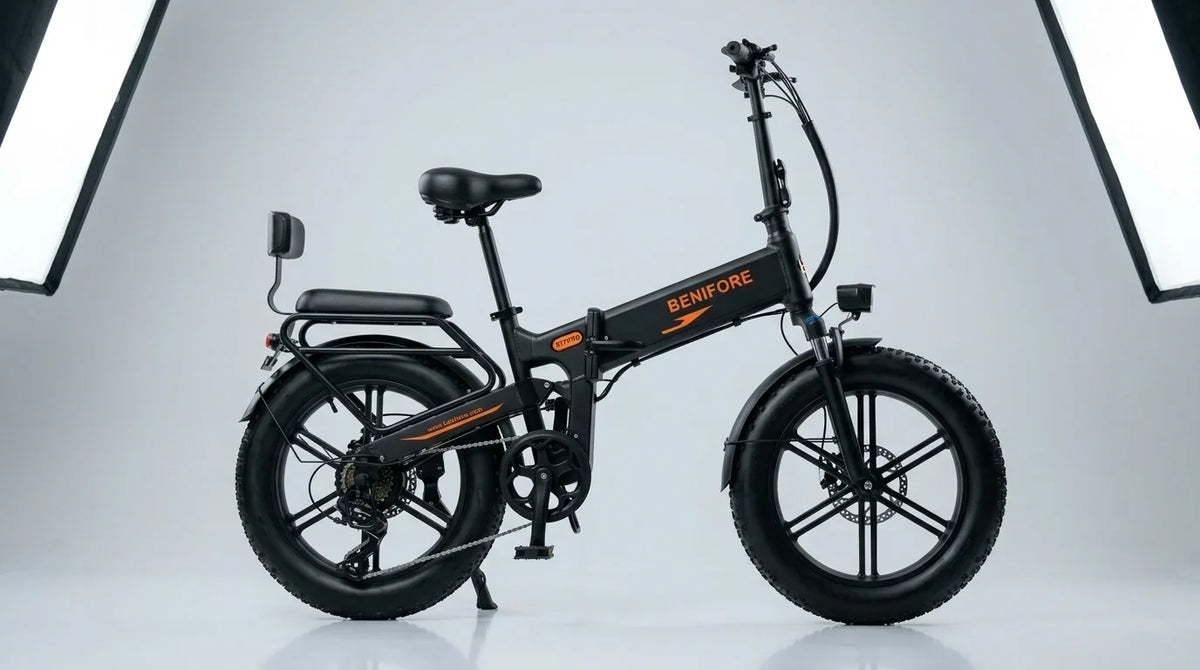
Gearing on a High-Performance eBike
Performance-oriented eBikes need to be considered as complete systems.
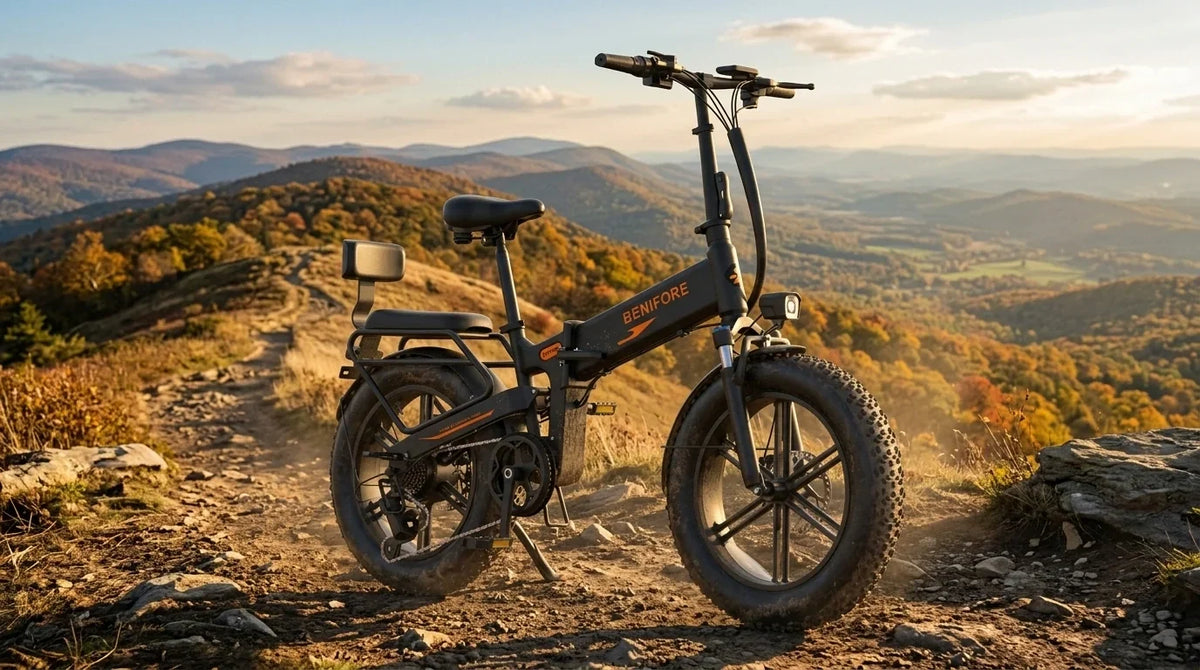
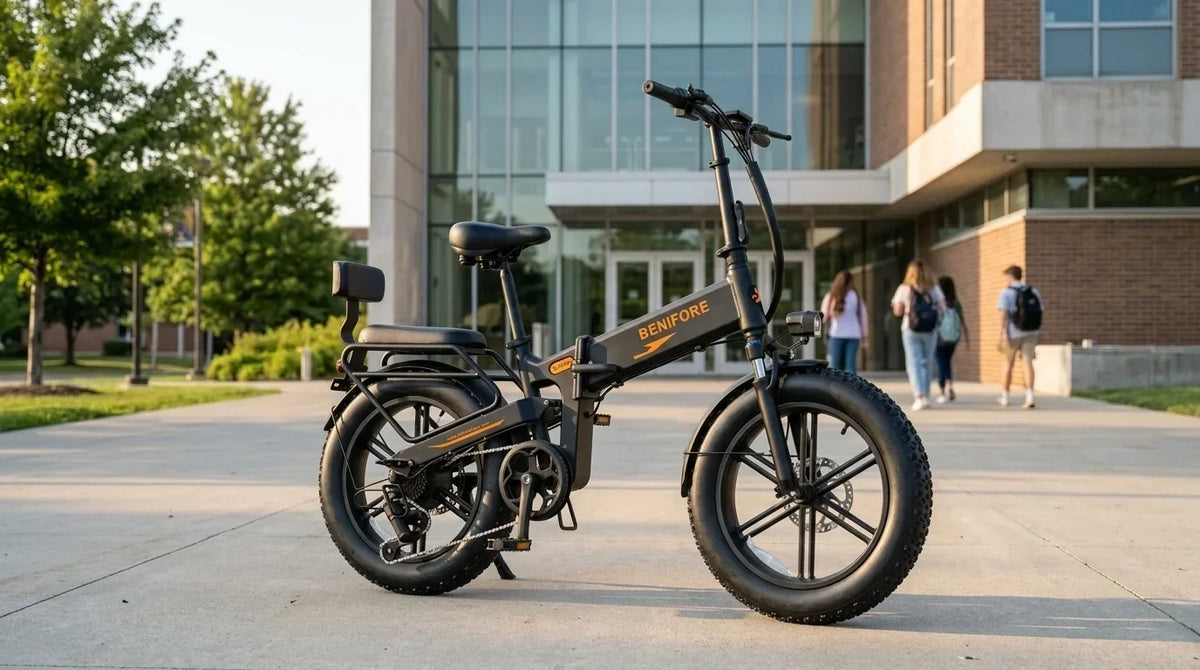
The Benifore X1T PRO combines:
- 1500W peak motor
- 90Nm torque
- 48V 20Ah battery
- Up to 65 miles of range
- 35 MPH top speed
- 20×4.0 fat tires
- Full suspension
- Up to 400 lbs load capacity
With this type of configuration, gearing is not simply about making pedaling easier.
It can help the rider adapt to different riding conditions.
A lower gear can be useful when climbing or starting.
A middle gear can work well for general riding.
A higher gear can allow a rider to continue pedaling comfortably as speed increases.
The goal is not to use the highest gear possible.
The goal is to use the gear that makes sense for the current terrain and riding speed.
How to Choose the Right eBike Gearing
Before buying an electric bike, think about where you will actually ride.
Mostly Flat Roads
You may prioritize:
- Comfortable cruising
- Higher available gearing
- Simple shifting
- Efficient everyday use
Hilly Areas
Look for:
- A useful low gear
- Appropriate gear range
- Strong motor assistance
- Easy shifting under changing terrain
Mixed Terrain
A wider gear range can provide more flexibility.
Recreational Riding
Consider whether you expect to switch between pavement, gravel, trails, and moderate climbs.
The best drivetrain is the one that matches your actual riding conditions.
Final Thoughts
Electric bike gears are easy to overlook because the motor provides much of the assistance.
But the drivetrain still plays an important role in how an eBike feels when accelerating, climbing, cruising, and pedaling at different speeds.
Instead of asking only:
"How many gears does this eBike have?"
ask:
"Does the gear range match where I actually ride?"
A well-designed drivetrain gives riders more control over their pedaling effort and allows the bike to adapt to changing terrain.
When evaluating an electric bike, look at the complete system rather than a single specification.
Motor power, torque, battery capacity, tires, suspension, gearing, brakes, rider weight, and terrain all contribute to the overall riding experience.
That is ultimately what makes an electric bike practical—not simply having the biggest number on the specification sheet.
Share: