




Tire pressure is one of the easiest things to overlook when riding an electric bike, yet it can have a noticeable effect on comfort, handling, traction, rolling resistance, and even battery consumption.
Many riders assume that tire pressure is simply a number printed on the tire sidewall. In reality, the right pressure depends on several factors, including tire size, rider weight, terrain, riding speed, weather, and whether the bike is being used primarily on pavement or off-road surfaces.
This becomes especially important with fat tire electric bikes. A 20×4.0 fat tire behaves very differently from a narrow commuter bicycle tire, and using the same pressure approach for both can result in an uncomfortable or unstable ride.
For riders using an electric bike for commuting, weekend trips, camping, gravel roads, or recreational riding, understanding tire pressure can make a significant difference.
This guide explains how electric bike tire pressure works, how to choose a practical starting point, what happens when pressure is too high or too low, and how to adjust pressure for different riding conditions.
Why Electric Bike Tire Pressure Matters
An electric bike carries more weight than a traditional bicycle because of its motor, battery, frame structure, and electrical components.
That additional weight means the tires play an important role in supporting the rider and maintaining contact with the riding surface.
Tire pressure affects several important aspects of the riding experience:
- Ride comfort
- Steering response
- Cornering stability
- Traction
- Rolling resistance
- Tire wear
- Puncture resistance
- Battery efficiency
- Off-road performance
A small pressure adjustment can sometimes change how an eBike feels immediately.
For example, a tire that is significantly overinflated may feel fast and responsive on smooth pavement but harsh over cracks and rough surfaces.
A tire with very low pressure may feel comfortable on loose terrain but can become sluggish or less predictable on pavement.
The goal is not simply to find the highest or lowest possible pressure.
The goal is to find a pressure that matches the bike, rider, terrain, and riding style.
What Is PSI?
PSI stands for pounds per square inch.
It is one of the most common units used to describe tire pressure in the United States.
When you use an air pump with a pressure gauge, the number displayed on the gauge is generally PSI.
For example, a gauge might show:
- 10 PSI
- 15 PSI
- 20 PSI
- 30 PSI
- 40 PSI
The correct pressure depends on the tire and the application.
Importantly, there is no single PSI number that works for every electric bike.
A lightweight commuter eBike with narrow tires may require a very different pressure from a heavy fat tire electric bike.
That is why riders should not copy the tire pressure from another bicycle without checking the specifications of their own tires.
Start With the Tire Manufacturer's Recommended Range
Before adjusting tire pressure, check the information provided by the tire manufacturer.
The tire sidewall may show a recommended pressure range or maximum pressure.
Your owner's manual may also provide model-specific guidance.
This information should be the starting point.
The pressure printed on the tire should not automatically be treated as the ideal pressure for every riding situation.
For example, the maximum pressure is not necessarily the pressure that provides the best comfort or traction.
It simply represents an important limit established for the tire.
A practical approach is:
Check the tire → check the bike manual → start within the recommended range → adjust based on riding conditions.
Never exceed the manufacturer's specified maximum pressure.
Fat Tire Electric Bikes Need a Different Approach
Fat tire electric bikes are designed around wider tires that provide a larger contact area and different handling characteristics.
A common fat tire size is:
20×4.0
This type of tire is substantially wider than a conventional bicycle tire.
Wide tires can provide several benefits:
- Increased stability
- More surface contact
- Better traction
- Greater comfort on uneven terrain
- Improved confidence on gravel and loose surfaces
However, tire pressure becomes particularly important because the pressure inside a wide tire can significantly change how the bike behaves.
For example, a fat tire operated at a relatively lower pressure may feel more compliant over rough ground.
The same tire at a higher pressure may feel firmer and more responsive on smooth pavement.
This is one reason fat tire eBike riders often need to think about tire pressure as part of their riding setup rather than treating it as a fixed number.
How Rider Weight Affects Tire Pressure
Rider weight is another important factor.
A heavier rider places more load on the tires than a lighter rider.
The same is true when carrying:
- Camping equipment
- Groceries
- Fishing gear
- Work equipment
- Bags
- Other cargo
As the total system weight increases, the tires experience greater load.
This does not mean that a heavier rider should simply inflate the tires to the maximum possible pressure.
Instead, the rider should stay within the manufacturer's recommended range and use appropriate pressure for the total load.
The important point is that tire pressure should be considered together with:
Rider weight + bike weight + cargo + terrain + riding style
rather than looking at rider weight alone.
How Tire Pressure Changes Ride Comfort
One of the most noticeable effects of tire pressure is comfort.
When riding over uneven surfaces, the tires are one of the first components absorbing small impacts.
If tire pressure is too high for the terrain, the tire becomes very firm.
The result can be:
- More vibration
- A harsher ride
- More impact transferred to the rider
- Less comfort on rough roads
Lower pressure can allow the tire to deform more easily when encountering small bumps.
This can create a smoother feeling.
However, lower pressure is not automatically better.
If pressure becomes excessively low, the tire can become unstable, particularly during cornering or faster riding.
The tire may also become more vulnerable to damage if it is operated outside the manufacturer's recommended range.
Therefore, comfort should be balanced against stability and tire protection.
How Tire Pressure Affects Handling
Tire pressure also changes how an electric bike responds to steering input.
A properly inflated tire should provide predictable handling.
When pressure is too high, the bike may feel:
- Firm
- Quick to respond
- Less forgiving over rough surfaces
When pressure is too low, the bike may feel:
- Softer
- Slower to respond
- Less precise during cornering
This is particularly noticeable on fat tire electric bikes because the larger tire volume can produce a different steering sensation compared with traditional bicycle tires.
For everyday riding, the ideal setup is usually a balance between comfort and control.
Does Tire Pressure Affect Electric Bike Range?
Yes, tire pressure can influence efficiency.
Rolling resistance is the force that opposes the movement of the tire across the riding surface.
When a tire deforms significantly as it rolls, more energy can be lost through that deformation.
The electric motor must then provide additional energy to maintain speed.
This can affect battery consumption.
However, that does not mean that maximum tire pressure automatically produces maximum range.
Real-world efficiency depends on many variables:
- Rider weight
- Speed
- Terrain
- Wind
- Tire construction
- Tire pressure
- Assist level
- Stop-and-go riding
- Temperature
- Battery condition
For example, a rider commuting on smooth pavement may prefer a firmer setup for efficient rolling.
An outdoor rider traveling over gravel may accept slightly greater rolling resistance in exchange for improved comfort and traction.
The best pressure is therefore a compromise based on the actual riding environment.
Tire Pressure for Pavement Riding
Smooth pavement generally allows riders to use a firmer tire setup than loose or rough terrain, as long as the pressure remains within the recommended range.
For pavement-focused riding, the priorities are usually:
- Predictable handling
- Efficient rolling
- Stable cornering
- Good braking control
- Reasonable comfort
If your electric bike is mainly used for commuting, errands, or paved bike paths, begin with the manufacturer's recommended pressure range.
Then evaluate how the bike feels.
Ask yourself:
Does the bike feel stable?
Does the ride feel excessively harsh?
Does the tire feel soft or vague during cornering?
These observations can help determine whether a small adjustment is appropriate.
Tire Pressure for Gravel Roads
Gravel changes the equation.
Loose stones and uneven surfaces require more tire compliance than smooth pavement.
A slightly different pressure within the manufacturer's recommended range may provide:
- Better traction
- More comfort
- Better control over loose surfaces
- Reduced vibration
However, gravel riding also increases the importance of protecting the tire and wheel.
Avoid using extremely low pressure simply to make the ride softer.
The goal should be to maintain enough air pressure to support the rider and protect the tire while allowing the tire to conform to the surface.
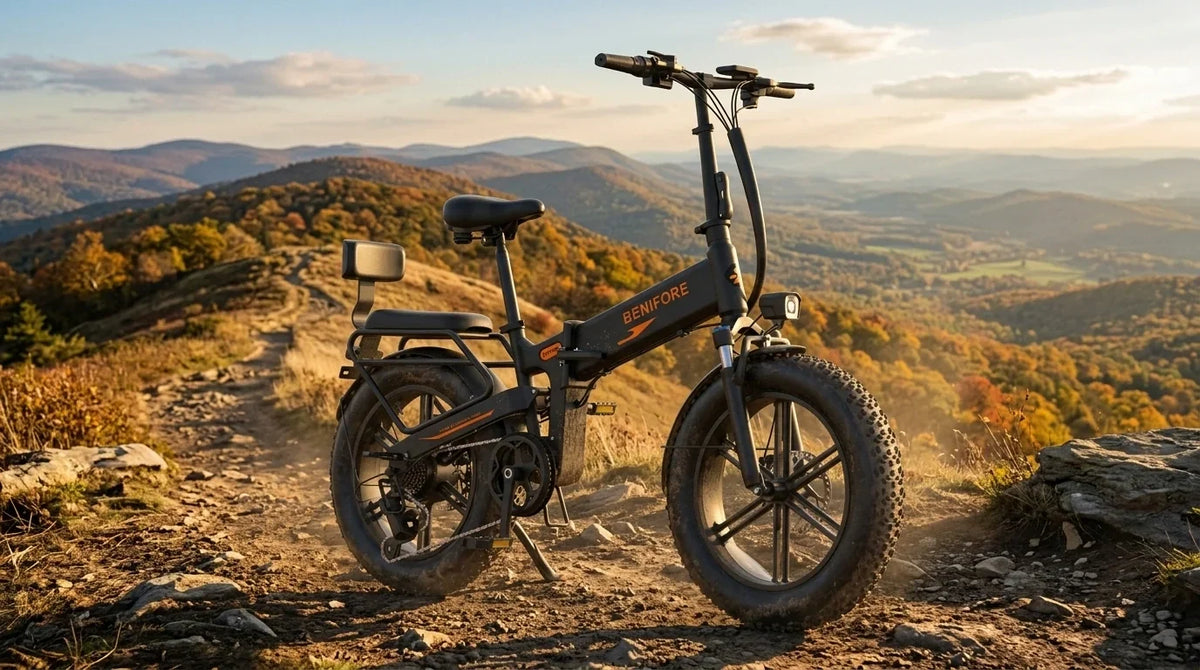
Tire Pressure for Camping and Outdoor Riding
Electric bikes are increasingly used for outdoor recreation.
Camping trips, fishing trips, park rides, and weekend adventures can involve several different surfaces during a single trip.
A route might include:
Pavement → gravel → dirt → uneven trail
In this situation, riders should think about the terrain rather than using one pressure setting for every surface.
Wide fat tires can be particularly useful because their larger footprint can provide a stable and comfortable ride across changing terrain.
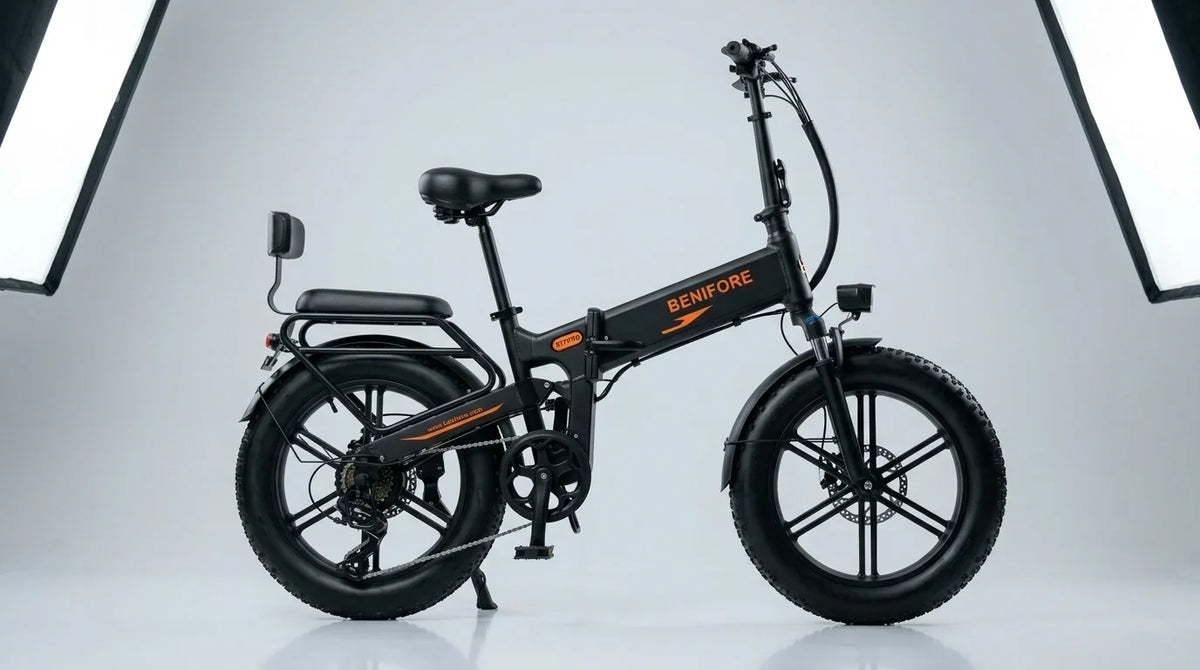
The Benifore X1T PRO uses 20×4.0 fat tires and full suspension, making tire setup an important part of getting the most from the bike's all-around riding capability.
The tires and suspension work together.
The suspension manages larger impacts and movement through the bike's suspension system, while the tires provide the first layer of contact with the ground.
How Temperature Can Affect Tire Pressure
Temperature can also affect tire pressure.
Air expands when it becomes warmer and contracts when it becomes colder.
This means the pressure you measure in a warm garage may not be exactly the same as the pressure you see on a cold morning.
For riders who experience significant seasonal temperature changes, checking tire pressure regularly is a simple maintenance habit.
It is particularly useful before:
- Long-distance rides
- Camping trips
- Road trips
- Outdoor adventures
- Extended commuting
Do not rely entirely on how the tire looks.
A tire can appear properly inflated while still being significantly different from your intended pressure.
A pressure gauge provides a much more reliable measurement.
How Often Should You Check Electric Bike Tire Pressure?
There is no need to make tire pressure complicated.
For riders who use their eBike regularly, checking the tires before important rides is a good habit.
A quick check can help identify:
- Slow leaks
- Pressure loss
- Uneven inflation
- Tire damage
- Valve problems
Daily riders may benefit from checking pressure frequently, while occasional riders should check before longer rides.
It takes only a short amount of time and can prevent avoidable problems.
What Happens If Tire Pressure Is Too High?
Overinflation can create several problems.
1. Reduced Comfort
The tire becomes less able to absorb small bumps.
2. Less Traction on Rough Surfaces
A very firm tire may not conform as effectively to uneven terrain.
3. Harsher Handling
The bike may feel more rigid over cracks and bumps.
4. Greater Sensitivity to Road Impacts
Hard tires can transmit more impact through the wheel and frame.
5. Uneven Tire Behavior
A tire operated at an inappropriate pressure may not perform as intended.
High pressure is not inherently bad.
The problem is using pressure that does not match the tire, rider, and terrain.
What Happens If Tire Pressure Is Too Low?
Underinflation can also create problems.
1. Increased Rolling Resistance
The motor may need to work harder to maintain speed.
2. Slower Handling
The bike can feel less responsive.
3. Reduced Cornering Stability
The tire may deform more during turns.
4. Increased Risk of Tire Damage
Extremely low pressure can increase the chance of damaging the tire or wheel when hitting obstacles.
5. Poor Efficiency
More tire deformation can consume additional energy.
This is why simply lowering pressure to improve comfort is not a good strategy.
The goal is balanced performance.
How to Check Your eBike Tire Pressure Correctly
Checking tire pressure is straightforward.
Step 1: Let the Tires Cool
Whenever possible, measure pressure before a long ride.
Step 2: Find the Valve
Locate the tire valve and remove the valve cap.
Step 3: Use a Reliable Pressure Gauge
A pump with an integrated gauge is convenient, but a separate digital gauge can also provide accurate readings.
Step 4: Compare With the Recommended Range
Check the tire sidewall and owner's manual.
Step 5: Adjust Gradually
Do not make large pressure changes without a reason.
Small adjustments make it easier to understand how the bike responds.
Step 6: Check Both Tires
Do not assume that one tire is automatically at the same pressure as the other.
Depending on the bike and riding conditions, front and rear tires can experience different loads.
Should Front and Rear Tire Pressure Be the Same?
Not necessarily.
The rear wheel often carries a greater proportion of the total load because of rider positioning, battery placement, frame design, and cargo.
This can influence the ideal setup.
However, riders should not automatically create a large pressure difference between the front and rear tires.
Always start with the manufacturer's guidance.
If different front and rear pressures are recommended, follow those specifications.
Otherwise, use a consistent setup within the recommended range and adjust only when you have a clear reason.
How to Choose Tire Pressure for Different Riding Styles
Instead of looking for one universal PSI number, consider the type of riding you actually do.
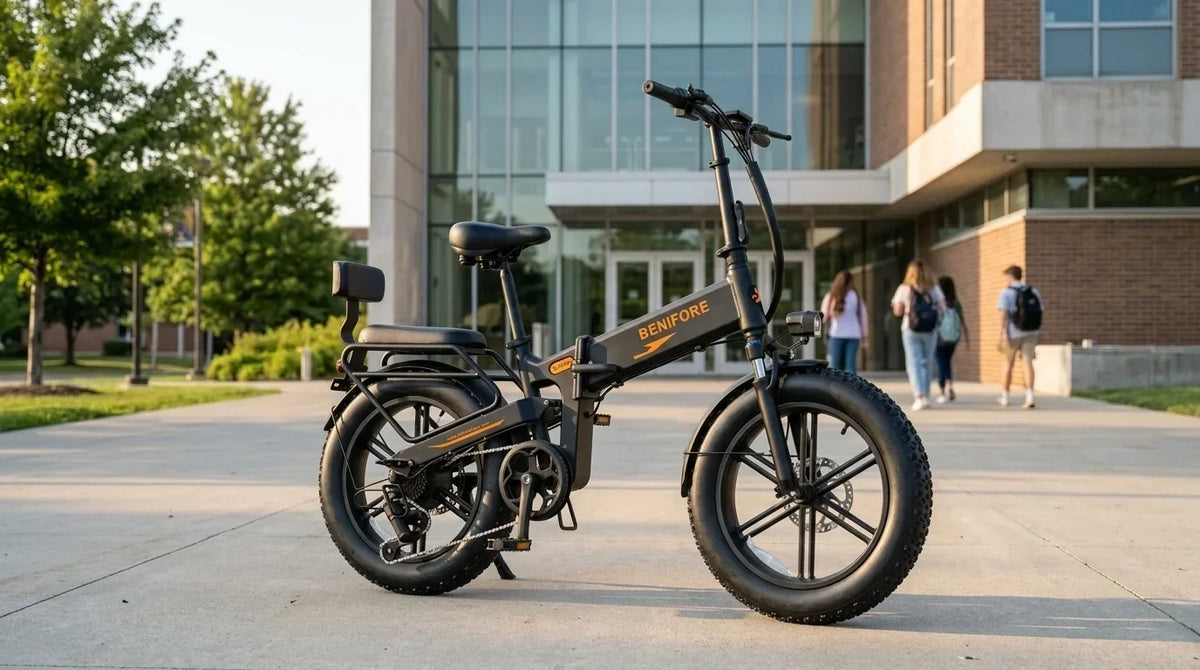
Daily Commuting
Prioritize:
- Stability
- Efficient rolling
- Predictable braking
- Comfort on pavement
A moderately firm setup within the recommended range may work well.
Weekend Recreation
Prioritize:
- Comfort
- Stability
- Versatility
You may want a setup that is comfortable across pavement and occasional gravel.
Camping and Outdoor Riding
Prioritize:
- Traction
- Comfort
- Surface adaptability
A tire setup that works well on mixed terrain can be more valuable than optimizing purely for pavement efficiency.
Long-Distance Riding
Prioritize:
- Comfort
- Consistent handling
- Efficiency
- Tire reliability
Before a long ride, inspect both pressure and tire condition.
Tire Pressure and the Benifore X1T PRO
The Benifore X1T PRO is designed for riders who want more than a basic commuter bicycle.
Its configuration includes:
- 1500W peak motor
- 90Nm torque
- 48V 20Ah battery
- Up to 65 miles of range
- 35 MPH top speed
- 20×4.0 fat tires
- Full suspension
- Up to 400 lbs load capacity
These specifications are designed to support a wide range of riding situations, from everyday transportation to weekend outdoor use.
But specifications alone do not determine how an eBike feels.
Tire setup is part of the overall riding experience.
The 20×4.0 tires provide a large contact area, while the full-suspension design helps manage uneven surfaces.
Maintaining appropriate tire pressure allows these components to work as intended.
For X1T PRO owners, the correct approach is not to copy a pressure number from another fat tire eBike.
Instead:
Check the tire → check the owner's information → consider your total load → consider the terrain → make small adjustments within the recommended range.
This approach provides a much more reliable starting point.
Common Electric Bike Tire Pressure Mistakes
Mistake 1: Using the Maximum Pressure Every Time
Maximum pressure is not automatically the ideal pressure.
It may create an unnecessarily harsh ride.
Mistake 2: Copying Another Rider's PSI
Two riders can use the same eBike and still need different setups because of differences in weight, terrain, and riding style.
Mistake 3: Ignoring Tire Size
A narrow commuter tire and a 20×4.0 fat tire should not be treated the same way.
Mistake 4: Checking Pressure Only When the Tire Looks Flat
A tire can lose meaningful pressure without looking obviously soft.
Mistake 5: Forgetting Cargo Weight
Camping equipment, groceries, and other gear increase the total load.
Mistake 6: Making Large Adjustments
Large pressure changes make it difficult to understand what actually improved or worsened the ride.
Small changes are easier to evaluate.
A Simple Tire Pressure Routine for eBike Owners
You do not need an advanced maintenance system.
A simple routine is enough for most riders.
Before regular rides
Check the tires visually.
Before long rides
Use a pressure gauge.
Before outdoor trips
Check pressure and inspect the tire surface.
After extended storage
Check pressure before riding.
When the bike feels different
Investigate the tires before assuming there is a larger mechanical problem.
Changes in handling can sometimes be related to pressure loss.
Frequently Asked Questions
What PSI should an electric bike tire have?
There is no universal PSI for every electric bike. The correct pressure depends on the tire design, size, rider weight, terrain, and manufacturer recommendations. Always start with the recommended range for your specific tire and bike.
Is higher tire pressure better for an eBike?
Not necessarily. Higher pressure can reduce tire deformation on smooth pavement, but excessive pressure can reduce comfort and traction on rough surfaces.
Is lower tire pressure better for fat tire eBikes?
Lower pressure can improve comfort and traction on some surfaces, but excessively low pressure can reduce stability and increase the risk of tire or wheel damage. Stay within the manufacturer's recommended range.
Do fat tires need less pressure?
Fat tires often operate differently from narrow bicycle tires because their larger volume and contact area change how they interact with the ground. Always follow the pressure guidance for the specific tire.
Does tire pressure affect eBike battery range?
Yes. Tire pressure can influence rolling resistance and therefore energy consumption. However, speed, rider weight, terrain, wind, assist level, and temperature can also have major effects on range.
How often should I check my eBike tires?
Regular riders should check pressure frequently, especially before long rides. Riders who use their eBike less often should check the tires before riding after extended storage.
Final Thoughts
Electric bike tire pressure is a small detail that can have a surprisingly large effect on the riding experience.
The right setup can help balance:
- Comfort
- Stability
- Traction
- Efficiency
- Handling
- Tire durability
There is no single pressure that is perfect for every rider.
A commuter riding smooth pavement may want a different setup from someone riding gravel roads or taking an electric bike camping.
The most reliable approach is to start with the tire manufacturer's recommended range, consider the rider and cargo weight, think about the terrain, and make small adjustments based on how the bike actually feels.
For fat tire electric bikes such as the Benifore X1T PRO, understanding tire pressure is especially useful because the 20×4.0 tires are designed to provide stability, traction, and comfort across a variety of riding environments.
A better electric bike experience does not always come from adding more power.
Sometimes, it starts with something as simple as checking the air in your tires.
Share: