




Tire pressure is one of the easiest things to overlook on an electric bike.
It takes only a few minutes to check, but the amount of air inside your tires can affect how the bike feels, how efficiently it rolls, how comfortably it handles rough surfaces, and how confidently you can control it.
This becomes even more noticeable with fat-tire electric bikes.
A 20×4.0 tire has a very different volume and riding characteristic from a narrow road-bike tire. Using the same pressure you would use on a traditional bicycle can result in a completely different ride.
So, what is the correct tire pressure for an electric bike?
There is no single PSI number that works for every eBike.
The correct pressure depends on the tire, rim, rider weight, cargo, road surface, temperature, and the tire manufacturer's specifications.
This guide explains how eBike tire pressure works, how to find the right PSI, what happens when tires are overinflated or underinflated, and how to adjust pressure for different riding conditions.
Why Electric Bike Tire Pressure Matters
Your tires are the only part of the bike that normally makes direct contact with the road.
That means they play an important role in:
- Ride comfort
- Traction
- Steering feel
- Rolling resistance
- Stability
- Cornering
- Braking
- Tire wear
- Puncture resistance
On an electric bike, tire pressure can also influence how much energy is required to move the bike.
A tire that is significantly underinflated may create more rolling resistance.
A tire that is excessively inflated may feel harsh and provide less comfortable contact with uneven surfaces.
The objective is not simply to put in as much air as possible.
The objective is to find the pressure that matches the tire and the way you ride.
What Does PSI Mean?
PSI stands for:
Pounds per Square Inch
It is a measurement of air pressure.
When an eBike tire is labeled with a recommended pressure range, PSI tells you how much air pressure the manufacturer expects the tire to operate with.
For example, a tire might have a range such as:
5–30 PSI
The exact range varies by tire.
Never assume that every fat tire, road tire, or mountain-bike tire uses the same pressure.
Always check the markings on your tire and the manufacturer's recommendations first.
What PSI Should an Electric Bike Tire Have?
There is no universal PSI for all electric bikes.
The correct pressure should be based on:
Tire specifications + rider weight + riding conditions + manufacturer's recommendations
A lightweight rider on smooth pavement may prefer a different pressure from a heavier rider traveling over rough roads.
Similarly, a rider carrying cargo may need a different setup from a rider traveling with no additional load.
For this reason, the correct question is not:
“What PSI does every eBike need?”
It is:
“What pressure is appropriate for my specific tire and riding conditions?”
Start With the Tire Manufacturer
The first place to look is the tire itself.
Many bicycle tires have a recommended pressure range printed on the sidewall.
You may see markings such as:
MIN ___ PSI
or
MAX ___ PSI
Some tires may provide a more detailed recommended range.
This information should be treated as the starting point.
Do not exceed the maximum pressure printed on the tire.
If the bicycle manufacturer provides additional tire-pressure guidance, follow that information as well.
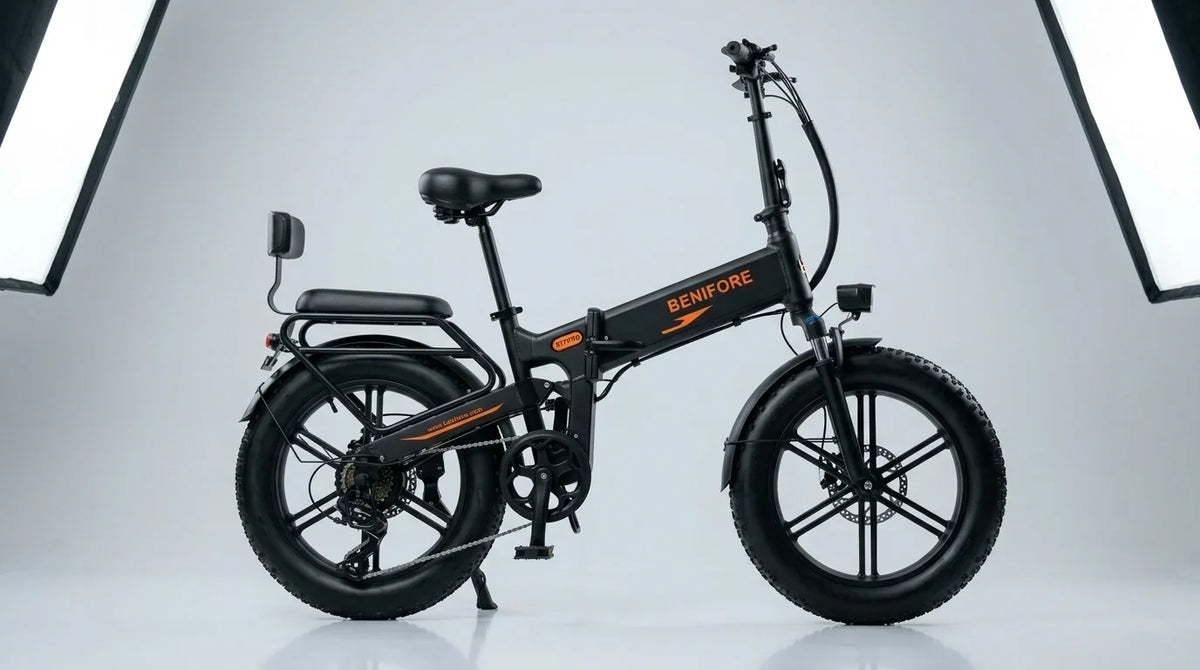
The Benifore X1T PRO Uses 20×4.0 Fat Tires
The Benifore X1T PRO uses:
20×4.0 fat tires
The larger tire volume creates a different riding experience from a narrow bicycle tire.
A fat tire can operate at relatively low pressures while still providing a substantial air volume between the rim and the road.
This can help create a comfortable and stable ride across different surfaces.
However, the correct PSI should still be based on the specific tire's markings and Benifore's recommended specifications.
Do not use a generic PSI number simply because another 20×4.0 tire uses it.
Why Fat Tires Use Different Pressure
A fat tire contains substantially more air volume than a narrow tire.
That means the tire can provide cushioning at lower pressure.
The larger air volume can help the tire conform to uneven surfaces.
This can be useful when riding over:
- Rough pavement
- Gravel
- Packed dirt
- Uneven roads
- Small bumps
- Mixed surfaces
The result can be a more comfortable and planted riding feel.
But lower pressure is not automatically better.
There is a balance.
What Happens When Tire Pressure Is Too Low?
An underinflated tire can feel soft and comfortable at first.
But going too low can create several problems.
Potential effects include:
- Increased rolling resistance
- Slower acceleration
- Less efficient riding
- Excessive tire flex
- Greater risk of rim impacts
- Unstable handling
- Increased sidewall stress
On a heavy eBike, these effects can become more noticeable because the tires are supporting a greater total load.
If you regularly carry cargo or ride with a heavier total system weight, tire pressure deserves additional attention.
Can Low Tire Pressure Damage a Fat Tire?
Running a fat tire at an excessively low pressure can increase the amount of flex in the tire sidewall.
When the tire hits an obstacle, the rim may also come closer to the road surface.
On sufficiently hard impacts, this can increase the possibility of rim damage or other tire-related problems.
Low pressure can be useful in certain conditions.
Extremely low pressure without a specific reason is not.
The goal is controlled tire deformation, not a tire that feels almost flat.
What Happens When Tire Pressure Is Too High?
Overinflating a tire creates a different set of problems.
An excessively hard tire may:
- Feel harsh
- Reduce comfort
- Bounce over rough surfaces
- Provide a less forgiving ride
- Reduce traction on some surfaces
- Increase the effect of small bumps
On smooth pavement, somewhat higher pressure can sometimes reduce rolling resistance.
But there is a point where additional pressure stops being beneficial.
More air does not automatically mean better performance.
Does Higher PSI Make an eBike Faster?
It can affect rolling resistance, but the relationship is not as simple as:
Higher PSI = Faster
Tire construction, tread pattern, surface, rider weight, tire width, and pressure all interact.
An excessively soft tire can feel slow because more energy is lost through deformation.
An excessively hard tire can also perform poorly because the tire may not conform effectively to the road.
The best pressure is usually a compromise between:
Efficiency + Comfort + Traction + Control
Does Tire Pressure Affect eBike Range?
Yes, tire pressure can influence energy consumption.
An underinflated tire can increase rolling resistance.
When rolling resistance increases, the motor may need to provide more energy to maintain the same speed.
Over a very short trip, the difference may be difficult to notice.
Over many miles, however, inefficient tire pressure can contribute to unnecessary energy consumption.
This is one reason regular tire-pressure checks are worthwhile for eBike owners.
Tire Pressure and the X1T PRO Battery
The Benifore X1T PRO uses a:
48V 20Ah battery
and is rated for:
Up to 65 miles of range
Actual range varies depending on:
- Rider weight
- Cargo
- Speed
- Terrain
- Riding mode
- Wind
- Temperature
- Tire pressure
- Battery condition
Keeping the tires within the recommended pressure range can help avoid unnecessary rolling resistance.
It will not guarantee the advertised maximum range, but it is one of the simple variables riders can control.
Does Rider Weight Change Tire Pressure?
It can.
A heavier total load puts more weight on the tires.
The relevant load may include:
Rider + Passenger where permitted + Cargo + Accessories
For example, a bike carrying a 180-lb rider with no cargo experiences a different tire load from the same bike carrying a 250-lb rider and 30 lbs of equipment.
This is why tire pressure should be considered together with the manufacturer's load recommendations.
What About the X1T PRO's Load Capacity?
The Benifore X1T PRO is rated for:
Up to 400 lbs load capacity
This provides substantial payload flexibility.
But higher load capacity makes proper tire setup even more important.
If you regularly ride with a heavier total load, inspect your tires more frequently and make sure the pressure is appropriate for the tire and riding conditions.
Do not use maximum load capacity as a reason to exceed the tire manufacturer's pressure limit.
Front and Rear Tire Pressure
Some riders assume both tires should always have exactly the same pressure.
That is not necessarily the case.
The front and rear tires experience different loads.
On many bicycles, the rear tire carries more of the total system weight.
The appropriate pressure can therefore differ depending on:
- Bike design
- Tire specifications
- Rider position
- Cargo
- Load distribution
If the manufacturer provides separate front and rear recommendations, follow them.
If not, stay within the tire's recommended range and use careful testing to find a suitable setup.
How Cargo Changes Tire Pressure Requirements
Cargo can significantly change the load placed on the rear section of an eBike.
Consider a grocery trip.
You start with:
Rider: 190 lbs
Then add:
Groceries: 25 lbs
And:
Accessories: 5 lbs
The total riding load increases by 30 lbs.
If the cargo is concentrated toward the rear, the rear tire may experience a greater increase in load than the front.
This is another reason why cargo should be distributed carefully.
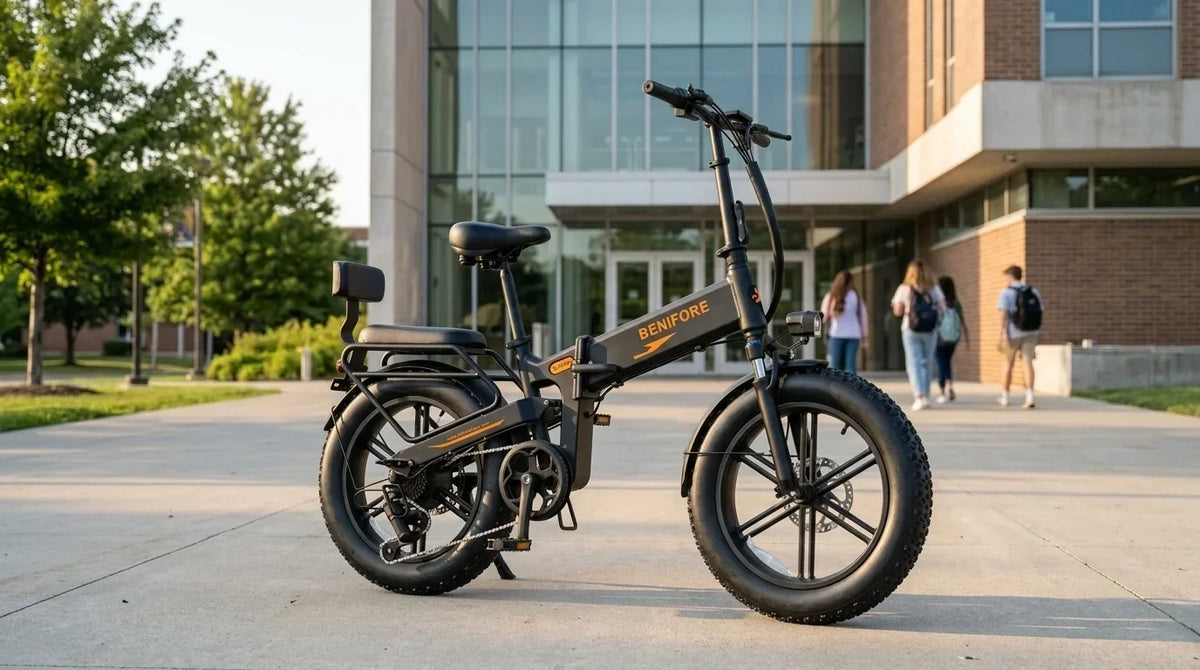
Tire Pressure for City Streets
For normal paved roads, riders generally want a balance between:
- Efficient rolling
- Comfortable ride
- Stable handling
- Predictable braking
Smooth pavement can tolerate a somewhat firmer setup than rough surfaces.
But the correct pressure still needs to stay within the tire manufacturer's specifications.
If the ride feels excessively harsh, check whether the tires are overinflated.
Tire Pressure for Rough Roads
Rough pavement changes the equation.
A slightly lower pressure within the manufacturer's recommended range may allow the tire to absorb more of the small bumps.
This can improve comfort and help the tire maintain contact with the surface.
However, do not reduce pressure indefinitely.
If the tire becomes too soft, rim protection and handling can suffer.
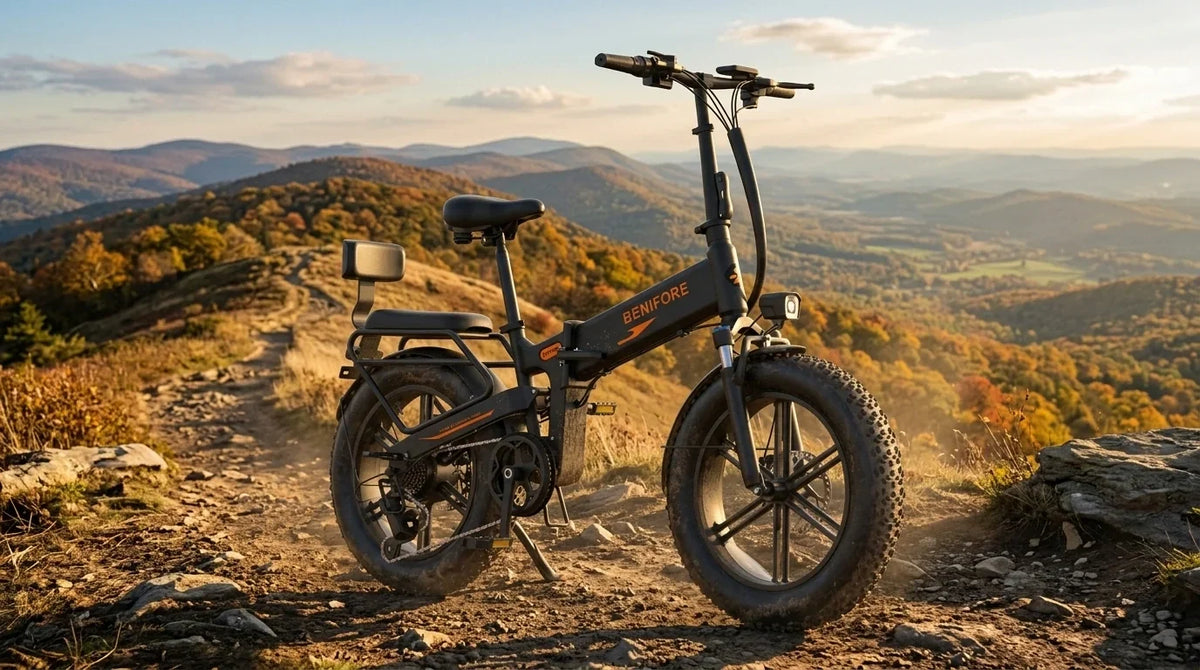
Tire Pressure for Gravel
Gravel introduces additional variables.
The surface is less predictable than smooth pavement.
A tire with some compliance can conform to small irregularities and maintain a more stable contact patch.
For mixed-surface riding, some riders prefer a lower pressure within the tire's approved range.
Again:
Lower does not mean unlimited.
Always stay within the manufacturer's safe operating range.
Tire Pressure for Wet Roads
Wet pavement can reduce traction.
Tire pressure alone cannot solve this problem.
Riders should also consider:
- Speed
- Braking distance
- Cornering
- Tire condition
- Road markings
- Standing water
Avoid making dramatic pressure changes simply because the road is wet.
The safest approach is to follow the tire manufacturer's specifications and adjust riding behavior for the conditions.
Tire Pressure in Hot Weather
Temperature affects air pressure.
When air becomes warmer, pressure can increase.
This means a tire checked in a cool garage may show a different pressure after sitting in direct sunlight.
For consistent measurements, check tire pressure when the tires are relatively cool.
Do not release air simply because the pressure rises after extended riding or exposure to heat unless the pressure exceeds the manufacturer's specified limit.
Tire Pressure in Cold Weather
Cold temperatures can reduce tire pressure.
If the bike is stored in a cold garage overnight, the tires may show a lower PSI in the morning.
This is normal.
Check the tires before riding and adjust pressure according to the manufacturer's recommended range.
Cold weather can also affect battery performance, so tire pressure is only one part of preparing an eBike for winter riding.
How Often Should You Check eBike Tire Pressure?
There is no single schedule that works for everyone.
However, regular riders should check tire pressure frequently rather than waiting until a tire visibly looks flat.
A practical habit is:
Before longer rides → Check
After a period of storage → Check
After hitting a major pothole → Inspect
When handling feels unusual → Check
Every week for frequent riders → Consider checking
A pressure gauge is much more reliable than judging pressure by pressing the tire with your hand.
Why You Should Use a Tire Pressure Gauge
Human hands are not accurate pressure gauges.
A fat tire can feel reasonably firm while still being significantly below its recommended pressure.
A basic bicycle floor pump with a built-in gauge makes checking much easier.
You can see the actual PSI instead of guessing.
For riders who use an eBike regularly, a pump and pressure gauge are two of the most useful basic maintenance tools to keep available.
How to Check Electric Bike Tire Pressure
Checking pressure is simple.
Step 1: Let the tires cool
Avoid checking immediately after a long ride.
Step 2: Remove the valve cap
Keep it somewhere clean.
Step 3: Attach the pressure gauge
Make sure the connection is secure.
Step 4: Read the PSI
Compare the result with the recommended range.
Step 5: Add or release air if necessary
Make small adjustments.
Step 6: Check again
Confirm the final pressure.
Step 7: Replace the valve cap
Make sure everything is secure before riding.
How to Inflate a Fat Tire eBike
A floor pump designed for bicycle tires is generally the most convenient option.
If you use an electric pump, pay close attention to the pressure setting.
Some compact electric pumps can inflate a tire quickly.
That convenience also makes it easier to accidentally exceed the intended pressure if you are not paying attention.
Always verify the final pressure with a reliable gauge.
Do Not Inflate Based on Appearance Alone
A fat tire can look large even when it is underinflated.
Conversely, it may still look normal when it is overinflated.
Visual inspection is useful for detecting obvious problems, but it should not replace measuring pressure.
Think of tire pressure the same way you think about battery charge.
You check the number rather than guessing.
How to Find Your Personal Starting PSI
Once you know the tire's approved pressure range, start conservatively.
Use a pressure that is appropriate for your rider weight and normal riding surface.
Then pay attention to how the bike feels.
Ask:
- Does the bike roll smoothly?
- Does steering feel predictable?
- Is the ride excessively harsh?
- Does the tire feel excessively soft?
- Does the tire deform heavily under load?
- Do you feel the rim striking through on rough surfaces?
Make small adjustments rather than changing pressure dramatically.
Signs Your Tire Pressure May Be Too Low
Watch for:
Excessive tire flex
The sidewall visibly moves significantly during normal riding.
Heavy steering
The bike feels slower to respond.
Increased effort
The bike seems less efficient than usual.
Rim impacts
You feel hard impacts through the wheel on bumps.
Tire squirm
The bike feels less stable during cornering.
These signs do not prove that pressure is the only problem, but they are good reasons to inspect the tires.
Signs Your Tire Pressure May Be Too High
You may notice:
Harsh ride quality
Small bumps feel unusually sharp.
Reduced comfort
The tires transmit more road vibration.
Bouncing
The bike may feel less planted on uneven surfaces.
Less forgiving handling
The bike can feel overly firm.
Again, inspect the pressure rather than relying solely on how the bike feels.
Does Tire Pressure Affect Braking?
Tire pressure can influence how the tire interacts with the road.
But braking performance depends on many other factors:
- Brake system
- Tire condition
- Road surface
- Rider technique
- Speed
- Weight
- Weather
Correct tire pressure can help maintain predictable tire behavior, but it does not replace proper braking technique or a functioning brake system.
Does Tire Pressure Affect Cornering?
Yes, tire deformation changes how a bike feels while turning.
An excessively soft tire may feel less precise.
An excessively hard tire may feel harsh and less forgiving on uneven surfaces.
The ideal setup depends on the tire and riding conditions.
For everyday riding, predictable handling is more important than trying to achieve the lowest possible rolling resistance.
Tire Pressure and Fat-Tire Handling
The 20×4.0 tires on the X1T PRO create a broad contact area and large air volume.
This can provide a stable riding feel.
But because fat tires contain more air volume, pressure changes can also produce noticeable differences in how the bike feels.
A small PSI adjustment may change:
- Comfort
- Steering response
- Surface compliance
- Rolling feel
This makes experimentation within the manufacturer's approved range useful.
Why You Should Not Copy Another Rider's PSI
A friend may tell you:
“I always run my tires at 15 PSI.”
That does not mean 15 PSI is automatically correct for you.
You may have:
- Different rider weight
- Different tire model
- Different cargo
- Different terrain
- Different riding style
- Different climate
Use other riders' experiences as reference, not as a replacement for your own tire specifications.
Tire Pressure and Tire Wear
Incorrect pressure can contribute to uneven tire wear.
Overinflation and underinflation can change how the tread contacts the road.
If you notice unusual wear:
- Inspect tire pressure
- Check wheel alignment
- Inspect the tread
- Look for damage
- Check whether the tire is properly mounted
A tire that wears abnormally should not simply be inflated harder or softer without identifying the cause.
Check Tires for Damage While Checking Pressure
Tire-pressure checks are a good opportunity to inspect the tire itself.
Look for:
- Cuts
- Cracks
- Embedded glass
- Nails
- Sharp stones
- Bulges
- Excessive tread wear
If you find significant damage, do not assume that adjusting PSI will solve the problem.
A damaged tire may need professional inspection or replacement.
What About Tubeless Fat Tires?
Some eBikes use tubeless tire systems, while others use inner tubes.
The correct pressure and maintenance procedure can differ.
Tubeless systems may allow different pressure strategies depending on the tire and rim combination.
However, riders should follow the specific tire and wheel manufacturer's recommendations rather than copying a pressure setup from another tubeless bicycle.
Tire Pressure and Puncture Risk
Tire pressure can influence how a tire reacts to obstacles, but punctures can happen at many different pressures.
Sharp objects can penetrate a tire regardless of PSI.
Lower pressure may increase the risk of rim strikes on hard impacts.
Higher pressure does not make a tire puncture-proof.
The best approach is to:
- Maintain appropriate pressure
- Inspect tires regularly
- Avoid obvious road hazards
- Replace damaged tires
Should You Lower PSI for Better Comfort?
Possibly, but only within the approved pressure range.
If your ride feels excessively harsh, a modest reduction may improve comfort.
But if the tire already operates near the low end of its recommended range, going lower can create other problems.
Think of pressure adjustment as fine-tuning.
You are looking for the best balance, not the lowest number.
Should You Increase PSI for Better Range?
A modest increase within the manufacturer's approved range may reduce rolling resistance on some smooth surfaces.
But increasing pressure simply to chase maximum range can make the ride less comfortable and potentially reduce the tire's ability to conform to uneven surfaces.
For most riders, the best approach is:
Use the appropriate pressure for your weight and surface.
Do not sacrifice control and comfort just to pursue a theoretical efficiency gain.
A Simple Tire Pressure Routine
For regular X1T PRO riders, a simple routine can work well.
Before riding
Look at both tires.
Before a long trip
Check actual PSI.
After storage
Check pressure before riding.
After carrying heavy cargo
Verify that the tires are properly inflated.
After hitting a major obstacle
Inspect the tire and wheel.
Once a week
Frequent riders can make a weekly pressure check part of their normal routine.
This takes only a few minutes.
Electric Bike Tire Pressure Checklist
Before a longer ride:
☐ Check front tire PSI
☐ Check rear tire PSI
☐ Stay within the tire manufacturer's range
☐ Inspect the tread
☐ Look for cuts or embedded objects
☐ Check the valve
☐ Confirm there is no visible bulging
☐ Consider rider and cargo weight
☐ Consider the riding surface
☐ Carry a repair solution on longer rides
A few minutes of preparation can prevent avoidable problems.
Common eBike Tire Pressure Mistakes
Mistake 1: Using the Same PSI as a Car
Bicycle and eBike tires operate very differently from automobile tires.
Never transfer car tire-pressure numbers to an eBike.
Mistake 2: Copying Another Rider
Different tires and riders require different setups.
Mistake 3: Inflating Until the Tire Feels Hard
A tire can feel hard while still being at an inappropriate pressure.
Use a gauge.
Mistake 4: Always Using the Maximum PSI
Maximum pressure is not necessarily the ideal pressure.
Mistake 5: Running Extremely Low Pressure for Comfort
Too little pressure can increase tire and rim stress.
Mistake 6: Ignoring Cargo
Additional load changes the forces acting on the tires.
Mistake 7: Never Checking the Pressure
Tires naturally lose air over time.
A tire that was correctly inflated several weeks ago may not have the same pressure today.
How Tire Pressure Fits Into eBike Performance
Tire pressure is only one component of the overall riding system.
The X1T PRO combines:
1500W peak motor
90Nm torque
48V 20Ah battery
Up to 65 miles of range
35 MPH top speed
20×4.0 fat tires
Full suspension
Up to 400 lbs load capacity
These specifications work together.
For example, the motor provides assistance, the battery supplies energy, the suspension helps manage uneven surfaces, and the tires connect the entire system to the road.
A powerful eBike still needs properly maintained tires.
How to Get the Most From 20×4.0 Fat Tires
If you own a fat-tire eBike, think about tire pressure as part of your setup rather than something you check only after a problem appears.
For the best experience:
Use the manufacturer's recommended range
This is always the starting point.
Match pressure to your conditions
Smooth pavement and rough surfaces may feel different.
Consider total load
More weight changes tire behavior.
Check regularly
Pressure changes naturally over time.
Make small adjustments
Avoid dramatic changes.
Monitor how the bike responds
Comfort and control are useful feedback.
Should You Change Tire Pressure Every Time You Ride?
No.
You do not need a completely different PSI for every trip.
The goal is to establish a sensible baseline for your normal riding conditions.
Then make small adjustments only when there is a clear reason, such as:
- Different surface
- Significant cargo
- Seasonal temperature changes
- Unusual handling
- Extended storage
Consistency is useful.
Constantly changing pressure without measuring results is not.
Final Thoughts
Tire pressure may not be the most exciting part of owning an electric bike, but it has a direct effect on how the bike feels.
The right pressure can help balance:
Comfort
Traction
Efficiency
Stability
Handling
Tire life
For a fat-tire eBike such as the Benifore X1T PRO, understanding tire pressure is especially useful because its 20×4.0 tires have a large air volume and can behave noticeably differently at different pressures.
The X1T PRO also combines those tires with a 1500W peak motor, 90Nm torque, 48V 20Ah battery, up to 65 miles of range, 35 MPH top speed, full suspension, and up to 400 lbs load capacity.
But even a high-performance eBike depends on the basics.
Before your next ride, take a few minutes to check your tires.
Don't guess.
Don't copy someone else's PSI.
And don't assume that harder is always better.
Start with the manufacturer's recommended range, consider your load and riding surface, use a reliable pressure gauge, and make small adjustments when necessary.
The right tire pressure is a small detail that can make a big difference in the ride.
Share: