




When people compare electric bikes, they usually focus on speed, range, or motor power.
But one of the most important performance factors is often overlooked:
👉 braking performance
In real-world riding, braking has a greater impact on safety and control than most headline specifications.
Why braking matters more on e-bikes than regular bikes
Electric bikes are heavier and faster than traditional bicycles, which changes stopping dynamics significantly.
- More weight increases stopping distance
- Higher speeds require stronger braking force
- Motor assistance builds momentum more quickly
Because of this, braking is not just a feature—it is a core safety system.
What defines good braking performance
A capable e-bike braking system is not only about stopping power.
It is defined by:
- response time (how quickly brakes engage)
- consistency under repeated use
- stability during emergency stops
- control during gradual deceleration
Good braking should feel smooth and predictable rather than abrupt or inconsistent.
Mechanical vs higher-performance braking systems
Basic mechanical braking systems can work well for low-speed use, but limitations appear under real riding conditions:
- longer stopping distance at higher speeds
- reduced control on downhill sections
- more rider effort required for precise stopping
More advanced systems prioritize stability and control, especially when speed increases or terrain changes.
How braking connects to overall riding performance
Braking does not operate in isolation. It is influenced by:
- tire grip
- suspension system
- frame stability
- rider position and weight distribution
If any of these elements are weak, braking performance becomes less predictable in real use.
Real-world riding situations
Most braking events in daily commuting happen in situations such as:
- intersections
- bike lane merging
- sudden traffic changes
- pedestrian crossings
These are reaction-based stops where control and predictability matter more than maximum stopping force.
Example of a stability-focused setup
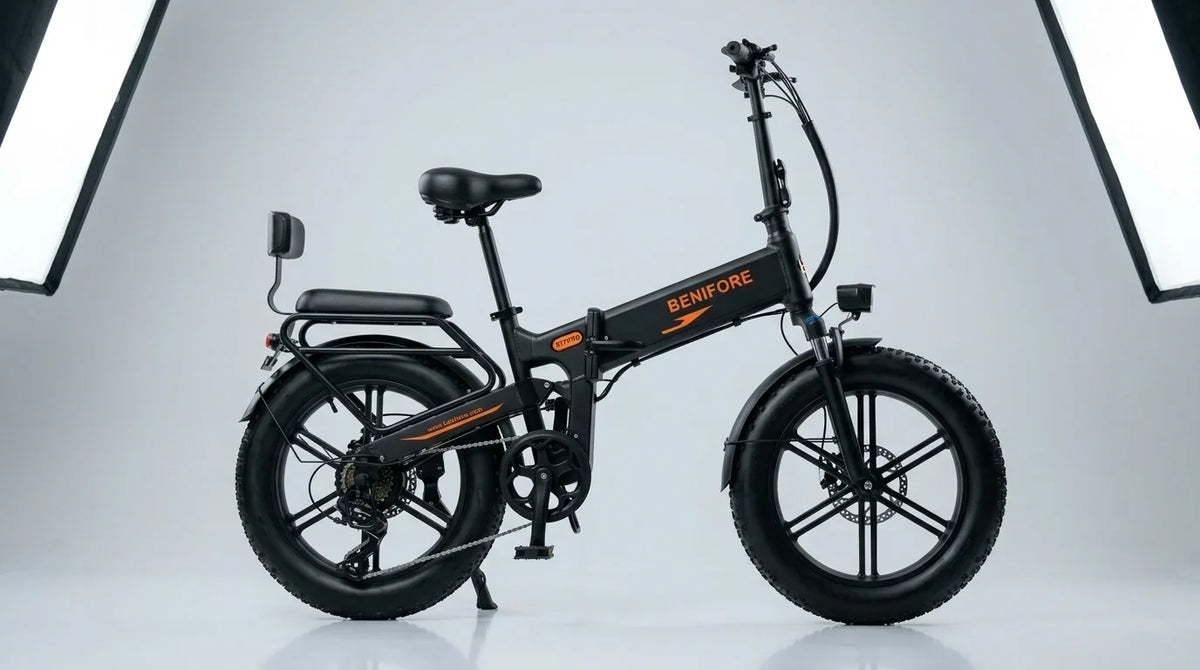
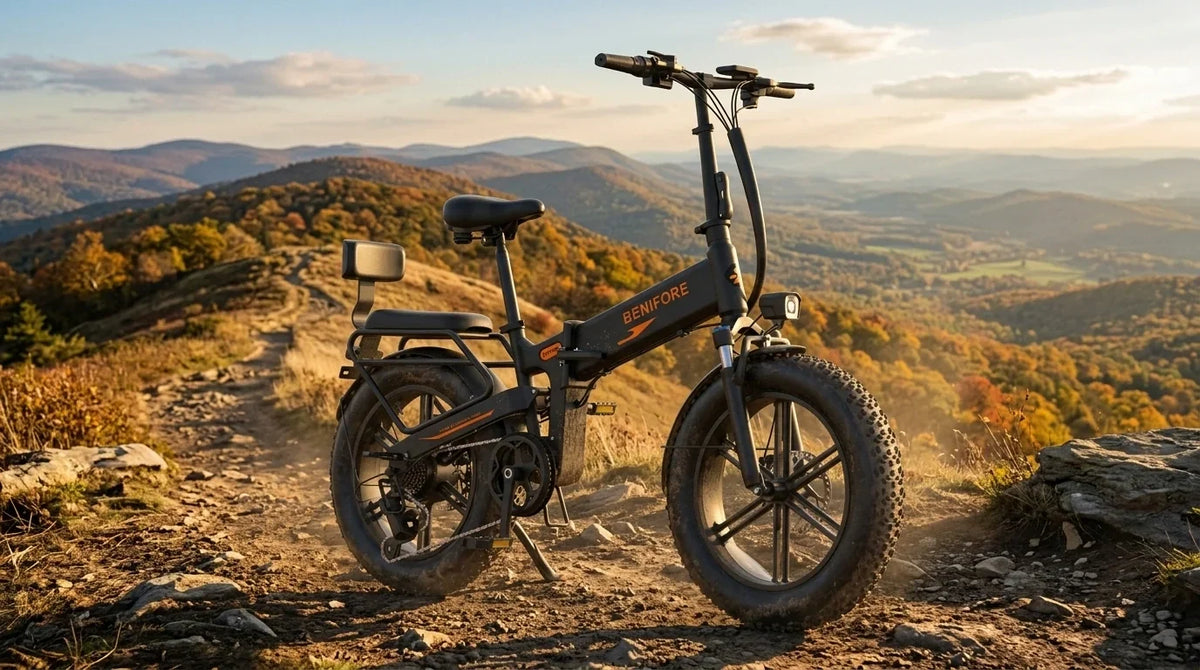
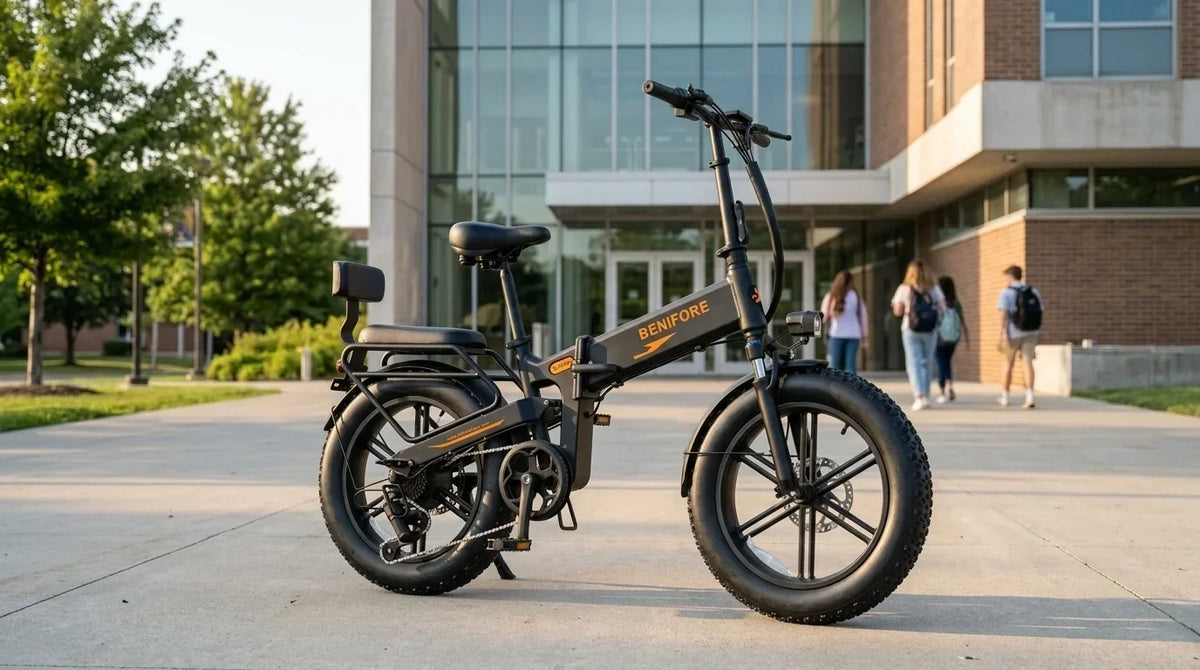
The Benifore X1T PRO is designed with overall ride control in mind, featuring:
- fat tires for improved grip and surface contact
- full suspension to maintain stability during deceleration
- balanced frame geometry for controlled weight transfer
- torque-focused power delivery for smoother acceleration behavior
Together, these elements contribute to more predictable braking performance in everyday conditions.
Common misconception
A frequent assumption is:
higher power makes a bike harder to control and less safe when braking
In reality, safety depends more on how well the system manages speed changes than on motor power alone.
A well-balanced e-bike can feel more controlled at higher speeds than a poorly designed low-power bike.
Final takeaway
Braking performance is one of the most critical yet underestimated parts of electric bike safety.
A well-designed system should feel:
- stable
- predictable
- consistent under pressure
👉 In 2026, safety is defined less by how fast a bike goes—and more by how effectively it can slow down when it matters most.
Share: