




When people shop for an electric bike, they usually compare the motor, battery, range, top speed, and tire size.
One important component is often overlooked: the electric bike controller.
The controller sits between the battery and the motor and plays a central role in determining how electrical power is delivered to the motor.
It helps manage acceleration, motor output, current delivery, and the relationship between rider input and motor assistance.
In other words, the motor may generate the mechanical power, and the battery stores the electrical energy, but the controller helps determine how that energy is delivered.
Understanding the controller can therefore give you a better idea of why two eBikes with similar motor and battery specifications can sometimes feel very different when riding.
This guide explains what an eBike controller does, how it works with the battery and motor, why controller specifications matter, and what riders should consider when evaluating an electric bike.
What Is an Electric Bike Controller?
An electric bike controller is an electronic device that regulates the electrical power supplied from the battery to the motor.
A simplified eBike electrical system looks like this:
Battery → Controller → Motor
But the actual system can involve several additional inputs and sensors, including:
- Throttle
- Pedal assist sensor
- Brake sensors
- Display
- Speed sensor
- Battery management system
- Motor position sensors
The controller receives information from these components and uses it to determine how the motor should operate.
This means the controller is not simply an "on/off switch."
It continuously manages electrical power based on the signals it receives.
What Does an eBike Controller Actually Do?
The controller performs several important jobs.
Its main responsibilities can include:
- Regulating current
- Managing motor power delivery
- Processing throttle input
- Processing pedal-assist signals
- Controlling acceleration
- Monitoring motor operation
- Working with safety systems
- Responding to brake cut-off signals
- Communicating with the display
- Managing electrical output based on system limits
The exact features depend on the controller and eBike system.
However, the basic purpose remains the same:
The controller determines how electrical energy from the battery is converted into usable motor output.
How the Battery, Controller, and Motor Work Together
It is useful to think about an electric bike as a complete electrical system.
Battery
The battery stores electrical energy.
For example, the Benifore X1T PRO uses a:
48V 20Ah battery
Its approximate nominal energy capacity can be calculated as:
48V × 20Ah = 960Wh
This describes the battery's nominal energy capacity.
Controller
The controller regulates how electrical power is delivered from the battery.
Motor
The motor converts electrical energy into mechanical movement.
So the basic process is:
Battery stores energy → Controller manages energy → Motor produces movement
Each component has a different job.
Why Controller Current Matters
One of the most important controller characteristics is its current capability.
Current is measured in amps (A).
Voltage and current work together to determine electrical power.
A simplified relationship is:
Power = Voltage × Current
For example, a system operating at 48 volts and drawing 20 amps would have a theoretical electrical input of:
48V × 20A = 960W
Actual motor output is more complicated because efficiency, operating conditions, controller behavior, and motor characteristics all affect the result.
This is why you should not simply multiply a battery's voltage by an advertised maximum current and assume that number represents the motor's rated mechanical output.
Rated Motor Power vs Peak Power
This distinction is particularly important when reading eBike specifications.
A motor may have a continuous or rated power specification and a higher peak power specification.
For example, the Benifore X1T PRO is configured with a:
1500W peak motor
Peak power refers to the higher level of output that the system can reach under appropriate conditions.
It does not mean the motor continuously operates at 1500W in every riding situation.
Actual power consumption changes constantly depending on:
- Rider weight
- Terrain
- Speed
- Acceleration
- Wind
- Tire pressure
- Riding mode
- Gradient
- Battery condition
- Controller behavior
This is why peak wattage should be treated as one part of the overall system rather than the only measure of performance.
Does a Bigger Controller Mean a Better eBike?
Not necessarily.
A controller with a higher current capability can potentially deliver more electrical power to a compatible motor system.
But simply installing a larger controller does not automatically make an eBike better.
The controller needs to be compatible with:
- Battery voltage
- Battery current capability
- Motor design
- Wiring
- Connectors
- Sensors
- Display
- Battery management system
- Thermal requirements
An electrical system should be designed as a complete package.
Putting a larger controller into an incompatible system can create excessive electrical or thermal stress.
Why Controller Programming Matters
Two electric bikes can use motors with similar advertised power but have different riding characteristics.
One reason can be controller programming.
The controller can influence how the motor responds to rider input.
For example, programming can affect:
- Acceleration response
- Assistance levels
- Current limits
- Speed behavior
- Throttle response
- Pedal-assist behavior
- Motor response under different conditions
This means the riding experience is not determined by the motor's wattage alone.
The interaction between the motor and controller can significantly influence how the bike feels.
What Is Throttle Response?
On an eBike equipped with a throttle, the controller interprets the rider's throttle input.
When the rider applies the throttle, the controller receives that signal and determines how much power should be delivered to the motor.
The response can feel:
- Smooth
- Gradual
- Immediate
- Strong
- Mild
depending on the system's design and programming.
A smooth response can make the bike easier to control, particularly when starting from a stop.
An overly aggressive response may feel less predictable for some riders.
This is why acceleration quality matters in addition to maximum power.
What Is Pedal Assist?
Pedal assist allows the motor to provide assistance when the rider pedals.
A sensor detects pedal movement or crank movement and sends information to the controller.
The controller then determines whether and how much motor assistance should be provided.
Depending on the eBike system, pedal assist may use different types of sensors.
Two common approaches are:
Cadence Sensor
Detects pedal movement or rotation.
Torque Sensor
Measures force applied to the pedals.
These systems can produce different riding characteristics.
Cadence Sensor vs Torque Sensor
A cadence sensor generally determines whether the rider is pedaling.
A torque sensor measures how much force the rider is applying.
This distinction can affect how the motor responds.
With a cadence-based system, assistance may begin when the system detects pedal movement.
With a torque-sensing system, assistance can be more closely related to the rider's actual pedaling force.
Neither system is automatically right for every rider.
The best choice depends on the desired riding experience.
Why the Controller Needs Safety Features
An electric bike contains a significant amount of electrical energy.
The controller therefore needs to operate within the limits of the electrical system.
Depending on the design, an eBike may incorporate protection against conditions such as:
- Excessive current
- Excessive temperature
- Low battery voltage
- Abnormal motor conditions
- Electrical faults
- Brake activation
For example, many eBikes use brake cut-off sensors.
When the brake lever is activated, the controller can receive a signal telling it to stop motor assistance.
This can help prevent the motor from continuing to provide power while the rider is braking.
What Happens When the Battery Gets Low?
The battery voltage gradually decreases as energy is consumed.
The controller monitors the electrical system and can respond to low-voltage conditions.
Depending on the system design, riders may notice:
- Reduced acceleration
- Reduced available power
- Lower assistance
- Battery warning indicators
- Automatic power reduction
This is one reason an eBike can feel different when the battery is nearly empty compared with when the battery is fully charged.
The controller is managing the available electrical energy rather than simply delivering maximum power regardless of battery condition.
Does Battery Size Determine Motor Power?
No.
Battery capacity and motor power are different specifications.
For example:
48V 20Ah
describes battery voltage and capacity.
Meanwhile:
1500W peak
describes the motor system's peak power capability.
The battery provides the electrical energy.
The controller regulates delivery.
The motor converts that energy into mechanical power.
All three need to be compatible.
A large battery does not automatically mean a powerful motor.
Likewise, a powerful motor does not automatically mean a long-range eBike.
Why Voltage Matters
Voltage is another important part of the electrical system.
Common eBike systems include different voltage levels.
A higher-voltage system can operate differently from a lower-voltage system, particularly when paired with an appropriate controller and motor.
The important point is that voltage should not be viewed independently.
The controller, motor, battery, wiring, and electrical components need to be designed for the same system voltage.
For the Benifore X1T PRO, the battery system is:
48V 20Ah
This provides a substantial electrical energy reserve while maintaining a common eBike system voltage.
Controller Heat and Why It Matters
Electrical components generate heat during operation.
The controller is no exception.
When current flows through electronic components, some energy is converted into heat.
Heat generation can increase when the system is working hard.
Examples include:
- Long climbs
- Heavy rider loads
- Strong acceleration
- High sustained power
- Hot outdoor temperatures
Good controller design therefore needs to consider thermal management.
An eBike that is used primarily on flat pavement may place very different demands on the controller compared with one repeatedly climbing steep terrain.
Heavy Loads and Controller Demand
The rider is not the only weight the motor system has to move.
The total system can include:
Rider + Bike + Cargo
A heavier total load generally requires more energy to accelerate and climb.
The Benifore X1T PRO supports up to 400 lbs of load capacity.
That does not mean the motor will use the same amount of energy regardless of load.
A heavier system can require more power, particularly during acceleration and climbing.
This is another reason why the battery, controller, and motor should be considered together.
Why Terrain Changes Power Demand
A flat road and a steep hill can produce dramatically different electrical demands.
On flat terrain, maintaining speed may require relatively modest power.
On a steep climb, the motor has to overcome gravity in addition to rolling resistance and aerodynamic resistance.
The controller responds to the operating conditions and rider input.
This is why a bike can consume energy much faster during repeated climbs than during steady riding on flat ground.
It also explains why real-world range is always affected by riding conditions.
Controller vs Motor: What Is the Difference?
This is one of the most common points of confusion.
Motor
The motor creates mechanical rotation.
Controller
The controller regulates electrical power delivered to the motor.
A simple analogy is:
Battery = Energy source
Controller = Power manager
Motor = Mechanical output
All three are important.
A high-quality motor cannot perform correctly if the controller cannot supply the appropriate electrical input.
Likewise, a capable controller cannot make an incompatible motor perform beyond its physical design.
Can You Upgrade an eBike Controller?
Technically, some eBike systems can be modified or upgraded.
However, this should not be treated as a simple plug-and-play upgrade.
Before replacing a controller, compatibility needs to be checked carefully.
Important considerations include:
- System voltage
- Maximum battery current
- Motor compatibility
- Connector type
- Phase wires
- Hall sensors
- Display communication
- Throttle compatibility
- Brake sensor compatibility
- Battery management system
- Thermal management
- Physical installation space
A controller that appears physically similar may still be electrically incompatible.
For this reason, riders should use manufacturer-approved components whenever possible.
Can a Controller Increase eBike Speed?
A controller can influence how much power the motor receives, but changing the controller is not automatically a safe or appropriate way to increase speed.
Maximum speed depends on multiple factors.
These can include:
- Motor characteristics
- Controller programming
- Battery voltage
- Wheel size
- Rider weight
- Aerodynamics
- Terrain
- Manufacturer configuration
- Applicable regulations
Increasing electrical power beyond the system's intended design can also increase heat and component stress.
For a complete eBike system, reliability and control are more important than simply chasing a higher number.
Why a Smooth Power Curve Matters
Maximum power gets attention because it is easy to advertise.
But the way power is delivered can be just as important.
A smooth power curve can make an eBike feel more predictable.
For example, gradual assistance can help when:
- Starting at an intersection
- Riding slowly
- Navigating crowded areas
- Turning
- Riding on loose surfaces
- Climbing gradually
A sudden power surge may feel very different.
This is why experienced riders often pay attention to how the bike delivers power, not just how much power it can theoretically produce.
Signs of a Possible Controller Problem
A controller is an electronic component, so failures can occur.
Potential warning signs can include:
- Motor suddenly stops working
- Intermittent motor assistance
- Unusual power cut-outs
- Error messages
- Throttle stops responding
- Pedal assist behaves abnormally
- Motor performance changes unexpectedly
- Controller becomes unusually hot
These symptoms do not necessarily mean the controller itself has failed.
The problem could also involve:
- Battery
- Wiring
- Sensors
- Motor
- Display
- Connectors
Proper diagnosis is important before replacing components.
How to Take Care of an eBike Electrical System
Most riders do not need to perform complicated electronic maintenance.
However, several simple habits can help protect the system.
Keep Electrical Connections Dry
Avoid unnecessary exposure to standing water.
Inspect Cables
Look for visible damage, cuts, or loose connections.
Avoid Unauthorized Modifications
Changing electrical components without checking compatibility can create problems.
Keep the Battery in Good Condition
Follow the manufacturer's charging and storage recommendations.
Watch for Abnormal Heat
If an electrical component becomes unusually hot, stop riding and investigate.
Pay Attention to Error Codes
Do not ignore recurring system warnings.
Why the Controller Is Important on a High-Performance eBike
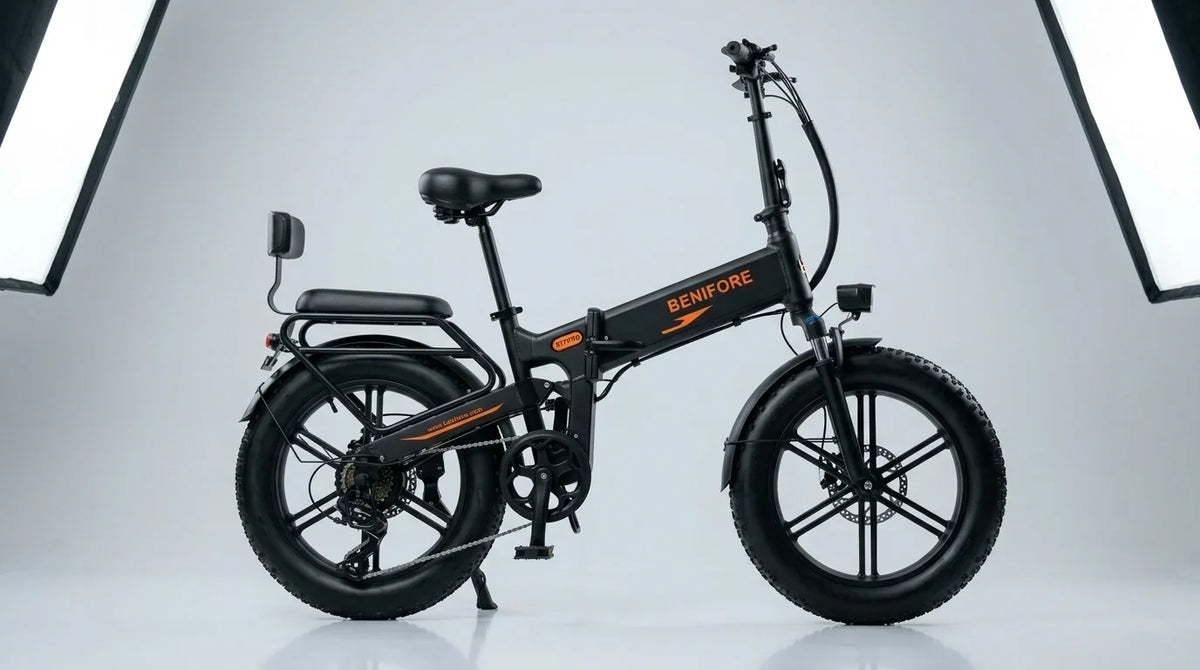
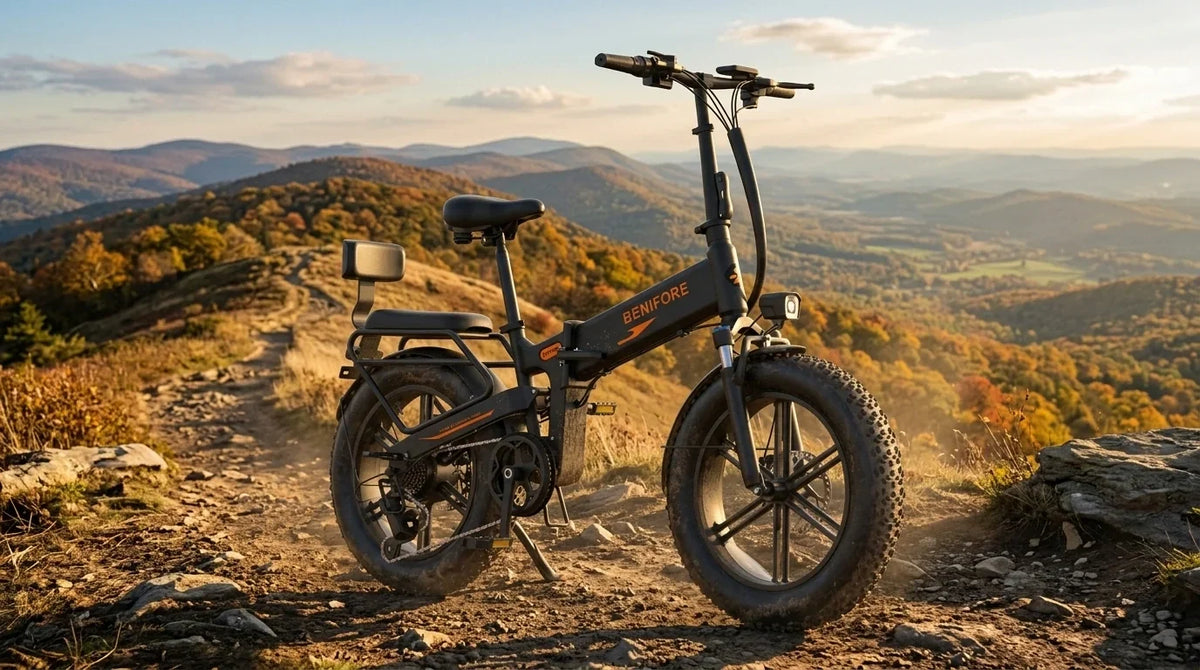
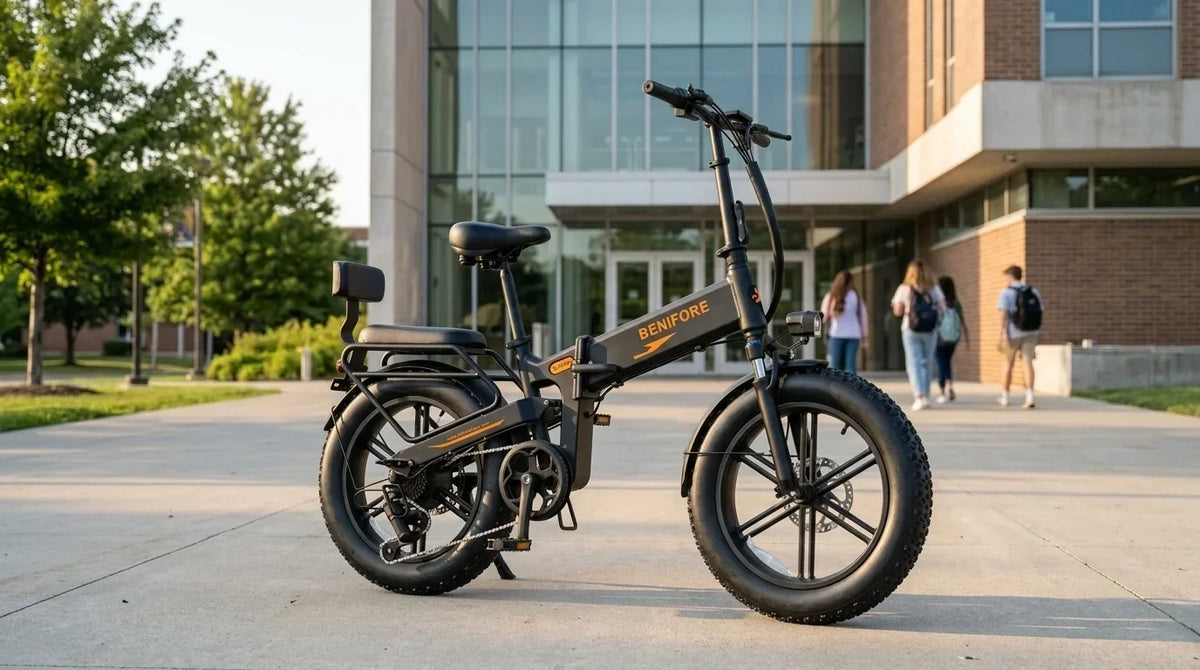
The Benifore X1T PRO is built around a performance-oriented configuration:
- 1500W peak motor
- 90Nm torque
- 48V 20Ah battery
- Up to 65 miles of range
- 35 MPH top speed
- 20×4.0 fat tires
- Full suspension
- Up to 400 lbs load capacity
When an eBike has this level of performance capability, the electrical system needs to work as a coordinated package.
The controller is one of the components responsible for managing that relationship.
The rider's throttle input, pedal input, battery condition, motor demand, and system protections all interact through the electrical control system.
This is why simply comparing motor wattage does not provide the complete picture.
What Should You Look for When Buying an eBike?
You do not necessarily need to know the exact controller model before buying an eBike.
Instead, look at the complete system.
Ask:
Is the battery compatible with the motor?
The electrical system should be designed as a matched package.
Does the bike provide predictable acceleration?
A smooth response can be more useful than simply having a large peak-power number.
Does the bike handle hills appropriately?
Motor output, gearing, rider weight, and terrain all contribute.
Is the electrical system properly protected?
Look for appropriate system design and manufacturer documentation.
Can replacement components be obtained?
Long-term serviceability matters.
Does the overall specification match your use?
A commuter, recreational rider, and off-road rider may have very different requirements.
Frequently Asked Questions
What is an electric bike controller?
An eBike controller is an electronic component that regulates electrical power between the battery and motor while processing signals from components such as the throttle, pedal-assist system, brakes, and sensors.
Does the controller control the motor speed?
The controller can influence motor operation and power delivery, but actual speed depends on the complete electrical and mechanical system.
Does a bigger controller make an eBike more powerful?
Not automatically. The controller must be compatible with the battery, motor, wiring, sensors, and thermal requirements.
What is controller current?
Controller current refers to how much electrical current the controller can manage or deliver under its specified operating conditions. It is normally measured in amps.
Can an eBike controller overheat?
Yes. High current, long climbs, heavy loads, high temperatures, and sustained power demands can increase heat generation.
Can I replace an eBike controller myself?
Some systems allow relatively straightforward replacement, but compatibility must be verified carefully. Professional service is preferable when electrical compatibility is uncertain.
Does the controller affect range?
It can influence energy consumption through power delivery and system efficiency, but range also depends heavily on battery capacity, rider weight, terrain, speed, wind, tires, and riding behavior.
Final Thoughts
The electric bike controller is one of the least visible but most important components in an eBike's electrical system.
The battery stores energy.
The motor converts electrical energy into mechanical movement.
The controller manages how that energy moves between them.
That relationship affects acceleration, assistance, throttle response, power delivery, and overall system behavior.
This is why an eBike should never be evaluated based on a single specification.
A 1500W peak motor, large battery, high torque figure, or high top speed may look impressive on a product page, but the real riding experience comes from how the entire system works together.
When comparing electric bikes, look beyond the headline numbers.
Consider the battery, controller, motor, drivetrain, tires, suspension, brakes, total load, and the type of terrain you actually ride.
That is a much more useful way to understand eBike performance.
Share: