




Camping and outdoor exploration have always been popular ways for people to disconnect from daily routines and experience nature. However, traditional outdoor trips often come with challenges — long walking distances, difficult terrain, heavy equipment, and limited access to remote areas.
Electric bikes are changing the way many outdoor enthusiasts explore.
An electric bike designed for camping and adventure riding can help riders travel farther, carry more equipment, and explore places that are difficult to reach with traditional bicycles.
For American riders, especially those who enjoy weekend adventures, fishing trips, camping journeys, and outdoor exploration, choosing the right eBike can make the experience more comfortable and enjoyable.
This guide explains what makes an electric bike suitable for camping, what features matter most, and how riders can choose a reliable outdoor eBike for real-world adventures.
Why Are Electric Bikes Becoming Popular for Camping?
Traditional camping often requires carrying equipment over long distances.
Riders may need to transport:
- Camping bags
- Fishing equipment
- Food and supplies
- Outdoor tools
- Personal gear
Walking long distances with heavy equipment can reduce the enjoyment of exploring nature.
An electric bike provides additional assistance, allowing riders to:
- Travel farther with less physical effort
- Explore larger outdoor areas
- Access trails and back roads
- Carry necessary equipment more easily
Instead of replacing outdoor activities, an eBike expands the possibilities.
Many riders use electric bikes as a tool for adventure — helping them spend more time outdoors while reducing the physical limitations of distance and terrain.
What Makes a Good Camping Electric Bike?
Not every electric bike is designed for outdoor adventures.
A camping eBike needs to handle conditions beyond smooth city roads.
The most important features include:
- Strong motor performance
- Long battery range
- Durable tires
- Comfortable suspension
- Stable frame design
- High load capacity
These features determine whether an electric bike can perform reliably during longer outdoor rides.
1. Powerful Motor Performance for Outdoor Terrain
Outdoor environments are different from urban streets.
Camping routes may include:
- Gravel roads
- Dirt paths
- Hills
- Uneven surfaces
- Grass areas
A motor with enough power helps riders maintain a comfortable riding experience when conditions become more challenging.
Motor power affects:
- Acceleration
- Hill climbing ability
- Load handling
- Riding confidence
For outdoor riders, having additional power is not only about speed.
It is about having enough capability when the terrain changes.
A stronger motor allows riders to explore more locations without worrying about whether the bike can handle the route ahead.
2. Long Range Battery for Extended Adventures
One of the biggest concerns during outdoor riding is battery range.
Unlike city commuting, camping routes may take riders far away from charging locations.
A suitable outdoor electric bike should provide enough range for:
- Trail exploration
- Weekend trips
- Longer recreational rides
- Remote outdoor areas
Battery performance depends on several factors:
- Battery capacity
- Riding speed
- Rider weight
- Terrain conditions
- Assistance level
A larger battery provides more flexibility and reduces range anxiety during adventures.
For outdoor riders, range is not just a specification.
It determines how far they can explore.
3. Fat Tires Improve Stability on Different Surfaces
Camping adventures often involve unpredictable terrain.
Riders may encounter:
- Gravel
- Sand
- Dirt roads
- Grass
- Mud
- Loose surfaces
Fat tire electric bikes are popular for outdoor riding because wider tires provide:
Better Stability
A larger contact area helps riders feel more balanced.
Improved Traction
Fat tires can maintain better grip on uneven surfaces.
More Comfortable Riding
The additional tire volume helps absorb small bumps and vibrations.
For outdoor riding, stability and comfort are often more important than maximum speed.
4. Full Suspension Creates a More Comfortable Ride
Long-distance outdoor riding can become uncomfortable when the bike constantly transfers impacts from rough terrain.
A suspension system helps reduce:
- Vibrations
- Road impacts
- Rider fatigue
Full suspension electric bikes provide additional comfort because both the front and rear sections of the bike help absorb impacts.
This is especially valuable for:
- Trail riding
- Gravel roads
- Long-distance exploration
- Outdoor adventures
A comfortable bike allows riders to spend more time enjoying the journey.
5. High Load Capacity for Camping Gear
Outdoor riders often carry more than regular commuters.
A camping electric bike should support additional weight from:
- Gear bags
- Supplies
- Tools
- Personal equipment
A strong frame and reliable load capacity provide better confidence during longer trips.
When selecting an adventure eBike, riders should consider:
- Maximum payload
- Frame strength
- Tire durability
- Motor capability
A bike designed for everyday transportation may not always perform well when loaded with outdoor equipment.
Electric Bike Camping vs Traditional Camping Transportation
Traditional transportation methods for camping usually involve:
Car
Advantages:
- Carries large amounts of equipment
- Travels long distances quickly
Limitations:
- Cannot access narrow trails
- Requires parking locations
- Less connected to the outdoor environment
Walking
Advantages:
- Simple
- Natural experience
Limitations:
- Limited distance
- Difficult with heavy equipment
Electric Bike
Advantages:
- Accesses more areas than cars
- Covers longer distances than walking
- Provides exercise with assistance
- Creates a more flexible outdoor experience
For many riders, an electric bike becomes the perfect middle option between a vehicle and traditional cycling.
Best Types of Outdoor Adventures for Electric Bikes
Camping Trips
Electric bikes can help riders reach campsites, explore surrounding areas, and transport supplies.
Fishing Trips
Many anglers use eBikes because they can carry equipment while reaching locations that are difficult to access by car.
Trail Exploration
Fat tire electric bikes perform well on mixed terrain where traditional bicycles may struggle.
Weekend Outdoor Riding
An eBike can turn short weekend rides into longer exploration experiences.
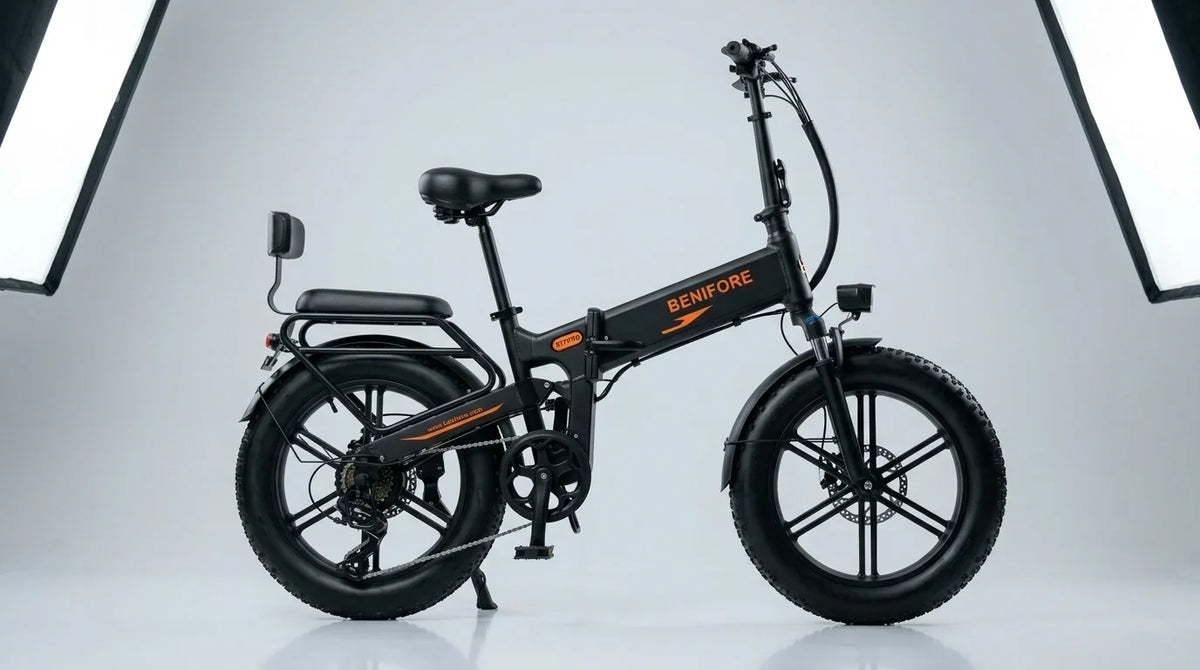
How Benifore X1T PRO Supports Outdoor Adventures
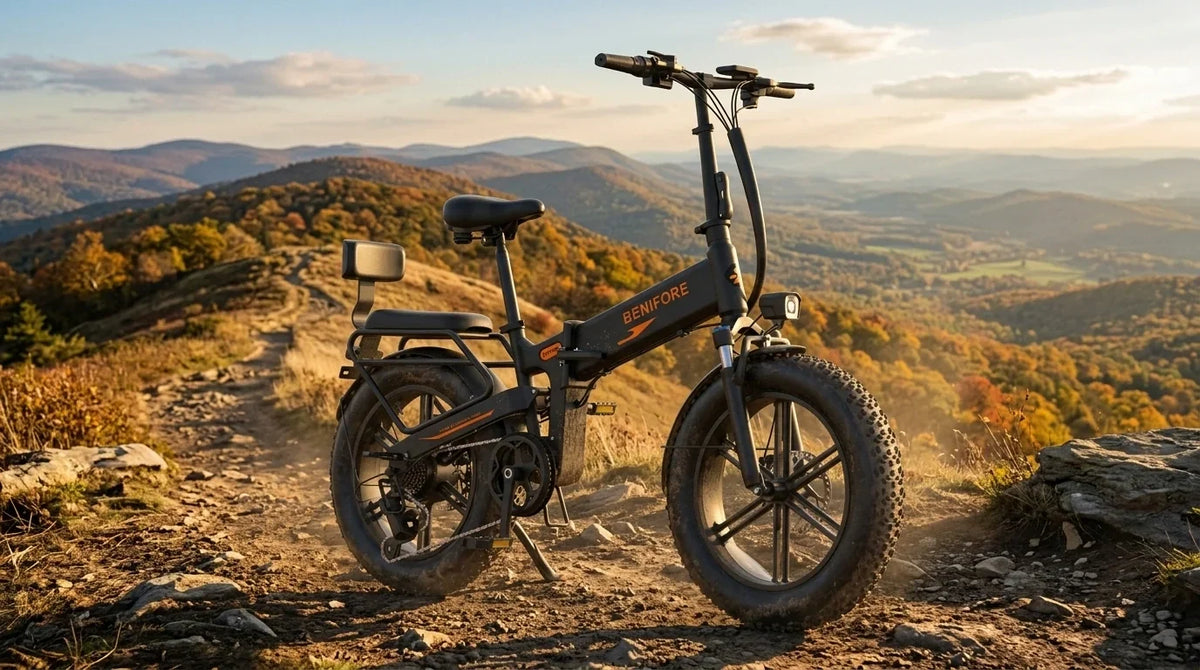
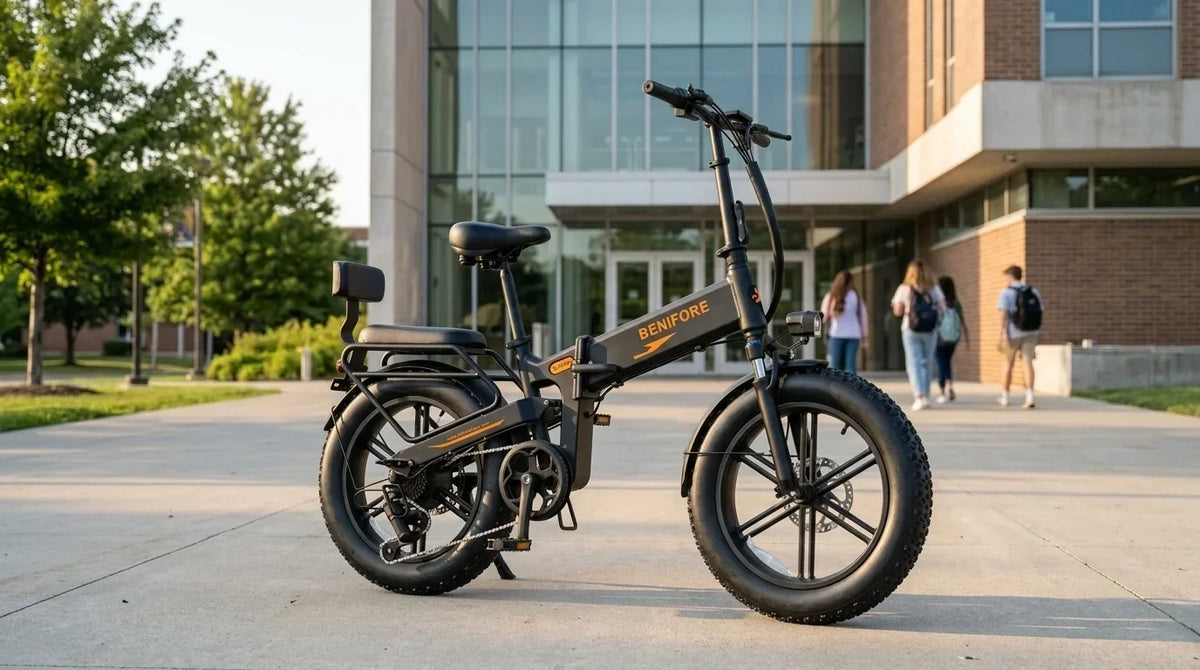
The Benifore X1T PRO is designed for riders who want an electric bike capable of handling both everyday transportation and outdoor exploration.
Its adventure-focused configuration includes:
- 1500W peak motor
- Up to 90Nm torque
- 48V 20Ah battery
- Up to 65 miles range
- 20×4.0 fat tires
- Full suspension system
- Up to 400 lbs load capacity
This combination provides the power, comfort, and stability needed for different riding environments.
Whether riding through neighborhood roads, gravel paths, camping areas, or outdoor trails, the X1T PRO is built around practical real-world performance.
What Should You Look for Before Buying a Camping Electric Bike?
Before choosing an outdoor eBike, consider:
Where Will You Ride?
Different environments require different capabilities.
City roads may require less power, while trails and hills benefit from stronger performance.
How Far Will You Travel?
Longer trips require more battery capacity.
What Will You Carry?
Camping equipment and supplies require a stronger frame and higher payload capacity.
How Important Is Comfort?
For longer adventures, suspension and tire design can significantly improve the experience.
Final Thoughts
A good camping electric bike is more than a transportation tool.
It gives riders the ability to explore farther, carry more, and enjoy outdoor experiences with fewer limitations.
For American riders who enjoy camping, fishing, trails, and weekend adventures, features such as motor power, battery range, fat tires, suspension, and durability all play an important role.
Choosing an electric bike built for real-world outdoor riding allows every journey to become more accessible, comfortable, and enjoyable.
Share: