




An electric bike is designed to be ridden, but how you store it between rides can have a major effect on its long-term condition.
Whether you ride every day, use your eBike only on weekends, or put it away for several weeks during colder weather, proper storage helps protect the battery, tires, drivetrain, electrical components, and frame.
Electric bikes are different from traditional bicycles because they combine mechanical components with a battery, motor, controller, display, wiring, and other electrical systems. That means storage is not simply a matter of parking the bike in a convenient location.
Temperature, moisture, battery charge level, tire pressure, and the storage environment all matter.
For riders who use an eBike for commuting, family rides, camping, fishing, or weekend adventures, developing a simple storage routine can prevent many unnecessary problems.
This guide explains how to store an electric bike properly, how to prepare the battery for longer periods without riding, where an eBike should and should not be stored, and what to check before riding again.
Why Proper Electric Bike Storage Matters
An electric bike can spend hundreds of hours outside during normal use.
It may encounter:
- Rain
- Dust
- Mud
- Road salt
- Heat
- Cold temperatures
- Direct sunlight
- Humidity
- Gravel and dirt
These conditions are part of normal riding.
The problem usually begins when an eBike is left exposed to those conditions for long periods without preparation.
Proper storage helps reduce unnecessary wear on:
- Battery
- Electrical connectors
- Motor system
- Tires
- Brakes
- Chain and drivetrain
- Frame
- Display
- Cables
Storage is especially important for riders who do not use their eBike every day.
A bike that sits untouched for several weeks can develop issues that would have been easy to prevent with a few minutes of preparation.
Where Is the Best Place to Store an Electric Bike?
The ideal storage location is:
Dry + protected + temperature controlled + away from direct sunlight
A garage, basement, utility room, or other secure indoor space can work well.
The exact location depends on the environment.
A good storage area should protect the bike from:
Excessive Moisture
Humidity and water exposure can affect metal components and electrical connections over time.
Direct Sunlight
UV exposure and heat can gradually damage certain materials and cause unnecessary temperature increases.
Extreme Temperatures
Very high or very low temperatures can affect battery performance and long-term battery health.
Theft
An electric bike is a valuable piece of equipment.
Even when stored inside a garage, it should not be left unsecured if the garage is accessible from outside.
Can You Store an Electric Bike Outside?
Technically, an eBike can be exposed to outdoor conditions during normal riding.
However, long-term outdoor storage is generally not the best option.
A covered outdoor location is better than leaving the bike completely exposed, but it still does not provide the same protection as indoor storage.
If outdoor storage is unavoidable, try to:
- Keep the bike under a waterproof shelter
- Keep it away from direct sunlight
- Prevent water from collecting around electrical components
- Use an appropriate protective cover
- Keep the battery in a suitable protected environment when possible
- Check the bike regularly
A cover can help protect the bike from weather, but it should not be treated as a substitute for a dry storage location.
Moisture can remain trapped underneath an improperly used cover.
Ventilation is therefore important.
Should You Remove the Battery Before Storage?
If your electric bike has a removable battery, removing it can be useful when storing the bike for an extended period.
The reason is simple:
The battery is one of the most important and expensive components of the eBike.
Keeping the battery in a controlled environment can make it easier to protect it from:
- Extreme temperatures
- Moisture
- Direct sunlight
- Accidental damage
For long-term storage, follow the battery and bike manufacturer's recommendations rather than leaving the battery connected indefinitely.
Never store a damaged battery.
If the battery shows unusual swelling, physical damage, overheating, leakage, or other abnormal behavior, stop using it and follow the manufacturer's safety instructions.
What Battery Level Is Best for Long-Term Storage?
Battery storage is different from everyday charging.
When you ride frequently, charging the battery after a ride is normal.
For longer periods without riding, however, keeping a lithium-ion battery at an extremely high or extremely low state of charge for an extended period may not be ideal.
A practical long-term storage approach is to follow the battery manufacturer's recommended storage charge level.
For many lithium-ion battery systems, a partial charge is commonly recommended for extended storage rather than leaving the battery completely full or completely empty.
The most important point is:
Do not store the battery completely discharged for a long period.
A deeply discharged battery can become difficult or impossible to recharge if the voltage falls too low.
At the same time, there is usually little reason to keep a battery at maximum charge for months when the bike is not being used.
Always prioritize the specific recommendations supplied with your eBike and battery.
How to Store a 48V 20Ah eBike Battery
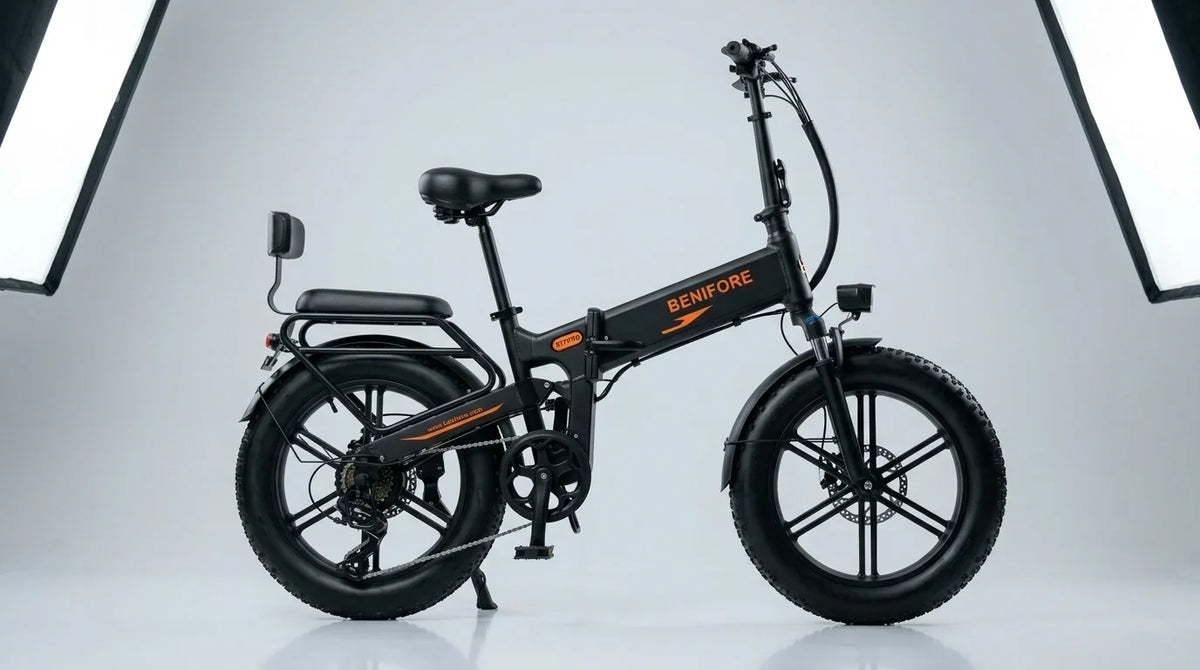
The Benifore X1T PRO uses a:
48V 20Ah battery
The battery provides the energy required by the motor system and supports the bike's long-range capability.
Because the battery is such an important component, storage should be considered part of normal eBike ownership.
When storing an X1T PRO for an extended period:
- Clean and dry the bike before storage.
- Check the battery condition.
- Store the battery according to the manufacturer's recommended charge level.
- Keep it in a dry location.
- Avoid extreme heat.
- Avoid freezing conditions.
- Keep the battery away from water.
- Do not store a visibly damaged battery.
- Check the battery periodically if the bike will remain unused for a long time.
The objective is simple:
Protect the battery while the bike is not being ridden.
Avoid Extreme Heat
Heat is one of the most important storage considerations for lithium-ion batteries.
Avoid leaving an electric bike or its battery:
- Inside a hot vehicle
- In direct summer sunlight
- Next to a heater
- Near a furnace
- In an extremely hot enclosed space
A garage can become much hotter than the outdoor temperature during summer.
If your garage becomes extremely hot, consider moving the battery to a more suitable indoor environment when the design allows it.
This is especially important during extended storage.
Avoid Extreme Cold
Cold temperatures can also affect battery performance.
A battery may temporarily provide less performance in very cold conditions.
That does not necessarily mean the battery is permanently damaged.
However, prolonged exposure to extreme temperatures should be avoided when possible.
If your eBike has been stored in a very cold environment, allow the battery to return to an appropriate temperature before charging or riding, following the manufacturer's instructions.
Do not try to rapidly heat a cold battery with a heater, hair dryer, or other direct heat source.
Gradual temperature recovery is safer.
Clean Your Electric Bike Before Storage
One of the simplest storage steps is also one of the most useful:
Clean the bike before putting it away.
Dirt and moisture left on the bike can continue affecting components while the bike is sitting.
Pay attention to:
- Frame
- Wheels
- Tires
- Drivetrain
- Brake components
- Fenders
- Battery area
- Electrical connection areas
You do not need an aggressive cleaning process.
A basic cleaning followed by proper drying is usually enough for normal riding conditions.
If the bike has been used on muddy trails, gravel roads, or wet surfaces, more attention may be necessary.
Do Not Store a Wet Electric Bike
This is an easy mistake to make.
You finish a rainy ride, park the bike in the garage, and assume it will dry eventually.
It may.
But storing a wet bike for a long period creates an unnecessary moisture problem.
Before extended storage:
Dry the bike.
Pay particular attention to:
- Battery connection areas
- Electrical connectors
- Frame openings
- Brake components
- Chain
- Metal hardware
The goal is not to make the bike perfectly dry after every ride.
The goal is to avoid trapping moisture against components for long periods.
What About the Tires?
Tires also need attention during storage.
An eBike can gradually lose air even when it is not being ridden.
If the bike sits for weeks or months, the tire pressure may become significantly lower.
This can place unnecessary stress on the tires and make the bike less ready to ride when you take it out again.
Before storage:
- Inspect the tires
- Check pressure
- Look for cuts or damage
- Remove embedded debris
- Follow the manufacturer's recommended pressure range
During long-term storage, periodically check the tires if practical.
Should You Lift the Electric Bike Off the Ground?
For normal short-term storage, there is usually no need to hang an electric bike.
However, long-term storage can benefit from reducing prolonged pressure on one position of the tires, particularly if the bike will remain untouched for an extended period.
A suitable bike stand can make storage easier.
If you use a stand, make sure it is designed to safely support the weight of your eBike.
This is particularly important with heavier electric bikes.
The Benifore X1T PRO has a load capacity of up to 400 lbs, but that does not mean every storage rack or wall mount can safely support the complete bike.
Always check the storage equipment's weight rating.
Store the Bike Upright or Horizontally?
For most riders, the most practical choice is to store the eBike in a stable upright position.
An upright position:
- Saves floor space
- Makes the bike easier to access
- Reduces the risk of accidental falls
- Makes regular inspection easier
If using a wall mount or hanging system, make sure it is specifically designed for the bike's weight and frame structure.
Do not install a generic bicycle hanger simply because the hook appears large enough.
Electric bikes are often significantly heavier than conventional bicycles.
Protect the Drivetrain
If your electric bike uses a chain-driven system, the drivetrain should be clean before storage.
A dirty chain can hold moisture and contaminants that contribute to corrosion.
Before longer storage:
- Clean the chain.
- Dry it properly.
- Apply suitable bicycle chain lubricant if recommended.
- Wipe away excess lubricant.
Avoid using excessive lubricant.
Too much lubricant can attract dust and dirt.
A clean, lightly lubricated drivetrain is generally a better starting point for storage.
What About the Brakes?
Brakes are one of the most important components on an electric bike.
Before storing the bike for an extended period, inspect:
- Brake pads
- Rotors
- Brake cables or hydraulic lines
- Brake levers
- Signs of contamination
If the brakes were already showing problems before storage, do not assume the problem will disappear while the bike sits.
Storage is a good opportunity to identify maintenance issues before the next ride.
Long-Term Storage vs Everyday Storage
Not every storage situation requires the same preparation.
Everyday Storage
If you ride your eBike almost every day, storage can be simple.
After riding:
- Park in a dry location
- Protect from rain
- Check for obvious damage
- Keep the battery appropriately charged
- Keep tires properly inflated
There is no need to perform a full maintenance routine after every ride.
Weekend Storage
If you ride once or twice per week, focus on:
- Dry storage
- Battery condition
- Tire pressure
- Basic cleaning
- Security
The bike is still being used frequently, so extensive long-term preparation is unnecessary.
Seasonal Storage
If you will not ride for several weeks or months, preparation becomes more important.
Before storing:
- Clean the bike
- Dry all components
- Check tire condition
- Inspect brakes
- Clean and lubricate the drivetrain
- Follow the recommended battery storage charge
- Protect the bike from moisture
- Store in a suitable environment
- Check the bike periodically
This routine can make the first ride of the next season much easier.
How to Store an Electric Bike During Winter
Winter storage depends heavily on your local climate.
If winter temperatures are moderate and you continue riding, normal storage may be sufficient.
If you are storing the bike for several months, focus on protecting the battery and preventing moisture-related problems.
A good winter storage routine includes:
1. Clean the bike
Remove dirt, mud, and road contaminants.
2. Dry everything
Do not put a wet bike into long-term storage.
3. Protect the battery
Follow the manufacturer's recommended storage procedure.
4. Keep the bike indoors if possible
A dry indoor location is preferable.
5. Check tire pressure
Prevent tires from sitting completely deflated.
6. Inspect the bike periodically
Do not forget about the bike for several months.
What Should You Avoid When Storing an eBike?
Several storage habits are worth avoiding.
Do Not Leave the Battery Completely Empty
Long periods at extremely low charge can create problems.
Do Not Leave the Bike in Direct Sunlight
UV exposure and heat are unnecessary risks.
Do Not Store a Wet Bike for Months
Moisture can contribute to corrosion and component problems.
Do Not Put the Battery Near a Heat Source
Extreme heat is not appropriate for lithium-ion battery storage.
Do Not Cover a Wet Bike With an Airtight Cover
Trapped moisture can create its own problems.
Do Not Ignore a Damaged Battery
Any abnormal battery condition should be addressed before storage.
Do Not Assume Storage Means No Maintenance
An unused bike can still lose tire pressure, accumulate moisture, or develop other issues.
Preparing an Electric Bike After Long-Term Storage
When it is finally time to ride again, do not simply turn the bike on and leave.
Perform a quick inspection first.
Step 1: Inspect the Frame
Look for:
- Cracks
- Loose components
- Corrosion
- Damage
Step 2: Check the Tires
Inspect pressure and tire condition.
Step 3: Check the Brakes
Make sure both brakes operate correctly.
Step 4: Check the Battery
Look for any visible damage or unusual condition.
Step 5: Check the Electrical Connections
Make sure connectors are properly seated and free from obvious damage.
Step 6: Test the Controls
Check the display, controls, lights, and other electrical functions.
Step 7: Start Slowly
Your first ride after months of storage should not immediately be a high-speed adventure.
Ride in a controlled area and make sure everything feels normal.
Why Storage Matters Even More for High-Performance eBikes
A basic electric bike may be used primarily for short neighborhood trips.
A high-performance model can have a much wider range of applications.
For example, the Benifore X1T PRO combines:
- 1500W peak motor
- 90Nm torque
- 48V 20Ah battery
- Up to 65 miles of range
- 35 MPH top speed
- 20×4.0 fat tires
- Full suspension
- Up to 400 lbs load capacity
That makes it suitable for a variety of riding situations, from everyday transportation to longer recreational and outdoor rides.
But a bike designed for higher performance still benefits from basic ownership habits.
Power does not replace maintenance.
A larger battery does not eliminate the need for proper storage.
Fat tires do not eliminate the need to check pressure.
Full suspension does not eliminate the need to inspect the bike.
The better approach is to think of storage as part of the overall maintenance routine.
Electric Bike Storage Checklist
Before putting your eBike away for an extended period, use this checklist.
Bike
- Clean the frame
- Remove mud and dirt
- Dry the bike completely
- Inspect tires
- Check tire pressure
- Inspect brakes
- Check drivetrain
- Check for loose components
Battery
- Check battery condition
- Follow recommended storage charge
- Avoid extreme temperatures
- Keep away from moisture
- Do not store a damaged battery
Storage Environment
- Dry location
- Protected from direct sunlight
- Away from heat sources
- Protected from freezing conditions when possible
- Secure from theft
- Stable storage position
Before Riding Again
- Check battery
- Check tire pressure
- Check brakes
- Check controls
- Inspect frame
- Test the bike at low speed
This takes very little time compared with dealing with a preventable problem later.
Frequently Asked Questions
Can I leave my electric bike in the garage?
Yes, a garage can be a practical storage location as long as it remains reasonably dry and does not experience extreme temperatures. During very hot or cold periods, pay particular attention to battery storage conditions.
Should I remove my eBike battery when storing the bike?
If the battery is removable and the bike will be stored for an extended period, removing and storing the battery according to the manufacturer's recommendations can be a practical option.
Can an electric bike be stored outside?
It is better to store an eBike indoors when possible. If outdoor storage is unavoidable, protect it from rain, direct sunlight, and extreme weather and inspect it regularly.
Should an eBike battery be fully charged during storage?
Not necessarily. For extended storage, follow the battery manufacturer's recommended storage charge rather than automatically keeping it at 100% for months.
How should I store an electric bike in winter?
Clean and dry the bike, protect the battery from extreme temperatures, maintain appropriate tire pressure, and store the bike in a dry and secure location.
How often should I check an eBike during long-term storage?
A periodic inspection is useful, especially for tire pressure, battery condition, moisture, and any visible damage.
Final Thoughts
Proper electric bike storage does not require complicated equipment or a long maintenance routine.
The most important habits are simple:
Keep the bike dry.
Protect the battery.
Avoid extreme temperatures.
Maintain tire pressure.
Inspect the bike before storing it and before riding again.
For riders who use their eBike every day, these steps take only a few minutes.
For riders who store their electric bike for an entire season, they can make an even bigger difference.
An electric bike is a combination of mechanical and electrical systems, and both need reasonable care.
The goal of proper storage is not to make ownership complicated.
It is to make sure that when you are ready for your next commute, weekend ride, camping trip, or outdoor adventure, your eBike is ready too.
Share: