




One of the most useful controls on an electric bike is also one of the easiest to misunderstand:
The throttle.
If you are new to eBikes, you may already know that electric bikes can use pedal assist to help you ride.
But a throttle works differently.
Instead of requiring the rider to pedal first, a throttle allows the rider to request motor assistance directly through a hand control.
This can make starting from a stop easier, provide additional assistance when climbing, and give riders another way to manage the bike's electric power.
However, throttle systems are not all identical.
Different eBikes can use different throttle designs, controller settings, power levels, and operating rules.
Understanding how a throttle works can help you make a better purchasing decision and use an electric bike more confidently.
This guide explains what an eBike throttle is, how it works, the different types of throttle controls, how throttles interact with pedal assist, what affects throttle performance, and what riders should know before choosing an electric bike.
What Is an Electric Bike Throttle?
An eBike throttle is a handlebar control that allows the rider to request motor assistance without relying solely on pedal movement.
The concept is similar to a throttle on other powered vehicles:
Rider input → Electrical signal → Controller → Motor response
When the rider activates the throttle, the throttle sends a signal to the controller.
The controller interprets that signal and determines how much motor power should be delivered based on the bike's system configuration.
The exact behavior depends on the eBike.
Some throttles provide variable control.
Others may have more limited operating characteristics.
The important point is that the rider can control motor assistance directly through the throttle rather than using pedal movement as the primary input.
How Does an eBike Throttle Work?
A throttle typically contains an electronic sensing mechanism.
When you move the throttle, the sensor detects the position of the control.
That information is converted into an electrical signal.
The signal travels to the motor controller.
The controller then determines how the motor should respond.
A simplified system looks like this:
Throttle movement
↓
Throttle signal
↓
Motor controller
↓
Electrical power management
↓
Motor
↓
Wheel movement
This happens extremely quickly.
The rider experiences it as a direct connection between throttle input and motor response.
Why Do Riders Like Throttles?
The biggest advantage of a throttle is simple:
You can request motor assistance without continuously pedaling.
This can be useful in many situations.
For example:
- Starting from a stop
- Getting through an intersection
- Climbing a short incline
- Recovering after slowing down
- Moving the bike with minimal effort
- Accelerating smoothly when appropriate
For riders who want flexibility, a throttle can be a valuable part of an eBike's control system.
Throttle vs Pedal Assist
Throttle control and pedal assist are two different ways of requesting motor assistance.
Pedal Assist
The rider pedals.
The system detects the rider's input.
The controller provides motor assistance.
Throttle
The rider activates the throttle.
The controller receives the throttle signal.
The motor provides assistance according to the system's settings.
A bike can be designed around one system or can combine both.
When both are available, riders can choose the control method that best fits the situation.
Can You Use Throttle and Pedal Assist Together?
Some eBikes allow both systems to be used.
For example, a rider may begin pedaling with pedal assist and then use the throttle briefly when additional direct control is useful.
The exact behavior depends on the manufacturer's programming.
Some systems may prioritize one input over another.
Others may allow both signals to work together.
This is one reason riders should check the manufacturer's operating instructions instead of assuming every eBike behaves the same way.
Different Types of eBike Throttles
There are several common throttle designs.
The two most recognizable styles are:
- Thumb throttles
- Twist throttles
They perform a similar basic function, but they feel different when riding.
What Is a Thumb Throttle?
A thumb throttle is operated by pressing or moving a control with your thumb.
The throttle is usually positioned near the handlebar grip.
To request motor assistance, the rider moves the thumb control.
Advantages
Thumb throttles can be easy to operate without changing the position of the entire hand.
They can also allow the rider to maintain a firm grip on the handlebar while controlling motor input.
For riders who frequently switch between pedaling, braking, and throttle control, this can be convenient.
What Is a Twist Throttle?
A twist throttle uses a rotating section of the handlebar grip.
The rider twists the control to request motor assistance.
This design can feel familiar to riders who have experience with other motorized vehicles.
The rider can gradually rotate the throttle rather than simply activating an on/off switch.
Depending on the system, more throttle movement may correspond to a greater motor request.
Is a Thumb Throttle Better Than a Twist Throttle?
Neither is universally better.
It depends on rider preference.
Thumb throttle
Can be convenient for riders who want to keep most of their hand around the grip.
Twist throttle
Can feel intuitive to riders who prefer rotating control.
The more important factor is whether the throttle provides predictable and controllable motor response.
A well-designed throttle should allow the rider to make smooth adjustments rather than producing unexpected acceleration.
Does a Throttle Automatically Make an eBike Faster?
No.
A throttle does not automatically increase the maximum speed of an electric bike.
Maximum speed depends on the overall system.
Factors can include:
- Motor characteristics
- Controller settings
- Battery voltage
- Wheel and tire configuration
- Rider weight
- Terrain
- Manufacturer settings
- Applicable regulations
The throttle is primarily a control method.
It does not create additional motor capability that the rest of the electrical system does not already have.
Does Throttle Position Control Motor Power?
On many variable throttles, throttle position is used as an input to the controller.
A small amount of input may request relatively low motor output.
More input may request more motor output.
However, the relationship is not necessarily perfectly linear.
The controller may apply limits based on:
- Speed
- Current
- Battery condition
- Motor temperature
- Controller configuration
- Manufacturer programming
Therefore, throttle movement is better understood as a request for motor output, rather than a direct measurement of motor wattage.
Why Smooth Throttle Response Matters
A throttle should not simply be powerful.
It should also be predictable.
Imagine moving the throttle slightly.
You expect the bike to respond gradually.
If a small movement causes a sudden surge, the bike may feel difficult to control.
A smooth throttle response can make it easier to:
- Start moving
- Maneuver at low speeds
- Adjust acceleration
- Navigate crowded areas
- Maintain control
This is why controller tuning matters as much as the physical throttle itself.
What Controls Throttle Response?
The throttle does not work alone.
Throttle behavior can be influenced by:
- Throttle sensor
- Controller
- Motor
- Battery
- Firmware
- Speed settings
- Current limits
- Manufacturer programming
This is important when comparing eBikes.
Two bikes can both have throttles but feel completely different.
One may respond immediately.
Another may have a softer acceleration curve.
Another may provide stronger output at higher throttle positions.
The throttle design and the control software work together.
Throttle and Motor Controller
The motor controller is the part of the electrical system that interprets the throttle signal.
A simplified example:
Rider activates throttle
↓
Throttle sends signal
↓
Controller interprets request
↓
Controller manages electrical output
↓
Motor produces torque
The controller determines how the motor responds within the system's designed limits.
This means that changing the throttle alone does not necessarily transform the performance of an eBike.
The controller and motor still determine what the system can deliver.
Throttle and Motor Torque
Throttle input and motor torque are related, but they are not the same thing.
Throttle input tells the system that the rider wants motor assistance.
Motor torque is the rotational force produced by the motor.
The amount of torque available depends on the motor, controller, battery, operating conditions, and system programming.
For example, an eBike equipped with a 90Nm torque motor may have substantial climbing capability, but the throttle still depends on the controller and electrical system to determine how that available capability is delivered.
Throttle and Battery Demand
Using a throttle can require substantial electrical energy, especially when accelerating or climbing.
Whenever the motor is producing significant power, the battery is supplying electrical energy.
Energy consumption can increase with:
- Strong acceleration
- High speeds
- Steep hills
- Heavy loads
- Frequent starts
- Headwinds
- Low tire pressure
Therefore, riders should understand that throttle use can influence how quickly battery energy is consumed.
The throttle itself does not "drain" the battery independently.
It is the motor power requested through the throttle that determines the electrical demand.
Why Starting From a Stop Is Different
Acceleration from zero requires more effort than maintaining an already established speed.
This is why throttle control can be especially useful when starting.
Instead of needing to generate enough pedal movement to initiate pedal assist, the rider can request motor assistance directly if the system allows it.
This can be useful when:
- Starting at an intersection
- Pulling away from a stop sign
- Starting on a slight incline
- Carrying additional weight
- Restarting after slowing down
However, riders should always apply throttle gradually and remain aware of surrounding traffic and road conditions.
Throttle Use on Hills
A throttle can be useful on short climbs or when additional motor assistance is needed.
For example, a rider may approach a hill and realize that maintaining speed requires more effort.
The throttle allows the rider to request additional motor assistance without necessarily changing pedal cadence.
But hill climbing places significant demand on the motor and electrical system.
The actual performance depends on:
- Motor torque
- Motor power
- Battery state
- Controller limits
- Rider weight
- Total load
- Gradient
- Riding speed
A throttle is a control mechanism, not a substitute for a capable motor system.
Throttle and Heavy Loads
Total load affects eBike performance.
The load includes more than just the rider.
It can include:
- Rider
- Passenger
- Cargo
- Accessories
- Equipment
The Benifore X1T PRO is designed with an up to 400 lbs load capacity.
When an eBike is carrying a heavier total load, acceleration and climbing can require more motor effort.
A throttle can make it easier for the rider to request assistance during those situations.
But riders should always stay within the manufacturer's specified load limits.
Does Using the Throttle Require Pedaling?
If an eBike is equipped and configured for throttle operation, throttle input may be able to request motor assistance without pedal movement.
However, operating requirements vary depending on the specific eBike and applicable regulations.
Some systems may have restrictions based on speed, riding mode, or other conditions.
Always follow the instructions provided with the bike.
Throttle and Riding Modes
Some eBikes provide multiple riding modes.
For example, a bike may allow different levels of pedal assistance while also providing throttle control.
The throttle can then provide direct motor input while the selected riding mode determines how other assistance functions behave.
The exact interaction varies by manufacturer.
This is why the user manual is important.
Never assume that the same throttle behavior applies to every eBike.
Can You Ride an eBike Using Only the Throttle?
That depends on the bike's design and the applicable regulations where you ride.
Some eBikes are designed to allow throttle-assisted riding.
Others may require pedal input for certain operating modes.
The legal classification of throttle-equipped eBikes can also differ between jurisdictions.
Before riding, check the requirements that apply to your location and the specific class of eBike you are using.
Throttle Safety
A throttle should be treated as a power control, not simply another button.
Before riding, make sure you understand:
- Where the throttle is located
- How much movement activates it
- How quickly the bike responds
- How to stop motor assistance
- How the brake cutoff works
- How to switch riding modes
New riders should practice in a controlled area before using throttle assistance in traffic.
Start with small throttle inputs.
Learn how the bike accelerates.
Then gradually become familiar with stronger inputs.
Why You Should Keep Your Hands on the Handlebar
When using throttle control, both hands should remain positioned to maintain control whenever riding conditions require it.
The throttle should be operated without compromising steering or braking control.
This is especially important when accelerating.
The bike may respond quickly to throttle input.
A rider who is not prepared for acceleration can lose control.
Good throttle technique is therefore about smooth input and stable control, not maximum power.
Throttle and Braking
Throttle control should always work together with braking.
When the rider activates the brake, a compatible brake cutoff system can communicate with the controller and interrupt motor assistance.
This provides two different control signals:
Throttle → Request motor assistance
Brake → Interrupt motor assistance
Understanding this relationship can make the entire eBike control system easier to understand.
The throttle tells the system:
Go.
The brake signal tells the system:
Stop assisting.
What If the Throttle Stops Working?
If an eBike display turns on but the throttle does not respond, several possible causes exist.
These may include:
- Loose connector
- Damaged throttle
- Wiring issue
- Controller problem
- Brake cutoff activation
- Battery issue
- Configuration problem
- Fault code
Do not immediately replace the throttle.
The problem could be elsewhere in the electrical system.
A systematic diagnosis is more effective.
What If the Throttle Works Intermittently?
Intermittent throttle behavior can be caused by electrical or mechanical problems.
Possible causes include:
- Damaged wiring
- Loose connector
- Internal throttle wear
- Water exposure
- Controller issues
- Brake sensor activation
- Poor connection
If throttle behavior changes unexpectedly, stop riding until the cause is understood.
An unpredictable throttle is not something that should be ignored.
Can a Throttle Be Replaced?
In some eBike systems, the throttle can be replaced.
But compatibility matters.
The replacement needs to match the electrical and mechanical requirements of the system.
Consider:
- Connector type
- Signal type
- Voltage range
- Controller compatibility
- Physical mounting
- Throttle orientation
A throttle that looks identical may not necessarily work correctly with a particular controller.
Use manufacturer-approved replacement parts whenever possible.
Can You Upgrade an eBike Throttle?
Some riders attempt to replace their original throttle with an aftermarket component.
This can be risky if the electrical characteristics are not compatible.
A throttle is not simply a handlebar accessory.
It is part of the control system.
An incompatible throttle can produce:
- Incorrect signals
- Unexpected acceleration
- No motor response
- Error conditions
- Controller problems
Before making an electrical modification, verify compatibility with the manufacturer or a qualified technician.
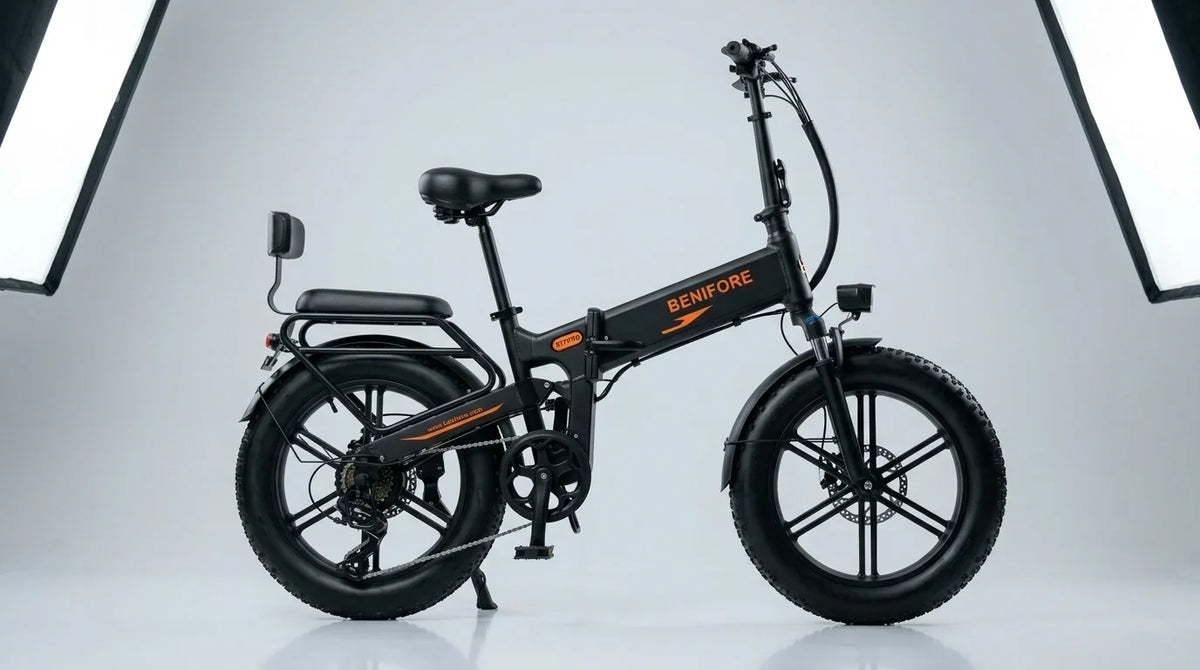
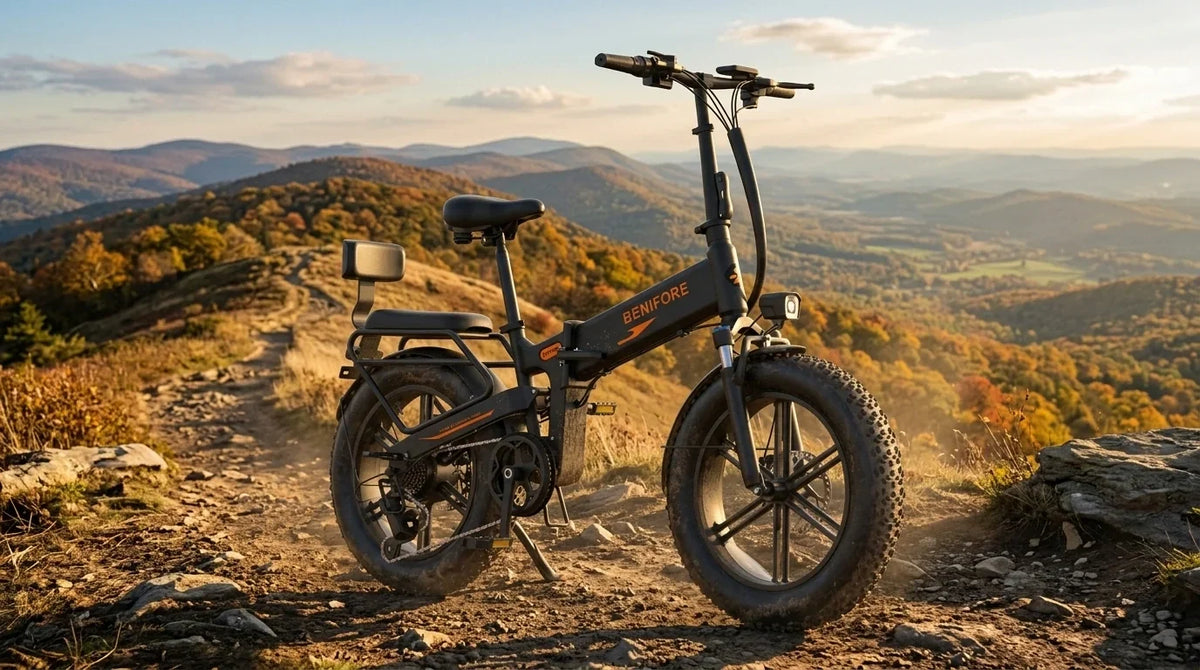
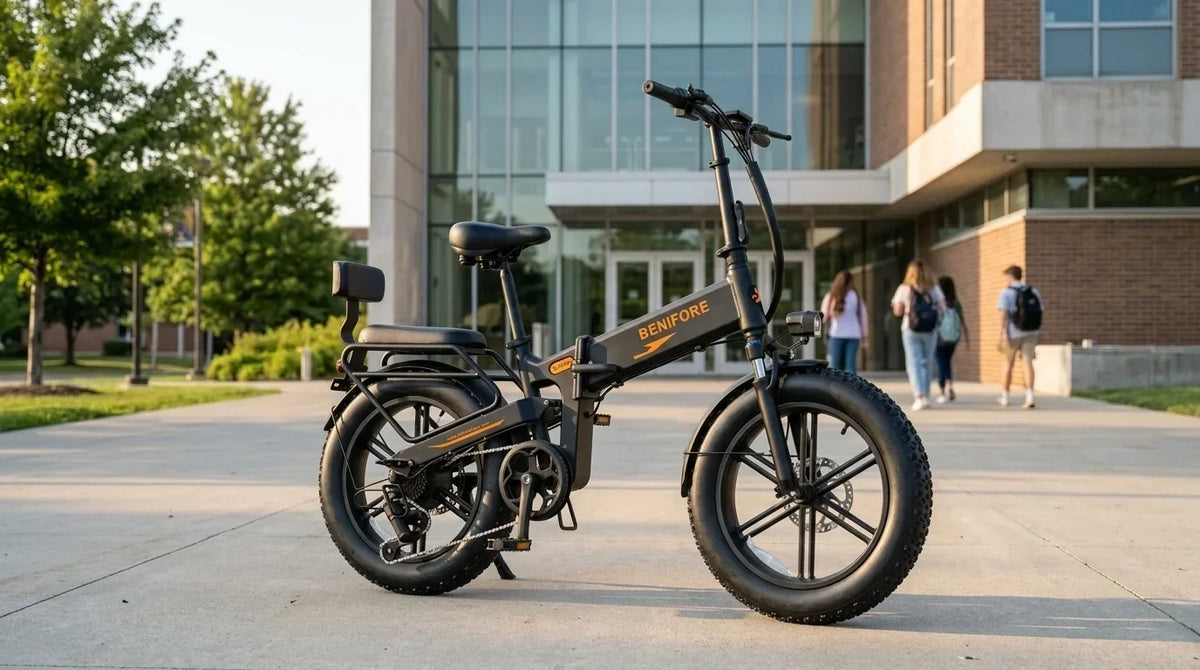
Throttle and the Benifore X1T PRO
The Benifore X1T PRO is designed as a high-performance electric bike with:
- 1500W peak motor
- 90Nm torque
- 48V 20Ah battery
- Up to 65 miles of range
- 35 MPH top speed
- 20×4.0 fat tires
- Full suspension
- Up to 400 lbs load capacity
For a system with this level of capability, throttle control is not simply about adding more power.
It is about giving the rider another way to interact with the motor.
The throttle can be useful when the rider wants direct assistance during starts, climbs, acceleration, or moments when continuous pedal input is less convenient.
At the same time, the rider still needs to understand the bike's controls, braking system, riding environment, and applicable local rules.
How to Choose an eBike With a Throttle
When shopping for an eBike, do not stop at:
"Does it have a throttle?"
Ask more detailed questions.
What type of throttle is used?
Thumb or twist?
Is the response smooth?
A good throttle should be predictable.
Does the throttle work independently from pedal assist?
Check the manufacturer's operating instructions.
How does the bike respond when braking?
Understand the brake cutoff behavior.
What limits throttle operation?
Speed, mode, controller settings, and regulations may affect operation.
Is replacement support available?
Check whether compatible replacement parts are supported.
Does the throttle match the bike's performance?
A high-output eBike should have controls that are appropriate for its motor and controller system.
Common Throttle Mistakes
Using Full Throttle Immediately
Maximum throttle is not always the best way to start.
Smooth acceleration provides better control.
Ignoring the Brakes
Throttle use should always be combined with an understanding of how quickly the bike can slow down.
Assuming Every Throttle Works the Same
Different systems have different responses.
Installing an Incompatible Throttle
Electrical compatibility matters.
Ignoring Local Regulations
Throttle-equipped eBikes may be subject to specific rules depending on location.
Treating the Throttle Like a Cruise Control
A throttle requires active rider control.
Do not assume that releasing or holding it will behave exactly like another type of vehicle control.
Frequently Asked Questions
What does an electric bike throttle do?
An eBike throttle allows the rider to request motor assistance directly through a handlebar control.
Does a throttle mean I do not have to pedal?
Depending on the bike's design and applicable regulations, throttle operation may allow motor assistance without pedal movement.
Is a thumb throttle better than a twist throttle?
Neither is universally better. The choice comes down to control preference and system design.
Does throttle use reduce battery range?
Throttle use can increase energy consumption when it results in higher motor output, especially during acceleration and climbing.
Does the throttle control motor torque?
The throttle sends an input to the controller. The controller determines how the motor responds within the system's limits.
Can a throttle make an eBike faster?
Not by itself. Maximum speed depends on the complete motor and electrical system.
Can a throttle and pedal assist work together?
Some eBikes support both. The exact interaction depends on the system.
Why does my throttle stop working when I pull the brake?
Many eBikes use a brake cutoff system that intentionally interrupts motor assistance when braking is detected.
Can I replace my eBike throttle?
Some throttles can be replaced, but the replacement must be electrically and mechanically compatible with the controller and bike.
Is throttle riding safe?
Throttle riding can be safe when the rider understands the controls, uses appropriate speed, maintains the braking system, and follows applicable riding rules.
Final Thoughts
A throttle is more than a simple button that makes an electric bike move.
It is a direct interface between the rider and the bike's electrical system.
When you activate the throttle, the system interprets your input and determines how much motor assistance to provide within its programmed limits.
That makes throttle response, controller tuning, braking integration, and rider control important parts of the overall experience.
For some riders, the throttle is especially useful for starting from a stop.
For others, it provides additional assistance on hills or during situations where continuous pedaling is inconvenient.
The key is understanding that the throttle does not work independently.
It is connected to the:
Battery
Controller
Motor
Brake cutoff system
Rider controls
When these components are properly matched, the throttle becomes a useful part of a complete eBike control system.
And when choosing an electric bike, the best question is not simply:
"Does it have a throttle?"
Instead, ask:
"How does the throttle work with the rest of the bike?"
That is the question that tells you much more about the actual riding experience.
Share: