




Choosing the right tire pressure is one of the easiest ways to change how an electric bike feels on the road. The same eBike can feel noticeably different depending on whether the tires are properly inflated, overinflated, or too soft.
For electric bikes, tire pressure affects more than comfort. It can influence handling, traction, rolling resistance, battery efficiency, braking feel, and how confidently the bike responds on different surfaces.
This is especially important for fat tire electric bikes. A 20×4.0 tire has a much larger contact area than a traditional bicycle tire, which gives riders more flexibility when adjusting pressure for different riding conditions. But lower pressure is not always better, and higher pressure is not always faster.
The right setting depends on the rider, terrain, load, weather, riding style, and tire construction.
This guide explains how electric bike tire pressure works, how to find a practical starting point, and how to adjust your tires for pavement, gravel, trails, and everyday riding.
Why Tire Pressure Matters on an Electric Bike
Tires are the only part of an electric bike that directly contacts the ground.
That means tire pressure has a major influence on how the bike interacts with the riding surface.
When tire pressure is too high, the tire becomes stiffer. On smooth pavement, this can reduce rolling resistance, but the ride may feel harsher because the tire absorbs less of the small bumps and imperfections in the road.
When tire pressure is too low, the tire becomes softer and can provide more cushioning and traction. However, excessively low pressure can make the bike feel less precise, increase rolling resistance, and increase the risk of damaging the tire or rim when riding over sharp impacts.
The goal is not to find the lowest possible pressure.
The goal is to find a pressure that provides a good balance between:
- Comfort
- Stability
- Traction
- Handling
- Rolling efficiency
- Tire protection
- Rider and cargo weight
For an electric bike, this balance becomes even more important because the bike is generally heavier and can travel at higher speeds than a conventional bicycle.
What Does PSI Mean?
PSI stands for pounds per square inch.
It is the most common measurement used for bicycle tire pressure in the United States.
For example, if a tire is inflated to 20 PSI, the air inside the tire is exerting approximately 20 pounds of pressure per square inch.
The number printed on the sidewall of a tire is important because it indicates the manufacturer's recommended pressure range or maximum pressure.
It should always be treated as the primary reference.
A rider should never assume that a particular PSI is appropriate simply because another eBike uses the same tire size. Different tires can have different constructions, compounds, sidewalls, and pressure ratings.
How to Find the Correct Tire Pressure
Before adjusting an electric bike's tire pressure, check the sidewall of the tire.
Look for information such as:
MIN PSI
or
MAX PSI
Some tires provide a recommended range rather than one specific pressure.
That range gives riders room to adjust the bike based on riding conditions.
For example, a lighter rider who mainly rides smooth pavement may prefer a different setting from a heavier rider riding on gravel or uneven trails.
The important point is to stay within the tire manufacturer's recommended range.
A good starting pressure can then be adjusted gradually.
Instead of making a large change, try changing the pressure by a small amount and pay attention to how the bike feels.
Tire Pressure Should Match the Rider
One of the biggest mistakes riders make is using the same tire pressure regardless of body weight.
A heavier rider places more load on the tires.
The additional weight compresses the tire more, so maintaining sufficient pressure becomes increasingly important.
A lighter rider may be comfortable at a lower pressure, while a heavier rider may need more pressure to maintain predictable handling and prevent excessive tire deformation.
The same principle applies when carrying additional equipment.
For example, an eBike used for:
- Fishing equipment
- Camping gear
- Groceries
- Work equipment
- Bags
- Passenger-related loads
may require a different pressure setup than the same bike used for a short solo ride.
The combined weight of the rider, bike, accessories, and cargo matters.
Tire Pressure for Different Riding Surfaces
There is no single tire pressure that is perfect for every environment.
The surface changes how the tire interacts with the ground.
Smooth Pavement
For primarily paved riding, riders generally want a tire that rolls efficiently while maintaining enough compliance to absorb road imperfections.
A slightly higher pressure can help reduce tire deformation and rolling resistance.
However, going too high can make the bike feel harsh, particularly when riding over:
- Cracked pavement
- Expansion joints
- Rough asphalt
- Small potholes
- Concrete surfaces
The best setup is usually a balance between efficiency and comfort.
Gravel Roads
Gravel introduces loose material and irregular surfaces.
A slightly lower pressure can allow the tire to conform better to the terrain and maintain traction.
The goal is to let the tire absorb some of the irregularities rather than bouncing over them.
However, riders should avoid dropping pressure excessively.
Large rocks and sharp edges can create hard impacts, and an overly soft tire may be more vulnerable to damage.
Dirt and Trails
Trail riding requires more attention to traction and control.
A softer tire can provide more surface contact and help the bike feel more planted over uneven ground.
This can be particularly useful when riding over:
- Loose dirt
- Packed trails
- Grass
- Sand
- Small rocks
- Uneven terrain
But the correct pressure depends heavily on the specific tire and terrain.
A technical rocky trail may require a different setting from a smooth dirt path.
Why Fat Tires Give Riders More Flexibility
Fat tires are designed with a much wider profile than standard bicycle tires.
A 20×4.0 tire, for example, has a substantial air volume compared with a narrow road-oriented tire.
That larger volume allows the tire to provide additional cushioning while maintaining a broad contact patch.
This is one reason fat tire electric bikes can work well across a variety of riding environments.
The larger tire profile can help riders maintain confidence when moving between pavement, gravel, dirt, and other surfaces.
But fat tires still need proper inflation.
A wide tire does not mean that the rider can simply run extremely low pressure.
The sidewall rating remains the starting point.
What Happens When Tire Pressure Is Too High?
Overinflation can create several noticeable changes.
1. Harsher ride
The tire has less ability to absorb small impacts.
2. Reduced comfort
More vibration can travel through the frame, handlebars, and saddle.
3. Less useful tire deformation
The tire may feel less forgiving on rough surfaces.
4. Reduced traction in some conditions
On loose terrain, an excessively hard tire may not conform to the surface as effectively.
5. Different handling characteristics
The bike can feel more sensitive to surface imperfections.
Higher pressure is not automatically better.
What Happens When Tire Pressure Is Too Low?
Underinflation can also create problems.
1. Increased rolling resistance
A soft tire can deform more as it rolls, requiring additional energy.
2. Less precise handling
The tire may feel less stable when cornering or changing direction.
3. Greater risk of impact damage
When riding over a sharp bump, the tire can compress significantly.
4. Increased sidewall movement
Excessive deformation can create unnecessary heat and stress.
5. Potentially reduced efficiency
More rolling resistance means the motor has to work harder to maintain speed.
For electric bikes, that can matter because unnecessary rolling resistance may reduce practical efficiency.
How Electric Bike Weight Changes Tire Pressure
Electric bikes are generally heavier than traditional bicycles because they include:
- Motor
- Battery
- Controller
- Reinforced frame
- Additional electrical components
A heavier bike puts more load on its tires even before the rider gets on.
Consider an eBike designed to support a rider and total load of up to 400 lbs.
That does not mean every rider should automatically inflate the tires to the maximum pressure.
Instead, the total system weight should be considered when selecting a pressure within the manufacturer's recommended range.
This is particularly important for riders who frequently carry equipment or use their eBike for longer outdoor trips.
A Practical Way to Adjust Tire Pressure
Instead of trying to find a perfect number immediately, use a simple adjustment process.
Step 1: Check the tire sidewall
Find the manufacturer's recommended pressure range.
Step 2: Start conservatively
Choose a pressure within the recommended range rather than immediately using the maximum.
Step 3: Check both tires
The front and rear tires may experience different loads depending on the bike's design and rider position.
Step 4: Ride your normal route
Pay attention to:
- Comfort
- Steering
- Traction
- Rolling feel
- Vibration
- Cornering
Step 5: Adjust gradually
If the bike feels harsh, a small reduction may improve comfort.
If the bike feels overly soft or vague, a small increase may improve stability.
Step 6: Recheck regularly
Tire pressure changes over time.
A tire that felt perfect several weeks ago may no longer be at the same pressure.
Why Tire Pressure Should Be Checked Before Longer Rides
A long ride is not the best time to discover that your tires are underinflated.
Before heading out for a longer trip, check the pressure with a reliable gauge.
This is particularly useful for riders who use an eBike for:
- Weekend rides
- Camping
- Fishing
- Long-distance exploration
- Commuting
- Multi-hour outdoor trips
Small maintenance checks before riding can prevent larger problems later.
It only takes a few moments to check tire pressure, but it can make a noticeable difference in the riding experience.
Tire Pressure and Battery Range
Tire pressure can also influence electric bike efficiency.
When a tire is significantly underinflated, more of the tire deforms against the ground as it rolls.
That increases rolling resistance.
The motor then needs to provide more energy to maintain the same speed.
This does not mean that maximum tire pressure automatically produces maximum range.
Real-world eBike range depends on many variables, including:
- Rider weight
- Speed
- Terrain
- Wind
- Temperature
- Battery condition
- Assist level
- Tire pressure
- Stop-and-go riding
- Surface type
Tire pressure is therefore one factor among many.
The best approach is to maintain the tires properly rather than trying to maximize range through inflation alone.
Tire Pressure and Braking Performance
Proper tire pressure also contributes to predictable braking behavior.
Braking performance is not determined only by the brake system.
The tires ultimately transfer braking forces to the riding surface.
If the tire is not properly inflated, the bike can feel different during hard braking, especially on uneven or loose terrain.
This is another reason to treat tire pressure as part of overall eBike maintenance rather than simply a comfort setting.
Good tires, appropriate pressure, functioning brakes, and controlled riding all work together.
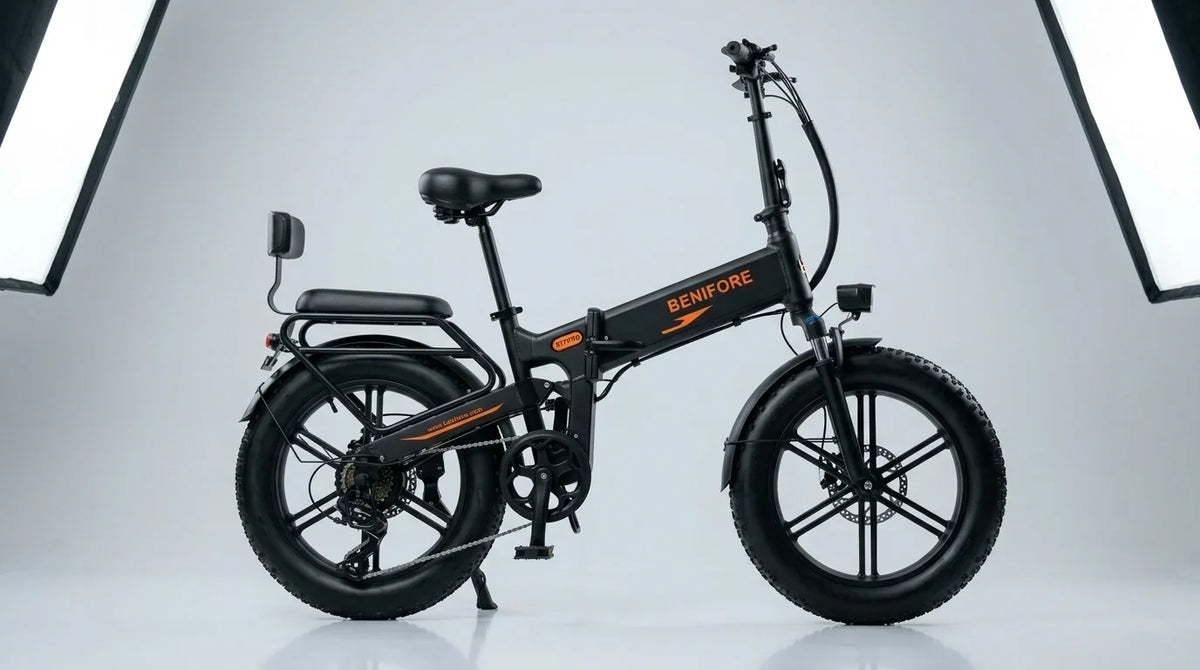
Tire Pressure for the Benifore X1T PRO
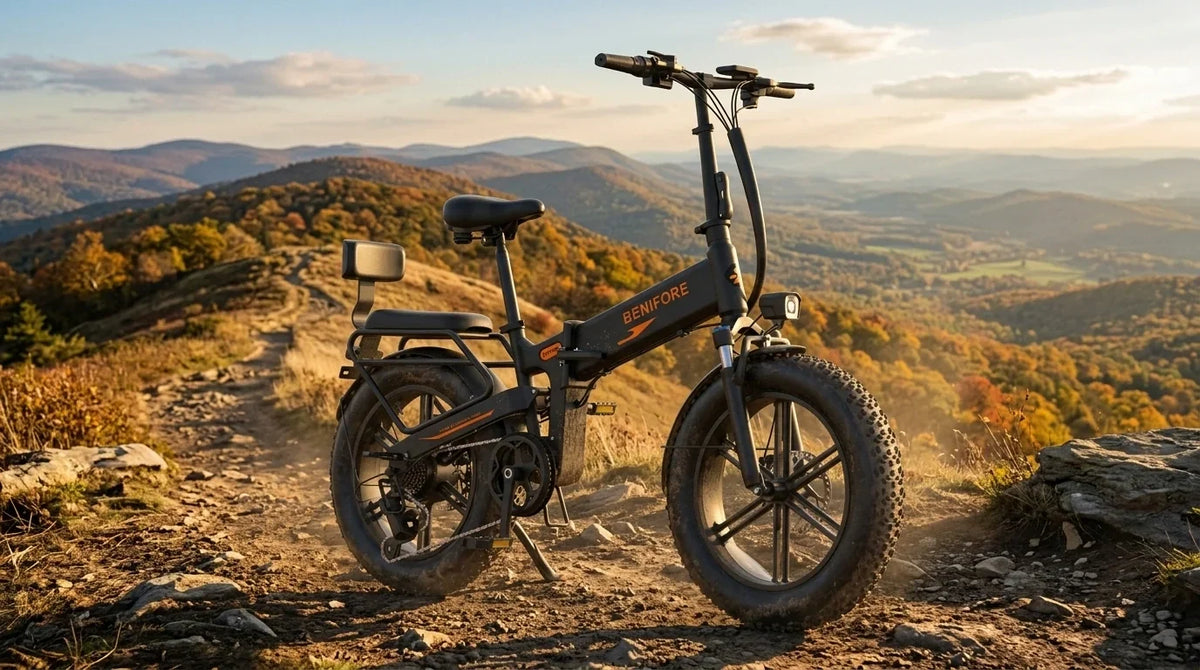
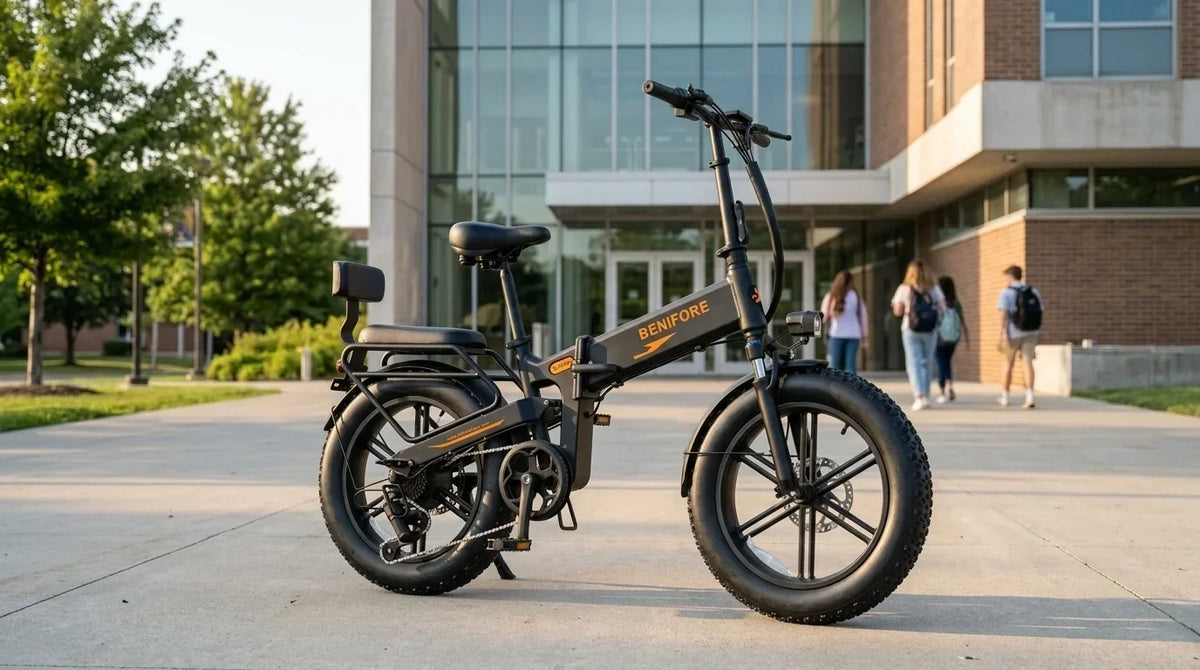
The Benifore X1T PRO uses 20×4.0 fat tires, a setup designed around stability, comfort, and versatility across different riding environments.
Its broader tires complement the bike's overall configuration, which includes:
- 1500W peak motor
- 90Nm torque
- 48V 20Ah battery
- Up to 65 miles of range
- 35 MPH top speed
- 20×4.0 fat tires
- Full suspension
- Up to 400 lbs load capacity
The combination is intended for riders who may use one electric bike across multiple types of riding rather than keeping it limited to perfectly smooth pavement.
For X1T PRO owners, tire pressure should still be based on the tire manufacturer's specified pressure range and the rider's actual conditions.
The bike's load capacity makes this especially relevant for riders who regularly carry additional gear.
A rider using the X1T PRO for a light neighborhood ride may prefer a different pressure setup from someone carrying camping equipment on a longer gravel route.
Common Electric Bike Tire Pressure Mistakes
Using the maximum PSI every time
Maximum pressure is not necessarily the ideal everyday pressure.
It is better to select an appropriate setting within the manufacturer's specified range.
Guessing by appearance
A tire can look properly inflated while still being significantly below its recommended pressure.
A pressure gauge is much more reliable.
Checking only when the tire looks flat
Pressure can drop gradually without the tire looking obviously soft.
Regular checks are better than visual inspection alone.
Ignoring rider weight
The correct pressure for a lightweight rider may not work equally well for a heavier rider.
Forgetting temperature changes
Air pressure can change with temperature.
A bike stored in a cold garage may have different pressure after being moved into a warmer environment.
Changing pressure dramatically
Small adjustments make it easier to understand how pressure changes the bike's behavior.
How Often Should You Check Your eBike Tires?
There is no universal schedule for every rider, but checking tire pressure regularly is a simple maintenance habit.
Frequent riders should consider checking pressure before longer rides and periodically during normal use.
A quick inspection should also be performed whenever you notice:
- The bike feels unusually soft
- Steering feels different
- Rolling resistance increases
- The tire appears visibly low
- The bike has been stored for an extended period
- You recently repaired or replaced a tire
For riders who depend on an electric bike for commuting or frequent outdoor trips, making tire pressure part of a normal pre-ride inspection can save time and prevent avoidable problems.
Final Thoughts
Electric bike tire pressure is a small detail that can have a surprisingly large effect on how an eBike feels.
The correct pressure depends on more than the tire size.
Rider weight, total load, terrain, riding style, weather, and tire construction all play a role.
For smooth pavement, riders may prioritize rolling efficiency. For gravel and trails, traction and comfort can become more important. For heavier loads, maintaining sufficient tire pressure becomes increasingly important for stability and tire protection.
Fat tires such as the 20×4.0 tires used on the Benifore X1T PRO give riders additional flexibility across different surfaces, but they still require proper inflation.
The best approach is simple:
Check the sidewall. Start within the recommended range. Adjust gradually. Pay attention to how the bike feels. Check the pressure regularly.
Proper tire pressure will not transform an electric bike by itself, but it can help the bike perform more consistently, comfortably, and predictably every time you ride.
Share: