




Choosing the right electric bike tire pressure is one of the simplest ways to change how an eBike feels on the road, trails, gravel, and uneven surfaces.
Tire pressure affects more than comfort. It can influence traction, steering response, rolling resistance, stability, braking feel, and how well the bike absorbs bumps.
For riders using a fat tire electric bike, getting tire pressure right becomes even more important. A 20×4.0 tire has a much larger air volume than a traditional bicycle tire, so small changes in pressure can noticeably change the riding experience.
There is no single tire pressure that is perfect for every rider. The right setting depends on the tire, rider weight, terrain, riding speed, cargo, weather, and whether you are prioritizing comfort or efficiency.
This guide explains how electric bike tire pressure works, how to choose a starting point, and how to adjust it for different riding conditions.
Why Does Electric Bike Tire Pressure Matter?
Your tires are the first part of the bike that interacts with the ground.
When tire pressure is too high, the tire becomes stiffer. This can make the bike feel more responsive on smooth pavement, but it can also reduce comfort on rough surfaces.
When pressure is too low, the tire can become softer and provide more surface contact. This may improve comfort and traction at lower speeds, but excessive low pressure can create other problems, including increased rolling resistance and a greater chance of damaging the tire or rim.
For an electric bike, the effect can be especially noticeable because eBikes are generally heavier than traditional bicycles and may be ridden at higher speeds.
The goal is not simply to use the lowest pressure possible or the highest pressure possible.
The goal is to find the pressure that provides a good balance between:
- Comfort
- Stability
- Traction
- Steering control
- Rolling efficiency
- Tire protection
- Rider weight
- Terrain
What Tire Pressure Should an Electric Bike Have?
The correct tire pressure should always start with the pressure range recommended by the tire manufacturer.
After that, riders can make small adjustments based on riding conditions.
For many fat tire electric bikes, a practical starting range can be around 10–20 PSI, but the correct number varies by tire construction and manufacturer specifications.
A heavier rider may need more pressure than a lighter rider. Similarly, smooth pavement may work better with a higher pressure setting, while loose gravel or rough trails may benefit from a lower setting within the tire's approved range.
For this reason, tire pressure should be treated as an adjustable part of your setup rather than a fixed number.
A simple starting approach
Smooth pavement:
Use a moderate-to-higher pressure within the manufacturer's recommended range.
Gravel roads:
Consider slightly reducing pressure to improve contact and comfort.
Loose or uneven terrain:
A lower pressure within the approved range can provide additional compliance and traction.
Heavy rider or additional cargo:
A slightly higher pressure may be appropriate to support the additional load.
The important point is to make adjustments gradually rather than making large changes at once.
How Rider Weight Changes Tire Pressure
Rider weight is one of the most important factors when setting tire pressure.
Two people can ride the same electric bike with the same tires and need different pressure settings.
A lighter rider puts less load on the tire. A heavier rider compresses the tire more, which means additional air pressure may be needed to maintain proper support.
This becomes especially relevant for utility-oriented electric bikes designed to carry heavier riders or additional gear.
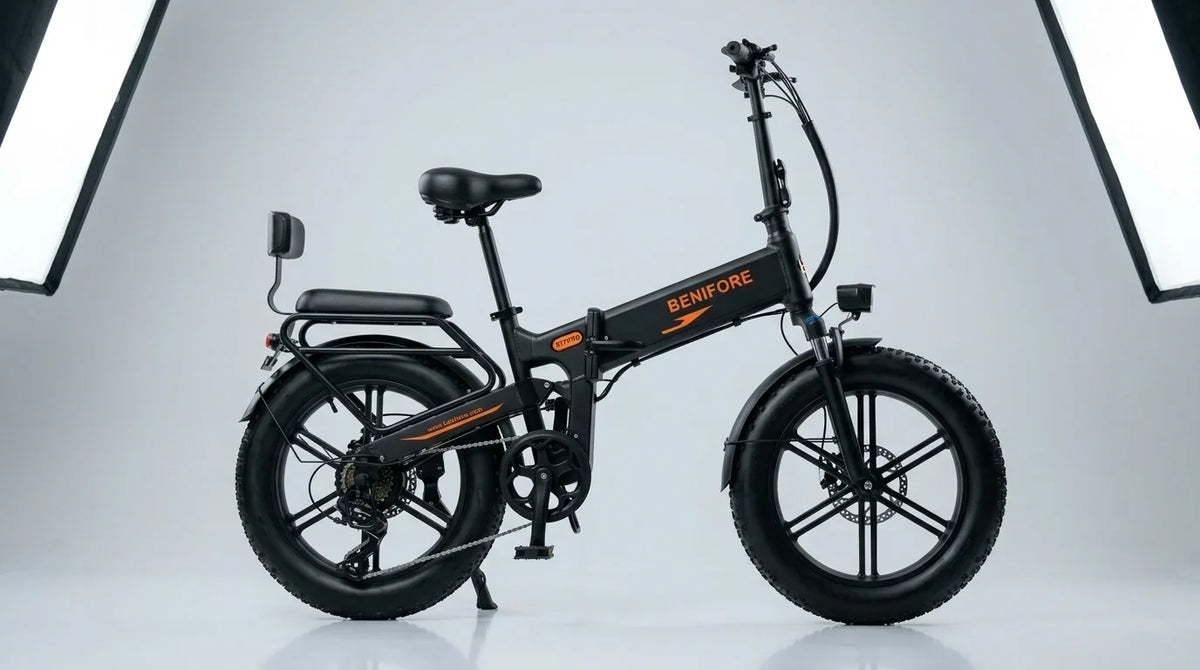
For example, the Benifore X1T PRO has a load capacity of up to 400 lbs. A rider carrying camping equipment, fishing gear, or other cargo may therefore have a very different tire-pressure requirement than a lighter rider riding without additional weight.
Instead of copying another rider's PSI setting, consider your complete riding load.
That includes:
- Rider weight
- Backpack
- Cargo
- Accessories
- Passenger weight, if the bike is designed and configured for passenger use
The heavier the total system load, the more important proper tire pressure becomes.
Should Fat Tire eBikes Use Lower Tire Pressure?
Fat tires are designed with a larger contact area and greater air volume than narrow bicycle tires.
This allows them to operate effectively at lower pressures than many traditional bicycle tires.
A 20×4.0 fat tire, for example, can provide a different combination of stability and cushioning compared with a narrow commuter tire.
Lower pressure can allow the tire to conform more closely to uneven terrain.
This can be useful when riding:
- Gravel
- Dirt roads
- Packed trails
- Grass
- Uneven pavement
- Outdoor riding areas
However, lower does not automatically mean better.
If the pressure becomes too low for the rider's weight and riding conditions, the tire can feel vague during cornering and may increase the risk of bottoming out against the rim.
The best setup is usually a balance between the tire's recommended range and the actual riding environment.
Tire Pressure for Pavement Riding
Smooth pavement generally allows riders to use a somewhat firmer tire setup.
Higher pressure can reduce tire deformation and may make the bike feel more efficient on smooth roads.
For everyday city riding, pay attention to how the bike feels during:
- Acceleration
- Cornering
- Braking
- Road transitions
- Speed changes
If the ride feels unnecessarily harsh over small bumps, the pressure may be higher than necessary.
If the bike feels unstable or the tires seem excessively soft during turns, pressure may be too low.
Make small adjustments and test the bike again.
Tire Pressure for Gravel and Rough Roads
Gravel changes the equation.
Loose stones and uneven surfaces require the tire to maintain contact with the ground while absorbing small impacts.
A slightly lower pressure, while remaining within the manufacturer's approved range, can help the tire conform to irregular surfaces.
This can improve the feeling of control and reduce the harshness that riders experience on rough roads.
For a fat tire electric bike, this is one of the areas where the additional tire volume can become a major advantage.
Instead of relying entirely on suspension, the tire itself becomes part of the bike's impact-management system.
Tire Pressure for Trails and Outdoor Riding
Trail conditions vary significantly.
A hard-packed dirt trail is very different from loose sand, mud, rocks, or roots.
There is therefore no universal "trail PSI."
Instead, think about the surface.
Hard-packed trails
A moderate pressure can provide a balance of rolling efficiency and traction.
Loose surfaces
Slightly lower pressure can increase the tire's contact with the surface, provided it remains within the tire manufacturer's recommended range.
Rocky terrain
Comfort and impact absorption become more important, but excessively low pressure should still be avoided.
Mixed terrain
If your ride includes pavement, gravel, and trails in the same trip, choose a middle-ground setup rather than optimizing for only one surface.
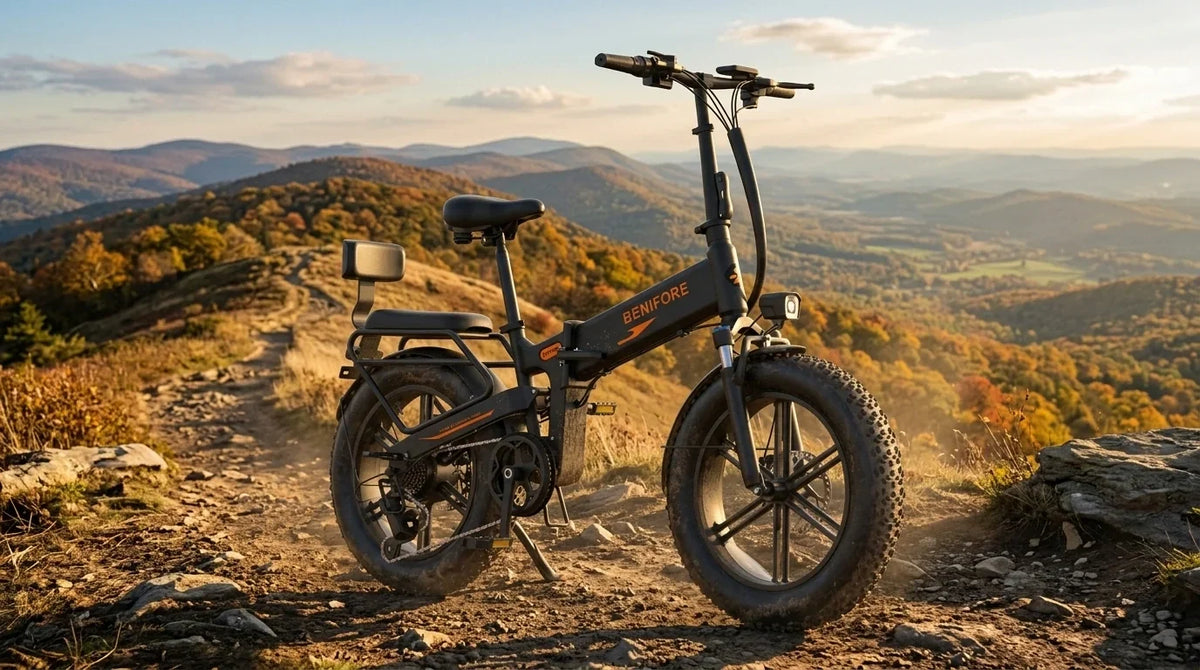
This is especially useful for riders who use their electric bike as both transportation and an outdoor recreation vehicle.
How Tire Pressure Affects Electric Bike Range
Tire pressure can also influence energy consumption.
When a tire is significantly underinflated, more of the tire deforms as it rolls. This increases rolling resistance and can require more motor assistance to maintain speed.
For an electric bike, that additional resistance can affect battery consumption.
However, maximum tire pressure is not automatically the best way to maximize range.
A tire that is too hard may reduce comfort and traction, particularly on uneven surfaces.
The better approach is to use an appropriate pressure for the terrain and load.
For long-distance riding, maintaining consistent tire pressure can help the bike perform more predictably throughout the ride.
How Tire Pressure Affects Handling
Tire pressure changes the way an electric bike responds to steering inputs.
With excessive pressure, the tire can feel very firm and may transmit more vibration from the road.
With insufficient pressure, steering can feel slower or less precise, particularly when cornering.
This becomes increasingly important as electric bike speeds increase.
A bike capable of reaching higher speeds requires predictable contact with the road.
For a model such as the Benifore X1T PRO, which has a 35 MPH top speed, tire condition and pressure should be part of the rider's regular pre-ride check.
Speed does not make tire pressure more complicated.
It simply makes good setup and maintenance more important.
How Full Suspension and Tire Pressure Work Together
Tires and suspension perform different jobs, but they work together.
The tire handles the first layer of contact with the ground.
Suspension then helps control larger impacts and movement through the bike's suspension system.
The Benifore X1T PRO combines 20×4.0 fat tires with full suspension, creating two layers of impact management.
This combination can be particularly useful for riders who regularly move between pavement and rougher outdoor surfaces.
However, suspension does not replace proper tire pressure.
A rider can have a sophisticated suspension system and still experience poor handling if the tires are significantly overinflated or underinflated.
How to Check Your eBike Tire Pressure Correctly
A tire can look properly inflated and still have an incorrect pressure.
That is why using a pressure gauge is better than checking by hand.
A simple routine can be:
1. Check the manufacturer's recommended range
Look at the tire sidewall and the manufacturer's specifications.
2. Check pressure when the tires are cool
Pressure can change as the air inside the tire warms during riding.
3. Check both tires
Do not assume that the front and rear tires automatically have the same pressure requirement.
4. Consider your total load
Include yourself and anything you are carrying.
5. Adjust gradually
Change pressure in small increments rather than making a dramatic adjustment.
6. Test ride
Pay attention to comfort, steering, braking, traction, and stability.
7. Recheck regularly
Tires naturally lose air over time.
How Often Should You Check Electric Bike Tire Pressure?
There is no need to wait until a tire looks visibly flat.
For riders who use their eBike frequently, checking tire pressure before longer rides is a good habit.
A quick pressure check is especially worthwhile before:
- Long-distance rides
- Camping trips
- Gravel rides
- Trail rides
- Carrying heavy cargo
- High-speed riding
- Extended periods of storage
Regular checks also make it easier to notice slow leaks or unusual pressure loss before they become a larger problem.
Signs Your Tire Pressure May Be Too High
Your tires may be overinflated if you notice:
- A harsh ride
- Excessive vibration
- Reduced comfort
- Less confidence on uneven surfaces
- The bike feeling overly rigid
- Less traction on loose surfaces
These symptoms do not automatically prove that pressure is too high, but they are reasons to check your gauge.
Signs Your Tire Pressure May Be Too Low
Possible signs of insufficient pressure include:
- Heavy or sluggish rolling
- Increased steering movement
- Excessive tire flex
- Poor cornering feel
- The tire feeling soft under load
- Increased rim-impact risk on rough surfaces
Again, the correct response is not necessarily to inflate the tire to maximum pressure.
Instead, compare the current pressure with the manufacturer's recommended range and adjust from there.
Why Tire Pressure Matters More on a High-Power eBike
Electric bikes with stronger motors can place greater demands on tires because riders may accelerate faster, travel at higher speeds, or carry more weight.
The Benifore X1T PRO combines:
- 1500W peak motor
- 90Nm torque
- 48V 20Ah battery
- Up to 65 miles of range
- 35 MPH top speed
- 20×4.0 fat tires
- Full suspension
- Up to 400 lbs load capacity
These specifications are designed around a relatively capable electric bike platform.
But specifications alone do not determine the riding experience.
Tire pressure, tire condition, rider weight, terrain, braking technique, and riding habits all contribute to how the bike behaves.
That is why tire setup deserves the same attention as motor power and battery capacity.
A Practical Tire Pressure Adjustment Method
Instead of trying to find the perfect pressure immediately, use a simple testing process.
Start near the middle of the tire manufacturer's recommended range.
Then evaluate the ride.
If the ride feels too harsh on the terrain you normally ride, make a small reduction.
If the bike feels too soft, unstable, or inefficient, make a small increase.
Test the bike again.
Continue until you find a setup that provides the combination of comfort, traction, stability, and rolling efficiency that fits your riding style.
This approach is more useful than following a generic PSI number because every rider and every riding environment is different.
Frequently Asked Questions
What PSI should I use for a 20×4.0 fat tire eBike?
The correct pressure depends on the specific tire and total riding load. Many fat tires operate at relatively low pressure compared with standard bicycle tires, but riders should always stay within the manufacturer's recommended range.
Is higher tire pressure better for eBike range?
Not necessarily. Excessively low pressure can increase rolling resistance, but excessively high pressure can reduce comfort and traction. The best pressure is the one appropriate for the tire, rider, load, and terrain.
Should heavier riders use higher tire pressure?
A heavier total load may require additional pressure to properly support the tire. Always use the tire manufacturer's recommended range as the starting point.
Can low tire pressure damage an electric bike?
If pressure is too low for the rider's weight and riding conditions, the tire can flex excessively and increase the chance of rim impacts or other tire problems. Proper pressure helps protect the tire and wheel.
Should front and rear tires have the same PSI?
Not always. Weight distribution and tire specifications can differ between the front and rear of an eBike. Follow the manufacturer's recommendations first.
Does tire pressure affect electric bike handling?
Yes. Pressure influences traction, steering response, cornering feel, comfort, and stability. This becomes particularly important on heavier or faster electric bikes.
Final Takeaway
Electric bike tire pressure is a small adjustment that can make a noticeable difference in how an eBike feels.
The right pressure is not simply the maximum number printed on the tire or a PSI recommendation from another rider.
Instead, consider the complete setup:
Tire → Rider → Load → Terrain → Speed → Riding Style
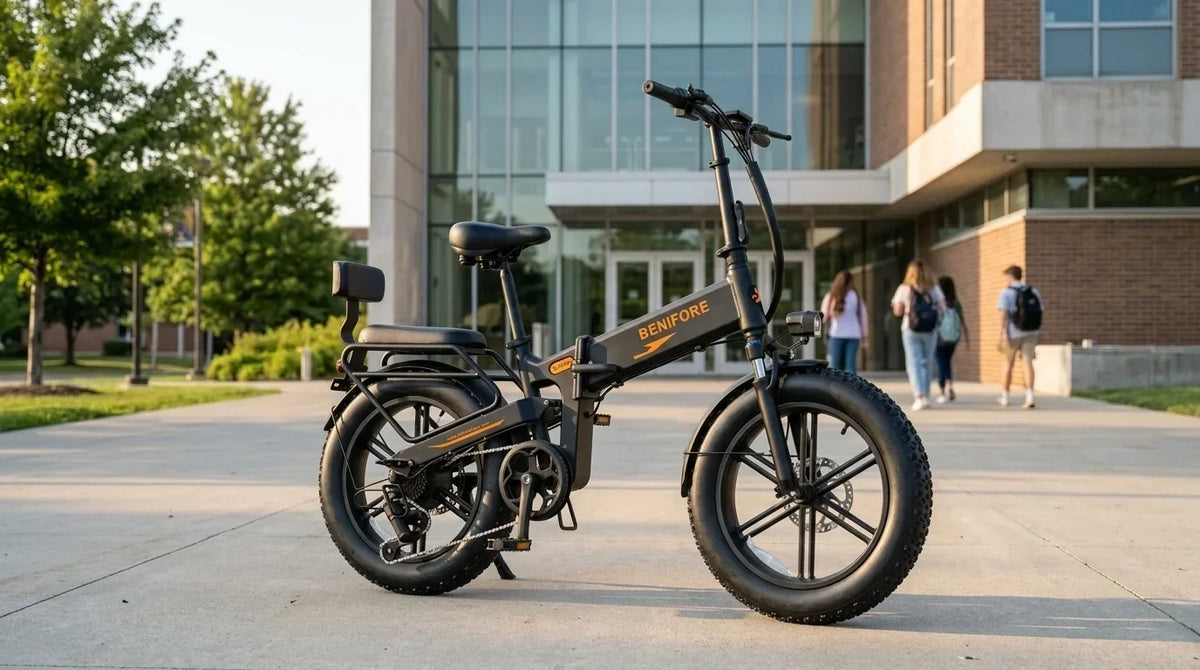
For everyday pavement, a firmer setup may provide efficient rolling. For gravel and uneven outdoor surfaces, a lower pressure within the manufacturer's approved range may provide additional comfort and traction.
For riders using a capable fat tire electric bike such as the Benifore X1T PRO, understanding tire pressure is another important part of getting the most from the bike.
The goal is simple: find the pressure that gives you predictable control, appropriate traction, comfortable handling, and reliable tire support for the way you actually ride.
Share: