




An electric bike can be much more than a way to travel from one place to another.
For some riders, an eBike is also a practical way to spend time with a partner, take a family member on a short ride, or make everyday trips more convenient.
That is where passenger-friendly electric bikes become interesting.
Instead of thinking only about the rider, these bikes are designed around a different question:
Can the bike comfortably accommodate an additional passenger while still providing a stable and controlled riding experience?
The answer depends on much more than the length of the seat.
Frame design, total load capacity, wheel and tire configuration, braking performance, motor output, suspension, rider position, passenger position, and local regulations all need to be considered.
This guide explains what to look for when choosing an electric bike for carrying a passenger, how passenger weight affects performance, why the total load matters, and what riders should understand before putting two people on an eBike.
What Is a Passenger Electric Bike?
A passenger electric bike is an eBike designed or equipped to carry more than just the primary rider.
Depending on the design, this may involve:
- An extended saddle
- A dedicated passenger seat
- A longer rear section
- Passenger footrests
- A reinforced rear area
- Higher overall load capacity
- A frame designed around additional weight
However, simply adding a longer seat does not automatically make an eBike suitable for two people.
The entire bicycle needs to be considered.
A passenger changes the bike's:
- Total weight
- Center of gravity
- Handling
- Acceleration
- Braking
- Range
- Suspension behavior
That is why passenger riding should be treated as a complete system rather than a seat accessory.
Can Two People Ride an Electric Bike?
Whether two people can legally and safely ride a particular electric bike depends on the bike's design, manufacturer's specifications, and applicable local regulations.
This distinction is important.
Some eBikes are designed specifically for carrying passengers.
Others are intended for one rider only.
Before carrying a passenger, riders should check:
- The manufacturer's maximum load capacity
- Whether passenger use is supported
- Whether the frame and seat are designed for the additional load
- Whether appropriate foot support is available
- Whether local laws permit passenger riding
Never assume that a large seat automatically means the bike is designed for two people.
Why Total Weight Matters With a Passenger
When a passenger gets on an eBike, the bike has to move and control additional weight.
The total riding load may include:
Primary rider + passenger + clothing + accessories + cargo
For example:
Primary rider:
190 lbs
Passenger:
130 lbs
Personal items:
10 lbs
Total:
330 lbs
The relevant number is therefore not simply the passenger's weight.
The entire system needs to remain within the manufacturer's stated load capacity.
Passenger Weight Changes How the Bike Feels
Adding a passenger changes the riding experience immediately.
You may notice differences in:
- Acceleration
- Steering
- Cornering
- Braking
- Starting
- Stopping
- Climbing
- Suspension response
A bike that feels very responsive with one rider can feel significantly different with two people.
This is normal.
The additional weight changes the physical behavior of the bicycle.
That is why passenger riding should start slowly and on familiar, controlled roads.
Why Passenger Position Matters
Where the passenger sits can affect the bike's balance.
A passenger positioned too far behind the rear axle can change weight distribution.
This can influence:
- Steering feel
- Rear suspension
- Front-wheel stability
- Braking behavior
- Cornering
A well-designed passenger setup should place the additional weight in a predictable position.
The passenger should also remain seated properly rather than shifting around while the bike is moving.
A Passenger Should Have a Stable Seat
Passenger comfort is not just about having enough space.
A useful passenger seat should provide enough room for the passenger to maintain a stable position.
Depending on the bike design, important features can include:
- Adequate seat length
- Comfortable padding
- Proper seating height
- Rear support where appropriate
- Footrests
- Secure positioning
The passenger should not have to balance themselves using the rider's shoulders or handlebars.
A stable seating position helps both people maintain better control of the bicycle.
Why Passenger Footrests Matter
Foot placement is often overlooked.
A passenger needs somewhere secure to place their feet.
Without proper foot support, the passenger may:
- Move their legs unexpectedly
- Interfere with the rider
- Lose balance
- Contact the rear wheel or drivetrain
Dedicated footrests help create a more predictable riding position.
They also make longer passenger trips more comfortable.
Passenger Riding Is Different From Solo Riding
When riding alone, the rider controls almost everything.
With a passenger, the bike becomes a shared system.
The passenger's movements can affect the bicycle.
For example, a passenger suddenly leaning to one side can influence the bike's balance during a turn.
A passenger standing up while the bike is moving can also create an unexpected change in weight distribution.
For that reason, communication matters.
The rider should tell the passenger:
- When they are starting
- When they are stopping
- Before making sharper turns
- Before accelerating
- Before riding over rough surfaces
Simple communication can make two-person riding much smoother.
Does a Passenger Need to Wear a Helmet?
Helmet requirements depend on local laws and circumstances.
Regardless of the exact legal requirement, appropriate protective equipment is strongly recommended for both the rider and passenger.
A passenger is exposed to many of the same risks as the rider.
Both people should understand the riding environment and wear suitable protective equipment for the conditions.
How a Passenger Affects Acceleration
An eBike carrying two people has more total mass to accelerate.
That means the motor has to do more work when starting from a stop.
The effect can be especially noticeable on:
- Inclines
- Loose surfaces
- Stop-and-go streets
- Intersections
- Steeper driveways
A stronger motor can help provide additional assistance, but the rider should still accelerate smoothly.
There is no reason to launch aggressively with a passenger.
A controlled start is easier for both people.
Why Torque Matters With Two Riders
When total weight increases, the motor has to overcome more resistance during acceleration and climbing.
Torque becomes particularly useful in these situations.
The Benifore X1T PRO provides:
90Nm of torque
This gives the motor strong pulling capability when dealing with demanding riding conditions.
However, motor performance should always be considered alongside total load, terrain, battery state, tire pressure, and riding mode.
No motor can eliminate the physical effects of carrying additional weight.
How a Passenger Affects Climbing
Hills are one of the situations where passenger weight becomes most noticeable.
Imagine riding uphill with one person.
Now add another 100 or 150 pounds.
The motor must move:
- The rider
- The passenger
- The bicycle
- Any cargo
up the same hill.
This requires more energy and more motor effort.
For riders who frequently carry passengers in hilly areas, motor performance and torque should therefore be important parts of the buying decision.
How a Passenger Affects Battery Range
Carrying an additional passenger can reduce real-world range.
This is because the motor generally needs more energy to move a heavier total load.
The effect can be greater when:
- Riding uphill
- Accelerating frequently
- Riding at higher speeds
- Using high assistance
- Riding against strong wind
The Benifore X1T PRO uses a:
48V 20Ah battery
and offers:
Up to 65 miles of range
Actual range will vary depending on rider and passenger weight, terrain, speed, temperature, riding mode, tire pressure, and other conditions.
The advertised maximum range should therefore be viewed as a reference rather than a guaranteed distance.
Passenger Riding and Battery Planning
If you regularly carry a passenger, plan your trips around the real-world conditions.
For example, a route that is comfortable within the bike's maximum solo range may require more battery when carrying two people.
Before a longer trip:
- Check the battery level
- Consider the route
- Account for hills
- Consider weather and wind
- Avoid unnecessary cargo
- Leave a reasonable battery reserve
Running the battery very low far from home is inconvenient with one rider.
With a passenger, it can become significantly more difficult.
Why Braking Becomes More Important
Adding a passenger increases total weight.
That means more energy needs to be controlled when slowing down.
Braking performance becomes especially important during:
- Descents
- Emergency stops
- Intersections
- Traffic
- Wet conditions
- Higher-speed riding
A passenger also changes the bike's balance during braking.
The rider should therefore brake smoothly and leave more stopping distance.
Give Yourself More Stopping Distance
A simple rule for passenger riding is:
Do not ride as if you are still alone.
If you normally leave a certain amount of space between yourself and another vehicle or cyclist, give yourself additional room with a passenger.
This is particularly important when:
- Approaching intersections
- Riding downhill
- Following traffic
- Riding on unfamiliar roads
- Carrying a heavier passenger
More time and space give the rider more opportunities to react.
Suspension Matters With Two People
Adding a passenger increases the load placed on the suspension.
If the bike has suspension, the rider should make sure the suspension system is appropriate for the combined load.
The Benifore X1T PRO features:
Full suspension
which helps manage uneven riding surfaces and contributes to a more controlled and comfortable ride.
However, suspension is not a substitute for staying within the bike's specified capacity.
Why Fat Tires Can Help With Passenger Riding
The X1T PRO uses:
20×4.0 fat tires
Wide tires can provide a stable, planted feeling across different surfaces.
This can be useful when carrying a passenger because the additional load can make changes in road surface more noticeable.
Fat tires can perform well on:
- Pavement
- Gravel
- Packed dirt
- Rough neighborhood roads
- Mixed surfaces
The correct tire pressure remains important.
Always follow the manufacturer's recommended pressure range.
Passenger Riding on Rough Roads
Two-person riding on rough terrain requires additional caution.
A pothole that feels manageable when riding alone can create a much larger impact when the bike is carrying a passenger.
The rider should reduce speed before:
- Potholes
- Speed bumps
- Curbs
- Gravel transitions
- Broken pavement
- Uneven surfaces
The passenger should remain seated and keep their feet on the designated footrests.
Can a Passenger Stand on the Rear Rack?
A rear rack should not automatically be treated as a passenger seat.
Unless the manufacturer specifically states that a component is designed and rated for passenger use, it should not be used as a seat.
A rack may be intended only for cargo.
Passenger weight and cargo weight create different demands on the bicycle.
Always follow the manufacturer's intended use.
Passenger Seat vs Extended Saddle
There are several ways an eBike can accommodate an additional rider.
Dedicated Passenger Seat
A separate seating area designed specifically for the passenger.
Extended Saddle
A longer saddle that provides room for a second rider.
Passenger Pad
A padded rear seating surface.
Rear Rack Seating
Only appropriate when specifically designed and rated for passenger use.
The important factor is not the name of the component.
It is whether the entire bike is designed to support the intended passenger load.
How to Choose an Electric Bike for Two People
If carrying a passenger is one of your main reasons for buying an eBike, start with these specifications.
1. Total Load Capacity
This should be the first number you check.
Calculate:
Rider + Passenger + Cargo
Then compare it with the manufacturer's maximum.
2. Frame Design
Look for a frame designed to handle the intended load.
The frame should feel stable rather than excessively flexible.
3. Motor Performance
A passenger adds substantial weight.
A capable motor can make starts and climbs easier.
4. Torque
Torque becomes particularly useful when accelerating from a stop or climbing.
5. Braking
More total weight requires more effective speed control.
6. Tires
Look for tires appropriate for the surfaces where you plan to ride.
7. Suspension
If your routes include uneven surfaces, suspension can improve comfort and control.
8. Passenger Position
The passenger should have a secure and predictable seating position.
9. Footrests
Passengers need stable foot placement.
10. Local Regulations
Always verify whether passenger riding is permitted where you intend to ride.
How Much Weight Can a Two-Person eBike Carry?
There is no universal number.
Electric bikes have different load ratings.
Some may support around 250 lbs.
Others may support 300 lbs.
Higher-capacity models can support significantly more.
The Benifore X1T PRO is rated for:
Up to 400 lbs load capacity
This gives the bike more total payload flexibility than many conventional eBikes.
For two-person riding, however, the rider must calculate the combined load rather than assuming that 400 lbs means two unrestricted passengers.
Example: Two-Person Load Calculation
Imagine:
Rider:
185 lbs
Passenger:
125 lbs
Backpack and small cargo:
15 lbs
Total:
325 lbs
A bicycle with an up-to-400-lb load rating has room within its stated capacity for this combined load.
But the rider should still consider:
- Terrain
- Speed
- Braking
- Passenger position
- Tire pressure
- Suspension setup
Staying below the maximum rating is only the first step.
Passenger Weight Distribution
Not all weight is equally easy for a bicycle to carry.
Where the passenger sits affects the center of gravity.
A passenger sitting in the intended position keeps the weight distribution more predictable.
A passenger carrying a heavy backpack, leaning backward, or frequently shifting position can make the bicycle feel different.
For the best riding experience, keep passenger weight:
Low, centered, and stable.
Communication Between Rider and Passenger
Two-person eBike riding works better when both people understand what to expect.
Before starting, agree on simple signals.
For example:
"Ready?"
before acceleration.
"Stopping."
before braking.
"Turning left/right."
before changing direction.
"Slow down."
when approaching rough surfaces.
These small habits can prevent sudden movements.
How a Passenger Should Sit
A passenger should:
- Sit securely
- Keep both feet on the footrests
- Hold the appropriate passenger handles if provided
- Avoid sudden movements
- Avoid leaning excessively
- Follow the rider's instructions
The passenger should never interfere with:
- The handlebars
- Brakes
- Pedals
- Wheels
- Drivetrain
The rider remains responsible for controlling the bicycle.
Starting With a Passenger for the First Time
Do not begin with a busy road.
Start somewhere:
- Flat
- Open
- Familiar
- Low traffic
- Free of major obstacles
Practice:
- Starting
- Stopping
- Turning
- Slow-speed balance
- Gentle acceleration
Once both people are comfortable, gradually move into normal riding conditions.
Passenger Riding in Traffic
Carrying a passenger in traffic requires additional awareness.
The rider needs to anticipate:
- Vehicles turning across the bike's path
- Parked cars
- Pedestrians
- Opening doors
- Uneven pavement
- Intersections
The passenger should remain calm and avoid sudden movements.
The rider should choose a safe speed based on the road conditions rather than simply using the maximum available motor assistance.
Passenger Riding and Speed
Two-person riding should generally prioritize control over speed.
A passenger can change the bike's handling characteristics.
Higher speed also reduces reaction time.
Even if an eBike is capable of higher speeds, that does not mean every ride should happen at those speeds.
With a passenger, smooth acceleration, controlled cornering, and adequate stopping distance become even more important.
Is a Passenger eBike Good for Families?
It can be useful for certain family situations, but the specific age, size, and passenger requirements matter.
A bicycle designed for an adult passenger is not automatically appropriate for a child.
Child passengers may require:
- Appropriate seating
- Secure restraints where applicable
- Foot protection
- Proper positioning
- Compliance with local requirements
Always use equipment specifically designed for the intended passenger.
Passenger eBike vs Cargo eBike
Passenger and cargo eBikes can look similar, but their intended uses are different.
A cargo eBike is primarily designed to carry:
Objects
A passenger eBike is designed around:
People
A passenger is alive, moves, shifts weight, and requires a stable seating position.
Therefore, carrying a passenger should not be treated the same way as carrying an equivalent amount of cargo.
What Makes a Passenger-Friendly eBike Different?
A passenger-friendly eBike should balance:
Capacity
Stability
Comfort
Motor performance
Braking
Passenger positioning
Practicality
This is why simply attaching a passenger pad to any eBike is not necessarily a good solution.
The complete bicycle matters.
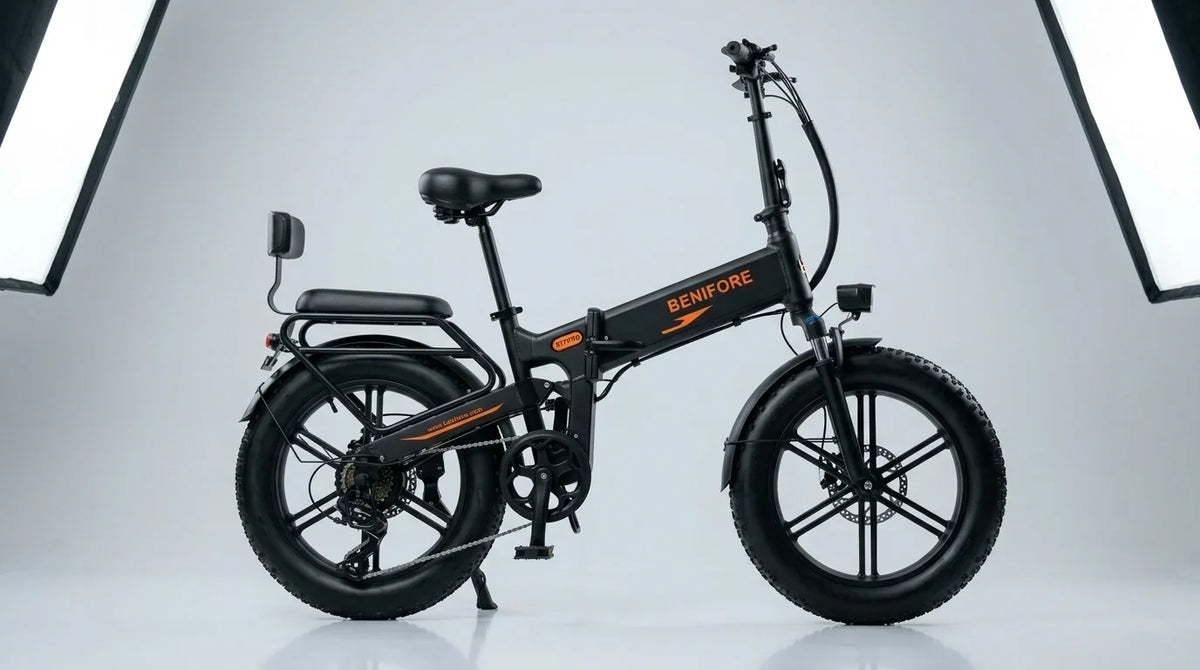
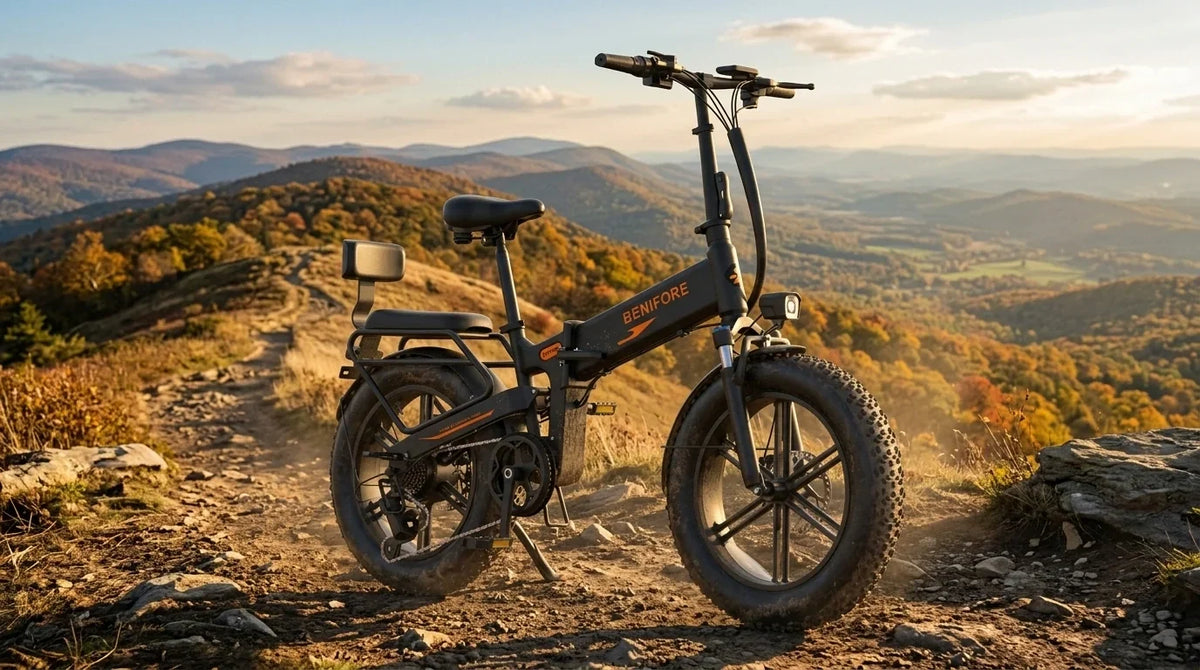
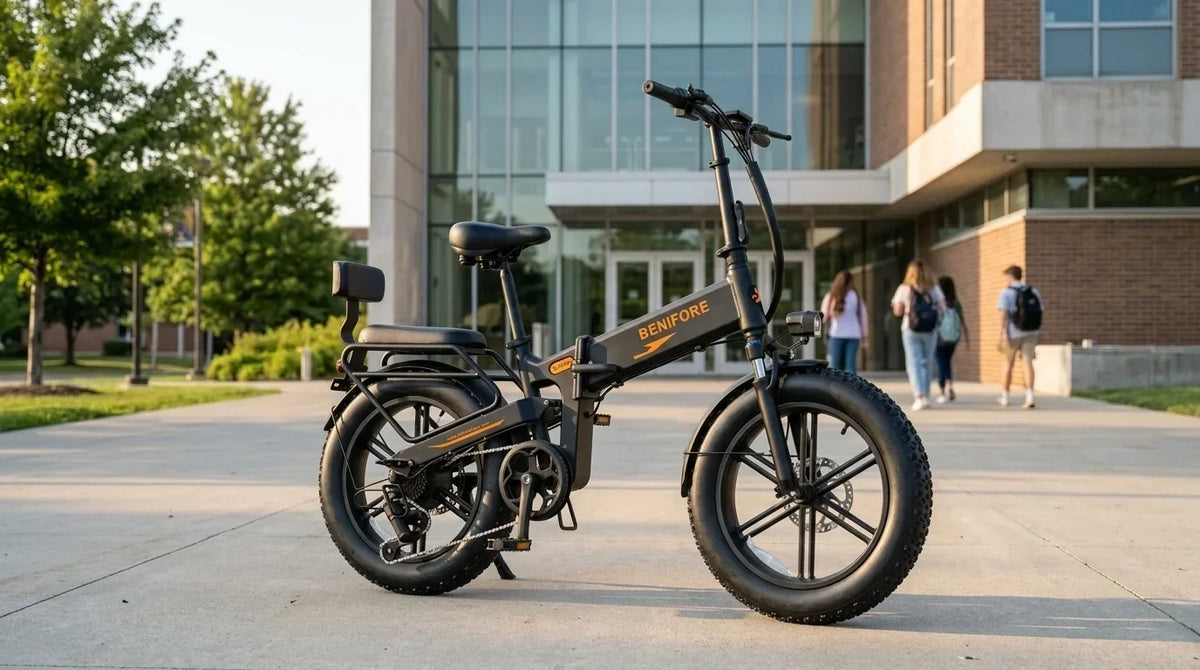
Benifore X1T PRO and Passenger-Friendly Riding
The Benifore X1T PRO is designed with a specification package that can be useful for riders who want additional carrying flexibility.
Its key specifications include:
- 1500W peak motor
- 90Nm torque
- 48V 20Ah battery
- Up to 65 miles of range
- 35 MPH top speed
- 20×4.0 fat tires
- Full suspension
- Up to 400 lbs load capacity
The up to 400 lbs load capacity is particularly relevant when calculating combined rider, passenger, and cargo weight.
The 1500W peak motor and 90Nm torque provide strong motor performance, while the 48V 20Ah battery provides substantial energy capacity.
Full suspension and 20×4.0 fat tires can also contribute to a more stable and comfortable experience across varied surfaces.
However, passenger use should always stay within the manufacturer's stated specifications and applicable local rules.
How to Make Two-Person eBike Trips More Comfortable
A few simple adjustments can make a significant difference.
Keep the passenger weight centered
Avoid unnecessary weight far behind the rear axle.
Adjust the saddle
The rider should maintain a comfortable and controlled position.
Check tire pressure
Use the manufacturer's recommended range.
Check the brakes
Make sure they are operating properly before carrying a passenger.
Check the battery
Two people can consume more energy.
Reduce speed on rough roads
More total weight means greater impact forces.
Communicate
Tell the passenger when you are starting, stopping, or turning.
Pre-Ride Passenger Checklist
Before every longer two-person ride, check:
☐ Total load is within the manufacturer's limit
☐ Tires are properly inflated
☐ Brakes are working correctly
☐ Battery has enough charge
☐ Passenger seat is secure
☐ Footrests are secure
☐ Rider position is comfortable
☐ Passenger understands basic riding behavior
☐ Route allows passenger eBike use
This takes only a few minutes but can make the ride much more predictable.
Common Passenger eBike Mistakes
Mistake 1: Checking Only the Seat
A long seat does not automatically mean the bike is designed for two people.
Mistake 2: Ignoring Total Weight
Rider and passenger weight must be considered together.
Mistake 3: Treating Cargo Capacity as Passenger Capacity
A cargo rack is not automatically a passenger seat.
Mistake 4: Riding at the Same Speed as Solo Riding
Two-person riding changes handling and braking.
Mistake 5: Ignoring Tire Pressure
Additional load can make proper tire pressure even more important.
Mistake 6: Forgetting Battery Consumption
A heavier load can reduce real-world range.
Mistake 7: Carrying a Passenger Without Checking Local Rules
Passenger riding regulations can vary by location.
Frequently Asked Questions
Can two adults ride an electric bike?
Some eBikes are designed for passenger use, while others are intended for one rider only. Check the manufacturer's specifications and local regulations before carrying an adult passenger.
What is the most important specification for a passenger eBike?
Total load capacity is one of the most important specifications. You should calculate the combined weight of the rider, passenger, and cargo.
Does carrying a passenger reduce eBike range?
It can. Additional weight generally requires more energy, especially during acceleration, climbing, and higher-speed riding.
Does a passenger need a separate seat?
The passenger should have a seating position specifically designed or approved for passenger use. Do not assume that any rear rack or extended surface is suitable.
Do passenger eBikes need stronger motors?
Not necessarily, but additional weight increases the demand placed on the motor. Riders who frequently carry passengers may benefit from stronger motor performance and torque.
Are fat tires useful for passenger riding?
They can provide a stable, planted feel on a variety of surfaces. However, tire size does not replace the need to stay within the manufacturer's load rating.
Is suspension important for carrying a passenger?
Suspension can improve comfort and control on uneven roads, particularly when the total riding load is higher.
Can a passenger ride on an eBike rear rack?
Only if the manufacturer specifically designs and rates the rack or seating system for passenger use. A standard cargo rack should not automatically be used as a passenger seat.
How should a passenger sit?
The passenger should remain seated, keep their feet on designated footrests, avoid sudden movements, and follow the rider's instructions.
Is a 400 lb eBike suitable for two people?
An eBike rated for up to 400 lbs can provide greater payload flexibility, but the combined rider, passenger, and cargo weight must remain within the manufacturer's specified limit.
Final Thoughts
A passenger-friendly electric bike can turn an ordinary ride into something much more useful.
It can make short trips more social, provide additional transportation flexibility, and allow riders to share the experience instead of riding separately.
But carrying another person changes the way an eBike behaves.
The bike has to manage more weight.
The motor works harder.
The battery may drain faster.
Braking requires more attention.
Handling changes.
And passenger positioning becomes important.
That is why the best passenger eBike is not simply the one with the longest seat.
Look for the complete combination of:
High load capacity
Stable frame design
Strong motor performance
Useful torque
Reliable braking
Appropriate tires
Comfortable suspension
Secure passenger positioning
Practical battery capacity
For riders considering the Benifore X1T PRO, its up to 400 lbs load capacity, 1500W peak motor, 90Nm torque, 48V 20Ah battery, up to 65 miles of range, 20×4.0 fat tires, and full suspension provide a strong specification foundation for riders who need additional carrying flexibility.
The most important thing is still to calculate the complete riding load, follow the manufacturer's limits, and check local passenger-riding regulations.
When the bike, rider, and passenger are properly matched, an eBike can become more than personal transportation.
It can become a way to ride together.
Share: