




California’s North Coast is not simply another scenic road-trip destination. For cyclists, it is a landscape where towering redwoods, Pacific coastline, small communities and changing road conditions can all become part of the ride.
A recent New York Times travel feature published on September 15, 2026, brought renewed attention to cycling in California’s North Coast. But for riders planning a trip of their own, the more useful question is what the region is actually like on two wheels.
This practical guide looks beyond the scenery to examine the roads, redwood forests, weather, route planning, e-bike considerations and California regulations that riders should understand before heading north.
Why California’s North Coast Is Different
Northern California’s coast offers a very different cycling environment from the urban and suburban riding found around Los Angeles, San Diego or the San Francisco Bay Area.
The landscape can change quickly. A ride may move from an exposed coastal road into a dense redwood forest, pass through a small community and then continue along a quieter stretch with fewer services.
Visit California describes the North Coast as a combination of redwood forests, coastal scenery and smaller communities. Its North Coast itinerary includes destinations such as Crescent City, Trinidad, Eureka and the Avenue of the Giants.
For cyclists, that variety is part of the attraction. It also means that route planning matters more than simply choosing a destination on a map.
Redwood Forests
Coastal redwoods create long stretches of shaded riding and a landscape unlike most other cycling destinations in California.
Pacific Coast
Ocean views, coastal cliffs, beaches and exposed sections of road create constantly changing riding conditions.
Small Communities
Communities such as Crescent City, Trinidad and Eureka can serve as useful stopping points during longer North Coast trips.
Riding Through California’s Redwood Country
For many cyclists, the redwoods are the defining reason to explore Northern California by bike.
Redwood National and State Parks contain several designated bicycle opportunities, including routes through forested areas and former logging roads. The National Park Service notes that some bicycle routes can involve steep or physically demanding sections.
That distinction is important for visitors who are accustomed to paved urban bike paths.
A forest road may look relatively simple on a map while still involving elevation changes, uneven surfaces or limited access to food, water and mechanical assistance.
Avenue of the Giants
The Avenue of the Giants is one of the most recognizable places to experience California’s redwood country. The scenic road passes through the Humboldt Redwoods region and provides a very different environment from an exposed coastal highway.
Humboldt County’s official tourism resources also highlight biking as one of the region’s outdoor activities, alongside hiking, kayaking, rafting and other forms of recreation.
Important: Not every trail in Redwood National and State Parks is open to bicycles or e-bikes. The National Park Service identifies specific routes where e-bikes are not permitted. Always check the current regulations for the exact trail you plan to use.
What Cycling the North Coast Is Actually Like
One of the easiest mistakes for first-time visitors is treating the entire North Coast as one continuous cycling experience.
It is not.
Different sections can have very different road surfaces, traffic levels, gradients, weather conditions and access to services.
Coastal Roads
Coastal riding can be spectacular, but riders should also be prepared for wind, fog, cooler temperatures and sections where bicycles share the road with motor vehicles.
Coastal fog is a particularly familiar feature of Northern California. The National Park Service explains that cold Pacific Ocean water and seasonal ocean conditions contribute to fog along parts of California’s coast.
Forest Roads
Forest sections can provide shade and protection from direct sunlight, but that does not automatically make them easier.
Riders may encounter elevation changes, narrower roads, rougher surfaces and limited visibility around bends. Bike control and appropriate speed become particularly important when conditions change.
Remote Sections
Some North Coast routes are relatively remote. Fuel stations, restaurants, bike shops and other services are not evenly distributed throughout the region.
For longer rides, riders should consider water, food, battery capacity, navigation and emergency communication before leaving a populated area.
What About Highway 1?
California Highway 1 is one of the state’s most famous scenic roads, stretching for hundreds of miles along the Pacific coast.
But “Highway 1” should not be treated as a single cycling route with identical conditions from one end to the other.
Road conditions can change because of construction, rock slides, emergency repairs, weather and other incidents.
For riders planning a current trip, checking Caltrans information shortly before departure is more useful than relying exclusively on an older travel article or a route saved months earlier.
Can You Ride an E-Bike on California’s North Coast?
The answer depends on the vehicle, the road or trail and the applicable local rules.
California recognizes three classes of electric bicycles. Class 1 provides pedal assistance up to 20 mph. Class 2 provides motor assistance through a throttle up to 20 mph. Class 3 provides pedal assistance up to 28 mph.
California’s 2026 consumer guidance also states that an electric bicycle must have fully operable pedals and a motor that does not exceed 750 watts to fall within the state’s statutory e-bike definition.
California legal reminder: A two-wheeled vehicle with a motor above 750 watts, throttle assistance above 20 mph, pedal assistance above 28 mph or other characteristics outside the statutory e-bike definition may be treated differently under California law. Additional vehicle, licensing or registration requirements may apply depending on the vehicle.
This is particularly important for riders shopping for high-power electric bikes.
Motor power is not simply a performance specification. It can also affect how a vehicle is legally classified and where it may be operated.
Park Rules Matter as Much as State Law
Even if an electric bicycle meets California’s general legal definition, that does not automatically mean that every trail is open to it.
The National Park Service explains that e-bikes are permitted on certain bicycle-accessible routes within Redwood National and State Parks, while other routes have restrictions.
This creates three separate questions for anyone planning an e-bike trip:
- Does the vehicle meet California’s legal definition of an electric bicycle?
- Does the specific road or trail allow bicycles?
- Does that road or trail have additional restrictions for e-bikes?
Checking all three is more reliable than assuming that a bicycle-friendly destination is automatically e-bike friendly.
What Kind of Bike Makes Sense for the North Coast?
There is no single bike that is ideal for every North Coast route.
A lightweight road bike may make sense for riders focused on long paved-road distances. A gravel-oriented bike can be useful for mixed surfaces. Riders prioritizing additional comfort on rougher roads may look for wider tires or suspension.
| Riding Situation | Features to Consider | Why They Matter |
|---|---|---|
| Long paved-road rides | Efficient tires, comfortable geometry and reliable brakes | Can help reduce fatigue during longer distances. |
| Mixed pavement and gravel | Wider tires, stable handling and dependable braking | Provides more versatility when surfaces change. |
| Forest roads | Traction, ground clearance and appropriate suspension | Useful when pavement transitions to rougher surfaces. |
| Loaded touring | Strong frame, adequate payload capacity and reliable brakes | Additional luggage changes handling and braking demands. |
Why Tire Choice Matters on a Long North Coast Ride
Tires are one of the easiest parts of a bicycle to overlook when planning a scenic trip.
On smooth pavement, narrower and more efficient tires may make sense. On mixed surfaces, wider tires can provide additional cushioning and traction, although they can also increase rolling resistance and overall bike weight.
For e-bike riders, tire pressure becomes particularly important because a heavier bicycle and higher combined rider-and-cargo weight can change how the tires behave over uneven surfaces.
The goal is not simply to use the lowest possible tire pressure. Riders should follow the tire manufacturer’s recommended pressure range and consider rider weight, cargo, surface conditions and riding speed.
Where BENIFORE Fits Into the Conversation
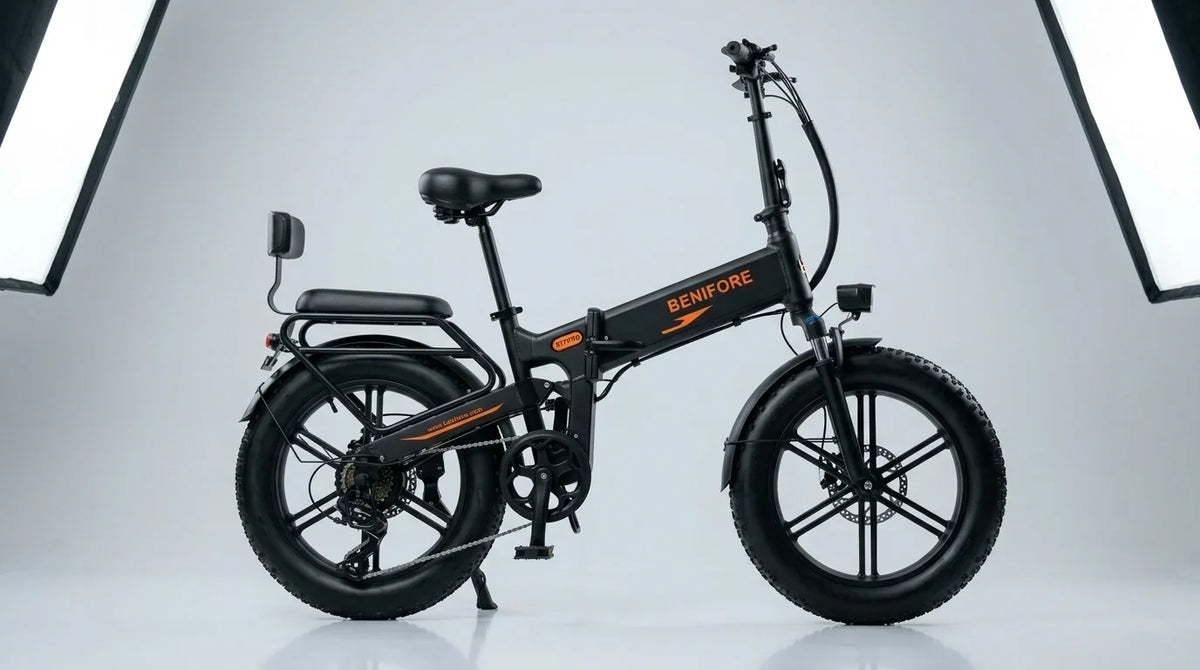
BENIFORE’s X1T PRO is designed around a different use case from a lightweight road bicycle.
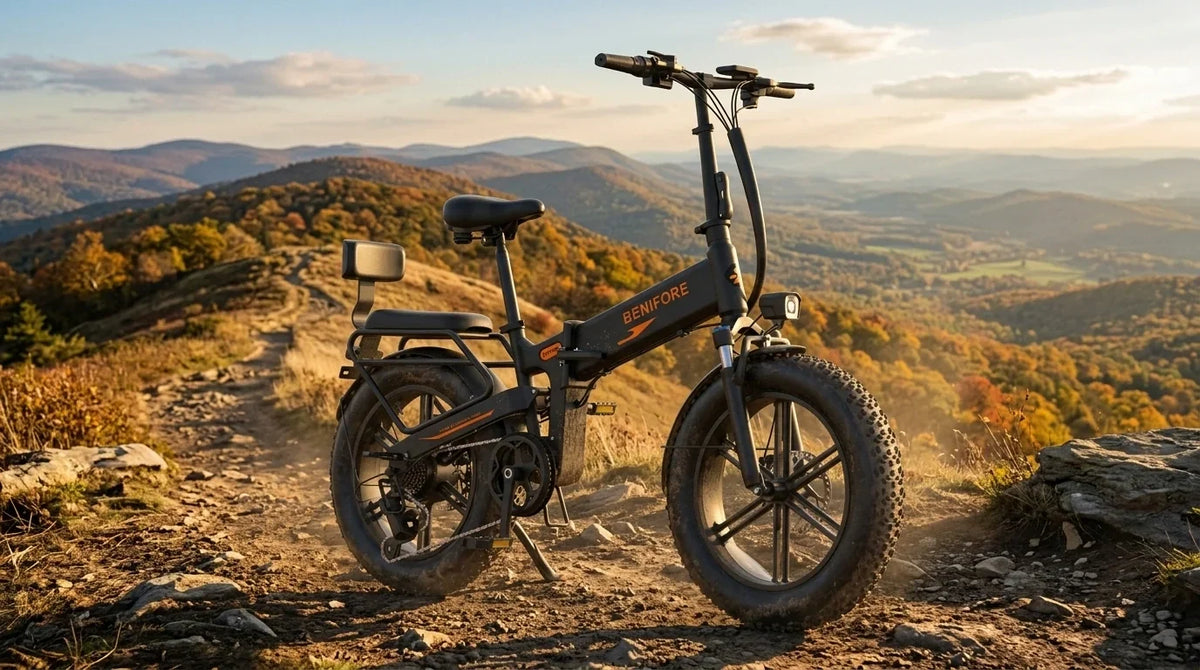
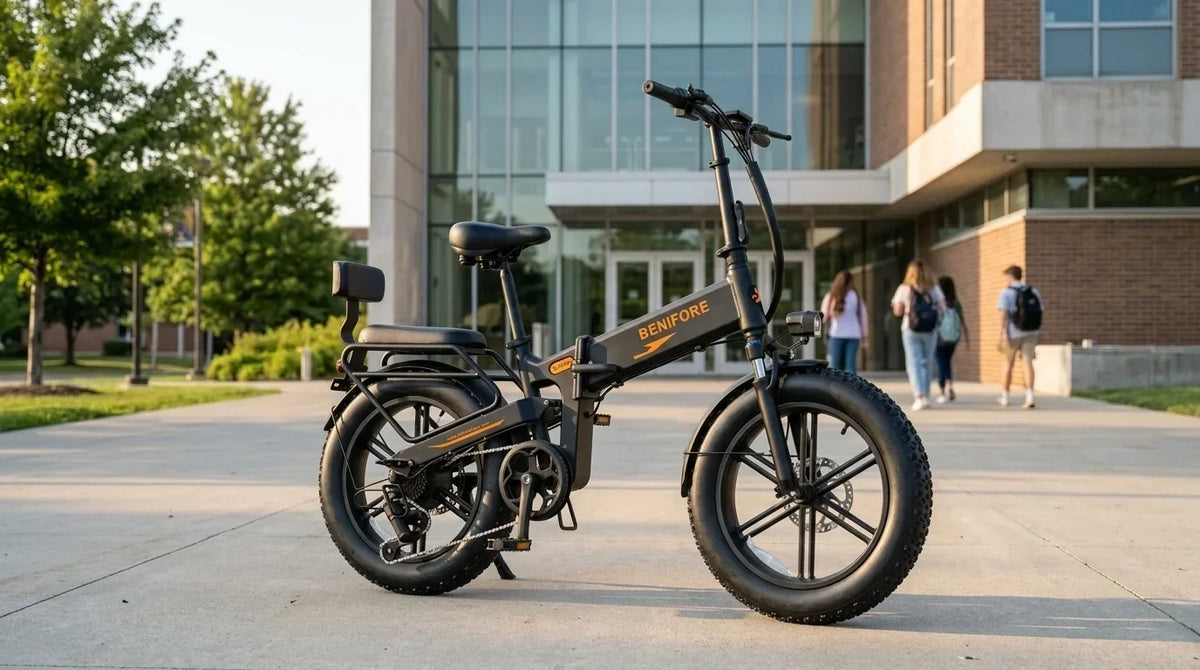
The platform combines a folding frame, 20 × 4.0-inch fat tires, full suspension and a 48V 20Ah battery. These characteristics are aimed at riders who prioritize versatility, comfort and a stable platform across different everyday riding environments.
However, California riders should pay particular attention to vehicle classification and local riding rules. The X1T PRO is a high-power electric bike platform, so riders should verify the applicable California and local requirements before using it on public roads or park trails.
That distinction is part of responsible e-bike ownership. A bike may have the physical characteristics needed for a particular riding environment while still being subject to different legal requirements depending on where it is operated.
You can learn more about the bike’s specifications on the BENIFORE X1T PRO product page .
How to Prepare for a North Coast Cycling Trip
A successful North Coast ride is less about having the most expensive bicycle and more about preparation.
1. Check the Road Before Leaving
Use current Caltrans road information and QuickMap before your trip. Conditions can change because of construction, rock slides, emergency repairs, weather and other incidents.
2. Check the Exact Trail Rules
If your route enters a national or state park, verify whether bicycles and e-bikes are permitted on every section of your planned route.
3. Plan Your Battery
E-bike range estimates are not guarantees. Rider weight, elevation, wind, temperature, tire pressure, assist level, surface conditions and cargo can all affect actual range.
For longer trips, build a charging plan around the route rather than assuming the published maximum range will be achievable in every situation.
4. Carry Basic Backup Equipment
- Spare tube or appropriate tire repair equipment
- Portable pump
- Basic multi-tool
- Front and rear lights
- Reflective equipment
- Water and food
- Phone with navigation and offline maps when possible
- Emergency contact information
5. Expect Changing Weather
The North Coast can be cool, foggy and windy even when other parts of California are warm and sunny.
Check the forecast for the actual coastal section you plan to visit rather than relying on temperatures in your departure city.
The Real Appeal of North Coast Cycling
The biggest reason to ride California’s North Coast is not simply the number of miles you can cover.
It is the changing environment.
One section of the ride can open toward the Pacific. Another can disappear beneath a canopy of redwoods. Small towns replace large urban areas, and the pace of the journey changes with the landscape.
That makes the North Coast particularly interesting for riders who view cycling as part transportation, part outdoor recreation and part travel.
It is also why preparation matters. The same remoteness that makes the region attractive can make an unexpected mechanical problem, low battery or road closure considerably more difficult to manage.
California North Coast Cycling: What to Remember
Plan the Route
Do not treat the entire North Coast or Highway 1 as one uniform cycling route. Conditions vary by section.
Check Conditions
Construction, rock slides, emergency repairs and weather can change the practical route after an article is published.
Know the Rules
California e-bike classifications and individual park regulations both matter when planning an electric-bike trip.
Frequently Asked Questions
Is California’s North Coast good for cycling?
Yes. The region offers coastal roads, redwood forests, scenic communities and designated cycling opportunities. Difficulty and road conditions vary considerably by location, so riders should plan according to the specific route.
Can you ride an e-bike in Redwood National and State Parks?
Some areas permit e-bikes, but not all trails do. The National Park Service identifies specific routes with restrictions, so riders should check the current rules for the exact trail before starting.
What should I check before riding Highway 1?
Check current Caltrans road information because construction, rock slides, emergency repairs and traffic controls can change over time.
Are high-power electric bikes legal as e-bikes in California?
Not necessarily. California’s 2026 consumer guidance states that electric bicycles must have fully operable pedals and a motor that does not exceed 750 watts to fall within the statutory e-bike definition. Vehicles outside that definition may be subject to different requirements.
Is a fat-tire e-bike suitable for North Coast riding?
A fat-tire e-bike can provide additional tire volume and traction on suitable surfaces, but it is not automatically the best choice for every North Coast route. Riders should consider the actual terrain, distance, bike specifications and local regulations.
Sources & Research Notes
This guide was prepared using publicly available information from California tourism authorities, the National Park Service, Caltrans and California’s 2026 e-bike safety guidance. The New York Times travel feature published on September 15, 2026 was used as the news-topic reference point for this article.
- The New York Times — Cycling California’s North Coast
- Visit California — North Coast Redwoods, Seascapes, and Wine Tasting
- Visit California — Highway 1
- National Park Service — Bicycling in Redwood National and State Parks
- Caltrans — California Highway 1 Road Information
- California Attorney General — 2026 E-Bike Consumer Safety Guidance
Editorial note: Road conditions, trail access, park regulations and e-bike laws can change. Readers should verify current information with the relevant government agency, park authority or local jurisdiction before traveling.
Exploring California on Two Wheels?
From everyday commuting to weekend adventures, choosing the right bike starts with understanding where and how you plan to ride.
Learn more about the BENIFORE X1T PRO and its specifications:
Explore BENIFORE X1T PRODisclaimer: This article is for general informational and travel-planning purposes only. It is not legal advice, professional cycling advice or a guarantee that any specific bicycle, e-bike or route is suitable for a particular rider. E-bike classifications, park rules, road conditions and local regulations may change. Always verify current requirements and conditions with the relevant California agency, park authority or local jurisdiction before riding.
Share: